
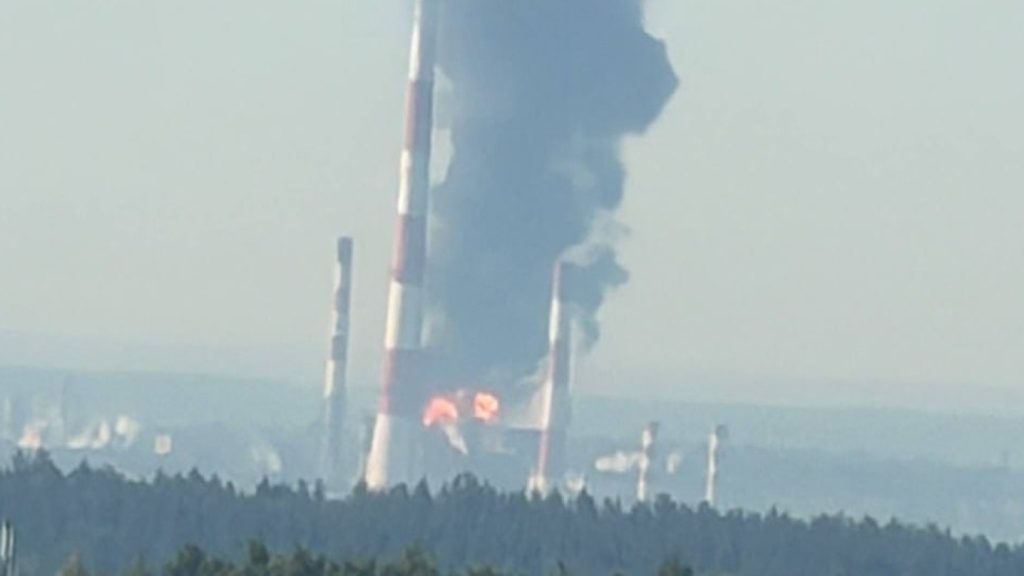
On the night of July 2, three dozen Ukrainian drones attacked the Nizhny Novgorod region, according to regional governor Gleb Nikitin. «Falling debris caused minor damage to one industrial facility and several residential buildings. It is with great pain in my heart that I must report the death of one civilian,» Nikitin wrote on Telegram. He also reported that four people were injured, one of whom was hospitalized. Emergency services are at the scene of the incidents, and air defense operations are continuing, the governor noted.
According to an analysis of eyewitness footage conducted by Astra, the Lukoil-Nizhegorodnefteorgsintez oil refinery in Kstovo was hit. It is Lukoil’s largest refinery, ranking fourth in Russia by capacity and second in gasoline production. The refinery has the capacity to process approximately 15 million tons of oil per year and produce 5 million tons of gasoline. The refinery also supplies fuel to the Moscow region. The refinery was previously attacked on June 24 and, according to Reuters sources in the industry, halted oil refining due to damage to the AVT-5 primary distillation unit, which operates at 25% of its capacity. However, the refinery planned to resume operations without the damaged unit and increase the utilization of its remaining capacity.
Earlier, Gazprom Neft’s Moscow Oil Refinery was suspended following a drone attack. The facility, with a capacity of 14 million tons per year, produced approximately 3 million tons of gasoline and the same amount of diesel fuel, accounting for more than a third of all fuel supplies to the capital. Drones damaged both primary processing units at the refinery. Reuters sources noted that repairs to the refinery would take «six months at best,» meaning it would not resume operations until 2027. Another refinery supplying Moscow with fuel, the Ryazan refinery, also suspended refining in May.
Following this, gasoline began to be shipped to Moscow as a priority, and regions, one after another, began imposing restrictions on its sale. Authorities in 40 Russian regions imposed official limits on gas stations, and fuel shortages affected more than 80 regions. To plug the gap in the fuel balance, the government increased gasoline imports from Belarus, negotiated supplies with India, and allowed refineries to lower gasoline quality requirements to Euro-3.