
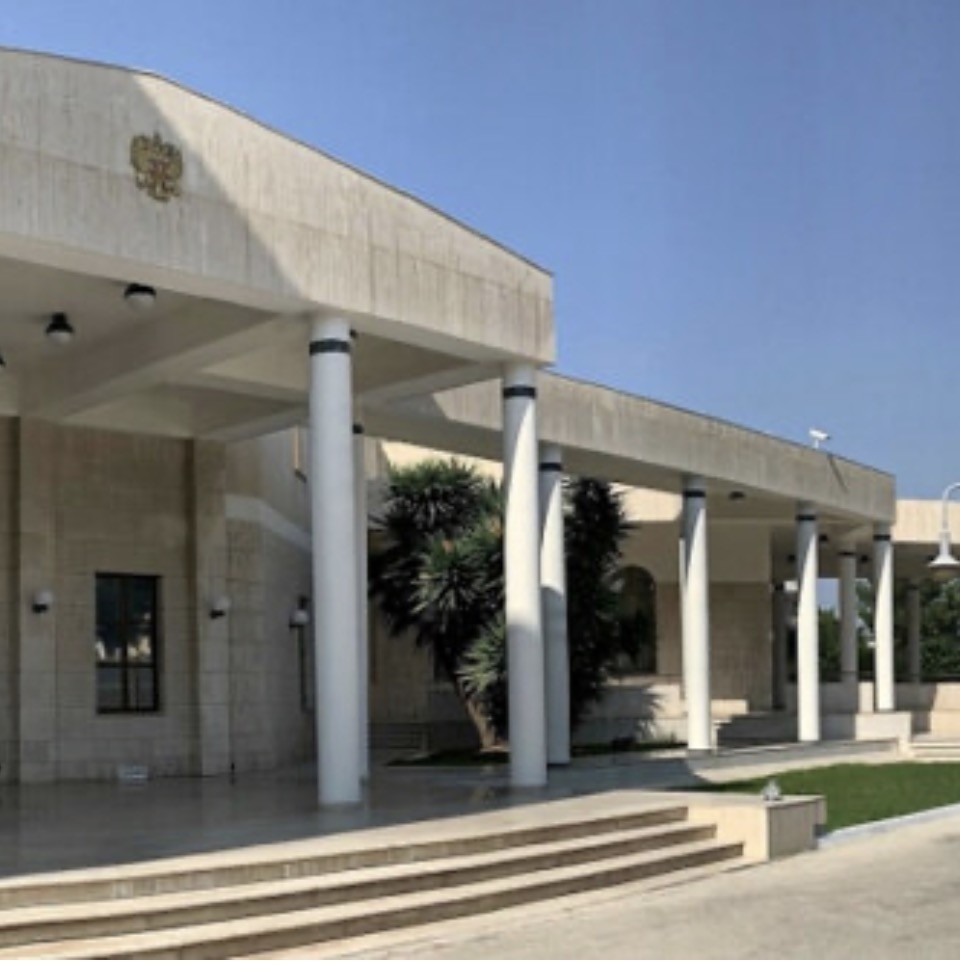
The two Russian diplomats whom Cyprus forced to leave the country earlier this week had been under close surveillance by the Cyprus Intelligence Service (KYP) for at least two months. These details were reported by the Cypriot news portal INK. Amid the scandal, ELAM has called for a full investigation into Russian espionage networks on the island and their possible links to the Soviet influence mechanisms that came under public scrutiny this autumn, after archives on the funding of AKEL were published.
Two Months Under Watch
The expulsion was first reported on the evening of 20 November by the television channel ANT1. According to the channel, both diplomats were officers of the Russian intelligence services working under the cover of the embassy in Nicosia. They sought contacts with Cypriot citizens whose positions give them access to confidential information, gathered intelligence on the national security of the Republic and of the European Union, and tried to obtain technology in circumvention of EU sanctions. Part of this activity, the channel says, took place in the first half of 2026, when Cyprus held the Presidency of the Council of the EU. According to ANT1, President Nikos Christodoulides received regular briefings on the progress of the operation.
INK added further details. A tip that reached KYP through one of its channels immediately alerted counterintelligence, and verifying it took only a few days. The diplomats were then placed under close surveillance. A source close to the investigation told the portal that the Cypriot authorities know whom the Russians met, what they wanted from the agents they had recruited and what they managed to obtain. In the source’s words, the main objective of their mission was never achieved. The Greek outlet Hellas Journal, summarising the ANT1 report, writes that the inquiry found signs of a wider network that went beyond the two expelled diplomats.
The diplomats have not been named. The government has made no official statement, and as far as we could establish by the evening of 22 November, the Russian Embassy had not commented publicly on the expulsion. It also remains unclear whether the Cypriot agents recruited by the spies will face any consequences.
ELAM Recalls the KGB Archives
In a statement quoted by ANT1, ELAM speaks of serious national security concerns and calls on the competent authorities to establish whether Russian or other foreign influence and espionage networks are active in Cyprus today, whether they are connected to mechanisms of the past and which individuals may be involved in them. The party attaches particular weight to the Soviet documents made public in October, which in its view contain irrefutable evidence of the funding of AKEL and of covert arms deliveries through KGB channels.
These are the materials broadcast by Sigma TV in early October. According to the documents, between 1961 and 1973 AKEL received some $448,000 from Moscow through the International Trade Union Assistance Fund, including $140,000 in 1973 alone. In July 1974, at the party’s request, around a hundred small arms with ammunition were secretly shipped to the island. AKEL spokesman Haris Polycarpou responded at the time that Soviet funding had been written about before and expressed surprise at the timing of the publication. We have not yet found any public response from AKEL to ELAM’s latest statement.
Old School, New Assignments
It would be easy to dismiss ELAM’s demand as political point-scoring, yet the question it raises is a legitimate one. Russian intelligence in Cyprus has never operated in a vacuum. It has always relied on locally recruited agents, informants and politicians willing to repeat talking points convenient for Moscow. For many years CDN has been reporting on FSB, SVR and GRU officers working under diplomatic cover in Nicosia and on the «Russian House», which serves as an agent hub for Russian intelligence. The expulsion of the two spies shows that this work did not stop even while Cyprus was representing the entire European Union.
A Cypriot security services officer who spoke to ANT1 confined himself to a brief remark: «The guardians know.» If those words are followed by new operations and public findings rather than leaks to the media alone, Moscow will find it considerably harder to treat the island as its bridgehead inside the EU.
Read also on CDN:
Cyprus Expels Two Russian Diplomats for Espionage
Moscow’s Money and AKEL’s Loyalty: Soviet Documents Reveal the Funding of Cypriot Communists
The Russian House in Nicosia: a Russian intelligence agent hub, family firms and Kremlin propaganda