
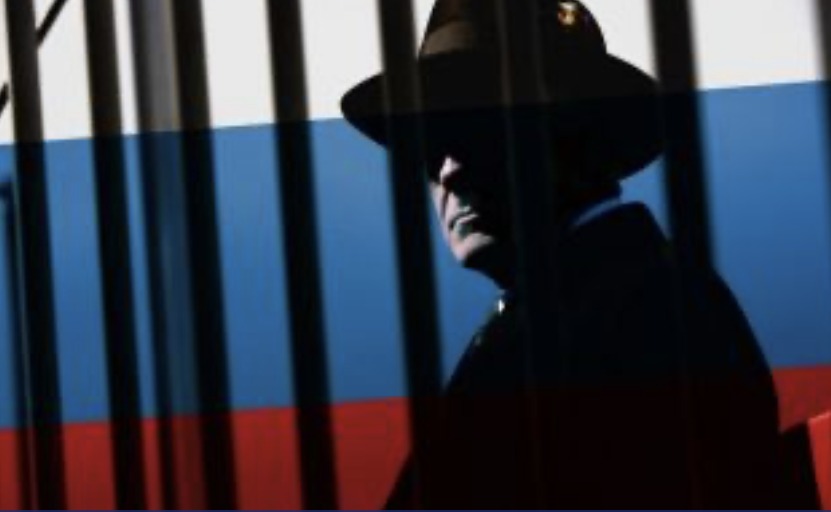
Two Russian diplomats left Cyprus at the beginning of this week at the request of the Cypriot security authorities. According to the Cypriot television channel ANT1, the Cyprus Intelligence Service (KYP) obtained a full picture of their espionage activities against the interests of the Republic of Cyprus. Operating under diplomatic cover, they were hunting for classified information on the national security of Cyprus and the European Union and were also trying to gain access to technology in breach of EU sanctions.
Under KYP surveillance
According to ANT1, both diplomats were undercover agents of the Russian intelligence services. Acting on reliable information, the Cypriot intelligence service placed them under surveillance, and the operation uncovered a network of Russian agents and their contacts with Cypriot citizens who, by virtue of their duties, have access to confidential information. The agents’ aim was to collect secret information on matters directly affecting the national security of the Republic of Cyprus and the European Union.
The espionage took place during a particularly sensitive period, which included the six months when Cyprus held the Presidency of the Council of the EU. According to the channel, President Nikos Christodoulides was kept informed of developments throughout.
«The guardians know»
A Cypriot security services officer contacted by ANT1 did not deny the information. He stressed that this was not the first time KYP had put a stop to the activities of foreign intelligence agents, and that these two were far from the only Russian diplomats who have been forced to leave Cyprus because of espionage. His message was unambiguous: «The guardians know.» The officer also made it clear that further operations of this kind will follow in the near future.
The names and positions of the expelled diplomats have not been disclosed, the government has made no official statement, and there has been no reaction so far from the Russian Embassy. It is also unknown whether criminal proceedings have been opened against any of the Cypriot contacts.
What CDN has been warning about for years
For CDN readers, this news comes as no surprise. For many years we have been writing that the Russian Embassy in Nicosia and the structures linked to it serve as cover for officers of the FSB, SVR and GRU, and that Cyprus has become a convenient bridgehead for the Russian intelligence services inside the European Union. As far back as 2021, CDN examined in detail how the system of Russian espionage, recruitment and influence operating on the island under the embassy’s roof works. In 2026 we published reports on the Russian House in Nicosia as a Russian intelligence agent hub, on a GRU illegal who has been operating in Cyprus for five years under the guise of a Ukrainian refugee, and on how Russian influence on the island is organised. Our investigations have drawn the attention of the European Parliament: MEP Rasa Juknevičienė has urged the EU to take a closer look at the Russian House in Cyprus.
For a long time, the Cypriot authorities preferred to act quietly. While most European countries expelled Russian «diplomats» en masse and publicly after the start of the full-scale invasion, Nicosia avoided publicity, and the Russian diplomatic presence on the island, at the very least, did not shrink. The KYP operation shows that the Cypriot intelligence services see the threat and are capable of acting effectively. The expulsion of two Russian spies, which the country learned about from a television exclusive rather than from the government, is only the beginning.
Read also on CDN:
The Russian House in Nicosia: a Russian intelligence agent hub, family firms and Kremlin propaganda
A Russian intelligence hub in Nicosia: MEP urges the EU to take a closer look at the «Russian House» in Cyprus
An undercover GRU spy has been operating in Cyprus for five years under the guise of a Ukrainian refugee
Russia’s Hybrid Influence in Cyprus: How Moscow’s Intelligence Networks Are Attempting to Undermine European Solidarity
Portrait of a Russian Diplomat
Special-Purpose Embassies: Why Russia Needs Two Thousand Diplomats in the European Union
Moscow Targets Journalist Boris Demash, Who Exposed FSB, SVR and GRU Networks in Cyprus