
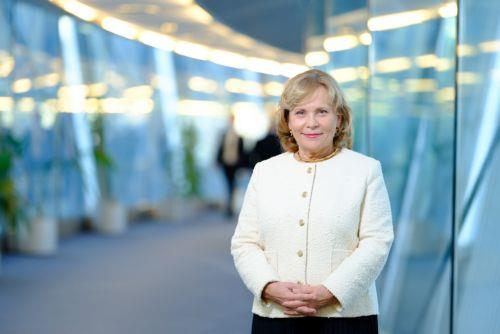
The activities of the “Russian House” in Nicosia must be seen as part of Russia’s hybrid war against Europe, Lithuanian MEP and former Lithuanian defence minister Rasa Juknevičienė said in an interview with the Cyprus News Agency. Citing public assessments by Estonia’s security services, she said such centres can be used by Russian intelligence and asked whether EU member states take this threat seriously enough.
CDN answered this question long ago. The Russian Centre for Science and Culture (RCSC) in Nicosia is not a cultural institution but a hub of the Russian intelligence services – the FSB, the SVR and the GRU.
Since 2020, Boris Demash, Dmitri Khmelnitsky and the CDN editorial team have been writing that the RCSC is engaged in espionage, spreading Kremlin propaganda and recruiting agents, including by sending young people to study in Russia, where all of them become targets for recruitment by the Russian intelligence services. The system is described in detail in the book by Dmitri Khmelnitsky and Boris Demash, “Russian Agents of Influence in Cyprus” (Berlin, 2025).
Juknevičienė represents the European People’s Party. She was rapporteur for the European Parliament’s report on hybrid warfare and the protection of the EU’s territorial integrity and critical infrastructure, which MEPs adopted at the September plenary session. In her view, hybrid threats concern the whole European Union, although they are most visible on its eastern flank. NATO military officials, she said, put it bluntly: “Today no capital in the EU is safe”, because Russian weapons can reach any point in Europe. “This is not only about regional defence, but about our common European defence,” the MEP stressed.
Europe will never reach one hundred per cent readiness, Juknevičienė believes, because both circumstances and methods keep changing. She pointed to the war in Ukraine, where drones, air defence and long-range weapons play an ever greater role. She listed sabotage, arson, cyberattacks, signal jamming, drone incursions, explosives and disinformation among the tools of hybrid operations. She also spoke about social media, YouTube, bloggers and networks of fake accounts that Moscow uses to inflame tensions in European societies, including over migration, and to try to influence elections.
Juknevičienė called what is happening a “war in the grey zone”. Russia, she said, operates below the threshold that would trigger Article 5 of the NATO Treaty on collective defence, and seeks to make Europeans afraid and turn them away from supporting Ukraine. Drawing on Lithuania’s experience, she cited migration pressure on the border with Belarus since 2021, weather balloons over Lithuanian territory, drone incidents and the risk of “false flag” provocations. Lithuania, she added, has stepped up security around its liquefied natural gas terminal.
The MEP sees the EU’s main problem in the fact that incidents in different countries are investigated in isolation. Signal jamming, attempts to damage railways, explosives and drones should be assessed together, so that it becomes clear whether they add up to a single operation. For this, in her view, EU member states need mechanisms that allow them to build a common picture of hybrid activity.
The “Russian Houses” are one of the main instruments of this war. All of them are offices of Rossotrudnichestvo, and Rossotrudnichestvo is a separate Russian intelligence service that works among Russian-speaking emigrants outside Russia and complements the FSB, the SVR and the GRU. Culture and science serve only as its cover. In the agency’s official language, its task is “strengthening ties with compatriots”. This is a euphemism for recruiting and using emigrants from the former Soviet Union in Moscow’s interests, while culture and science serve merely as means and methods of recruitment.
The agency’s history begins in 1925, when the USSR created the All-Union Society for Cultural Relations with Foreign Countries (VOKS). Formally it was a public organisation; in reality it was a unit of the OGPU, because in the Soviet Union any contacts abroad fell within the remit of state security. In 1958 VOKS was transformed into the Union of Soviet Societies for Friendship and Cultural Relations with Foreign Countries (SSOD). By 1991 the SSOD united 98 friendship societies and ran houses of Soviet science and culture and offices in 89 countries. It was a gigantic network of Soviet agents of influence that did not disappear after the collapse of the USSR. The people recruited by Soviet intelligence did not vanish either.
In 1992 it became the basis for the Russian Association for International Cooperation and the government agency RAMSiR, which received all of the SSOD’s property in Russia and abroad. In 1994 RAMSiR was succeeded by Roszarubezhtsentr, and in 2008 by Rossotrudnichestvo, which reports to the Russian president and falls under the Foreign Ministry. Today it has about a hundred offices in 80 countries, including 96 “Russian Houses”.
From 2020 Rossotrudnichestvo was headed by career intelligence officer Yevgeny Primakov, grandson of a former SVR director, and in April 2026 he was replaced by Igor Chaika, son of a former prosecutor general and one of the administrators of schemes for financing FSB operations in Moldova. After 2022 the EU put the agency on its sanctions list as “the main state body that designs the Kremlin’s soft power and hybrid influence”. When hundreds of intelligence officers working under diplomatic cover were expelled from EU countries, Rossotrudnichestvo’s legal networks of agents had to take on an additional burden.
The RCSC in Nicosia opened in 1978. In essence it is a branch of the embassy open to the general public and, at the same time, a key centre of intelligence operations. The embassy is watched by counterintelligence, but it is impossible to keep track of everyone who attends concerts, clubs and Russian language courses. That makes the “Russian House” an ideal place for meeting agents and recruiting new ones.
Its directors were chosen accordingly. From 2007 the centre was run by Roman Vavilov, who as early as 2004 was listed as the embassy’s first secretary for culture from Roszarubezhtsentr. His biography leaves no doubt that he belongs to the intelligence services. In 2013 the RCSC was headed by Alexei Rogalev, a diplomat with the rank of Envoy Extraordinary and Plenipotentiary, unusually high for this post. In 2015 Yuri Zaitsev became director after being expelled from the United States: the American press reported that the FBI was investigating his involvement in recruiting Americans while he headed the Russian cultural centre in Washington. From 2016 the centre was headed by Alina Radchenko, a former official of the Russian presidential administration.
Since May 2026 the director of the RCSC in Nicosia has been Yevgeny Eduardovich Demin, born on 26 June 1988 in the Ukrainian city of Enerhodar. According to CDN, Demin is a career SVR officer seconded to Rossotrudnichestvo.
CDN has named the officers and agents of the Russian intelligence services it has managed to expose. The post of “specialist in higher education in Russia” at “Russian Houses” around the world is reserved for the SVR. In Nicosia it was held for several years by SVR officer Igor Melnik: in 2022 CDN wrote about him as an SVR major who had been identified by the intelligence services of several Western countries as a career intelligence officer and who headed the RCSC’s higher education department. Working with him on “bringing up” agents was Denis Borodich, an SVR officer under the cover of embassy counsellor and head of the consular section. In autumn 2022 he led the Russian delegation at the UNECE conference of environment ministers in Nicosia and tried to block provisions of the declaration on the consequences of Russian aggression against Ukraine.
SVR officer Ilya Dmitriev, first secretary of the Russian embassy, worked under the cover of deputy director of the RCSC. As early as 2020, sources told the editorial team that the RCSC staff, then numbering about 20 people, included two seconded SVR officers.
Diana Borisova is the daughter of an FSB colonel and a graduate of the MGIMO journalism faculty. According to available information, she serves in the SVR and was trained in Cyprus for work in other countries. In 2019 Borisova became head of the Youth Club of Russian Compatriots in Cyprus, set up with the help of Rossotrudnichestvo.
The RCSC holds public propaganda events together with the embassy, which is headed by FSB Lieutenant General Murat Zyazikov. In January 2024 the RCSC and the Coordinating Council of Russian Compatriots staged a rally in Limassol to mark the anniversary of the lifting of the siege of Leningrad, at which European sanctions were compared to the blockade. Zyazikov repeated the same claim in an interview with the TASS correspondent in Cyprus, Andrei Surzhansky, known as an SVR officer. Pravfond, founded by the Russian Foreign Ministry and Rossotrudnichestvo, financed the Best Legal conferences in Cyprus. Judging by his biography, the head of the fund, Igor Panevkin, is one of the intelligence officers working under diplomatic cover. Danish police established from leaked fund documents that its centres are used by Russian foreign intelligence. And the theatre festival “Five Evenings in Cyprus”, launched by the RCSC in 2017, is linked to a company behind which stands SVR officer Sergei Muradov, son of former Russian ambassador to Cyprus Georgy Muradov.
The “Russian House” has an expert club. Its membership is given in the book: Metropolitan Isaias of Tamassos and Oreini; Michalis Azovidis, assistant to the President of the House of Representatives; Anastasios Kouzalis, president of the Cyprus Association of Graduates of Russian and Soviet Universities; Charis Thrassou, president of the Cyprus–Russia Friendship Society; Andreas Christou, former mayor of Limassol; Georgios Prodromou, honorary consul of Russia in Paphos and Limassol; and several cultural figures. Many of them studied in the USSR and Russia. This list is a register of local agents of influence, and certainly an incomplete one.
The organiser of Best Legal is Natalia Kardash, owner of the Vestnik Kipra publishing house. In 2021 Rossotrudnichestvo awarded her its honorary badge “For Friendship and Cooperation”. In its official congratulations the agency itself explained why: Vestnik Kipra is “a permanent media sponsor of the projects of the Russian House in Cyprus (RCSC Nicosia)”. Kardash is a member of the Coordinating Council of Russian Compatriots and of the European Russian Alliance – the very organisation that the Estonian Internal Security Service described back in 2005 as a cover for FSB agents.
Young people are the RCSC’s main focus. After 2022, when the expulsion of officers under diplomatic cover paralysed many agent networks, Moscow switched to remote recruitment. The pages of the “Russian Houses” carry announcements of competitions, olympiads and free study at Russian universities. Applicants register online and send in their work, usually on a patriotic theme. Propagandists work with those selected; finalists are taken to Russia and given state-funded university places. In 2024 the RCSC in Nicosia invited Cypriot schoolchildren and students to the “Themis” olympiad of the Russian State University of Justice, whose winners are guaranteed admission, and to the “Honest View” media award, which has a separate RT nomination. Decisions on which Cypriots to send to study, as CDN wrote, are made by an SVR officer. In Russia those selected are vetted for loyalty, their weak points are identified and they are recruited. Back home they work in government bodies, banks, the media, business and the church, and carry out Moscow’s assignments.
Spanish IT specialist Enrique Arias Gil went to Russia in 2024 on a grant from the “Russian House” in Madrid, was recruited there, and is now wanted in Spain for passing data on the country’s critical infrastructure to Russian hackers.
In Cyprus the most striking example is Vladimir Gorin, a product of the Russian House in Nicosia (RCSC) and an obvious agent of influence linked to the Russian intelligence services. He appeared at the “Russian House” in 2017, taught robotics at the “Pioneer” centre at the RCSC, studied in Moscow at the Pushkin Institute under the “ambassadors of the Russian language in the world” programme, and coordinates the “Volunteers of Victory” movement in Cyprus. His advancement was handled by SVR officers Igor Melnik and Denis Borodich. In autumn 2022 Gorin worked as a volunteer at the UNECE conference in Nicosia, where the Russian delegation was led by Borodich, and, according to participants, showed an interest in the delegations’ negotiations that went far beyond his duties. Today he is a Green Party activist, has stood in municipal elections and has become a member of the Youth Parliament of Cyprus. In such cases the line between the work of an agent of influence and that of an intelligence agent is blurred, and often they are two sides of the same coin.
Other countries are closing their “Russian Houses”. Their work has been suspended in the UK, the US, Lithuania, Slovakia, Slovenia, Croatia, Montenegro and North Macedonia, and in 2025 Azerbaijan and Moldova closed theirs. In September 2026, after the sabotage at Leipzig airport, Germany expelled the staff of the “Russian House” in Berlin. The RCSC in Nicosia carries on as if nothing had happened, and the staff of the embassy and the “Russian House”, reportedly about 300 people, freely engage in intelligence work and propaganda in Cyprus.
Concluding the interview, Juknevičienė said that Europe needs a common strategy towards Russia and that support for Ukraine must continue, because the security of the whole continent depends on the outcome of this war.
Read more on this topic:
Special-Purpose Embassies: Why Russia Needs Two Thousand Diplomats in the European Union
Portrait of a Russian Diplomat
An undercover GRU spy has been operating in Cyprus for five years under the guise of a Ukrainian refugee
“Agronomos”: Yet Another Russian Project to Destabilize Cyprus
“Russian Houses”: a global recruitment and espionage network of the Russian intelligence services (in Russian)
Embassy and ambassadors
Agent Network of Influence: How Russia Rebuilt Its Intelligence and Is Waging Hybrid War Against Europe
Not-so-“useful idiots”: how the International Russophile Movement took over the Kremlin’s influence networks (in Russian)
Not Holy Fire: Sectarian Forum at the Russian House
«What Keeps Me From Forgetting My Homeland?» Russian Authorities Intensively Prepare Young Influence Agents Around the World
Fidias Panayiotou – Russia’s agent of influence in the European Parliament
The FSB’s oasis in the European Union
How Pravfond works: a support centre for Russian agents abroad (in Russian)
«International Russophile Movement» and other Putin’s agents of influence in Cyprus. Part 2
How Putin’s agents of influence settled in Cyprus. Part 1
Aglantzia spy
Russian centres of science, culture and espionage (in Russian)
Conferences of Russian spies in Cyprus
Recruitment and ecology (in Russian)
A model agent
A theatre festival as an instrument of Kremlin influence in Cyprus (in Russian)
A successful operation of the Russian intelligence services: Cyprus football stands as an instrument of influence (in Russian)
«Russian House» in Nicosia: an incubator of Russian spies in Cyprus
What kinds of spies there are (in Russian)
Recruitment! (in Russian)
Russian spy network in Cyprus: The Failure of Undercover Agents
Pravfond and Natalia Kardash (in Russian)
A hunter’s trophy in the ambassador’s office (in Russian)
“Russian regiment” in Cyprus Goes to the Elections
The “Russian World” and its patrons (in Russian)
Pilgrims in uniform. The Palestine Society, state security and twin cities (in Russian)
Pilgrims in uniform. The Palestine Society, state security and twin cities (in Russian)
The liberty of the secret services. How Russian influence in Cyprus is organized
A hunter from Moscow
The FSB general destabilizes the political situation in Cyprus
Agents for Putin: how the “Russian World” works abroad (in Russian)
Dmitri Khmelnitsky. Russia’s agents of influence in Cyprus: Natalia Kardash (in Russian)
Dmitri Khmelnitsky. Russia’s agents of influence in Cyprus: Natalia Kardash (in Russian)
Natalia Kardash-their man in Cyprus
HUNTERS AND DIPLOMATS
THE EDUCATORS FROM THE RUSSIAN STATE SECURITY
Cyprus spy scandal
The Cypriot town of Ayia Napa and its Russian friends
Russian intelligence services work the same way everywhere (in Russian)
Russophiles in plain clothes
Spy — get out
“Family Values” from the FSB Office in Cyprus”
Russia Uses Cyprus as One of the Buffer State to Promote “Russkiy mir” in the EU
Moscow’s Trojan horse in the European Union (in Russian)
The expulsion of Rossotrudnichestvo spies from Europe (in Russian)
Critically dangerous Russians (in Russian)
Pozner and Urgant on tour: Kremlin agents to perform in Cyprus on the eve of the war anniversary (in Russian)
Active measures under theatrical cover (in Russian)
Agents, Russian Church proxies and “exarchate” blackmail: how Moscow is influencing the election of the head of the Church of Cyprus (in Russian)
A Russian “empress” on special assignment (in Russian)
Europe’s Environment as a Comfortable Habitat for a Russian Spy
Why Cypriots are divided over the invasion of Ukraine and how Russian agents operate in the Republic of Cyprus (in Russian)
Bad Russians. Who stages pro-Putin rallies in Europe, and what Rossotrudnichestvo and neo-Nazis have to do with it (in Russian)
SVR special operation “Zemfira” (in Russian)
Substitution of concepts: the foundation of Russian agents’ work (in Russian)
How Moscow uses organisations it controls in European countries for subversive activities (in Russian)
The “Russian World” in Cyprus mobilises in support of the war (in Russian)
The “Russian World” in Cyprus is in its death throes (in Russian)
A major failure of a Russian disinformation operation in Cyprus (in Russian)
A Chekist dynasty (in Russian)
Hybrid compatriots (in Russian)
Dossier Center: what Rossotrudnichestvo is and why it exists (in Russian)
A Chekist on the payroll (in Russian)
“Fraternal” assistance from the Kremlin’s Cypriot agents (in Russian)
Russian intel activates their “sleeping agent” in Cyprus, employs affiliated media assets
The Communists of Cyprus and Moscow’s agents (in Russian)
A Russian spy’s Cypriot holiday (in Russian)
Austrian and Cypriot intelligence services uncover a Russian spy network on the island (in Russian)
Forced into Russian Orthodoxy (in Russian)
Russia’s hybrid attack on the Orthodox Church of Cyprus – 3 (in Russian)
Russia’s hybrid attack on the Orthodox Church of Cyprus – 2 (in Russian)
Russia’s hybrid attack on the Orthodox Church of Cyprus (in Russian)
Dancing with a tambourine in Nicosia
“Operation Party”
The FSB conference in Cyprus – four Generals in the first row beside agents
Russia’s agents of influence – 2. The press (in Russian)
Russia’s agents of influence (in Russian)
Russia wishes the Crimea house would operate in the EU
Buying off agents of influence is a major task for Russian intelligence services abroad