
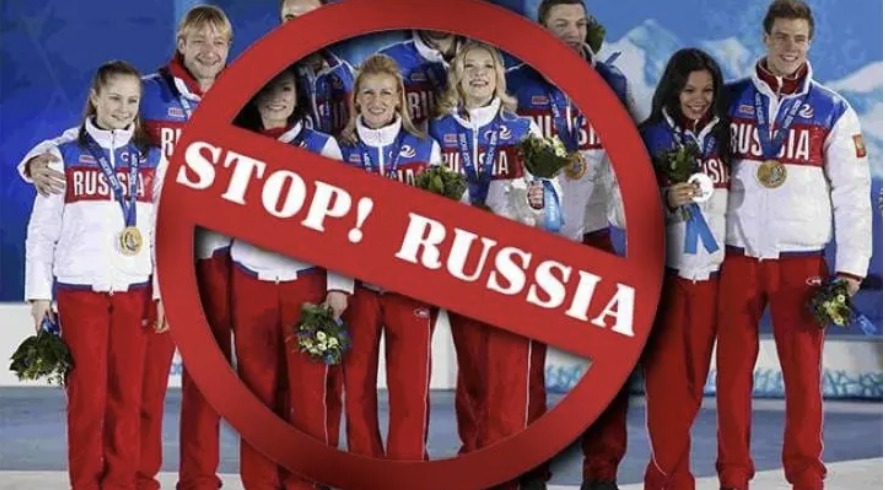
In October, Greece twice opened its doors to Russian sport. A water polo team from Kazan played in Athens, and Russian sambo athletes competed in Thessaloniki under their state flag. A month later, the International SAMBO Federation pointed to Thessaloniki and demanded the same from Cyprus. Nicosia refused. Both countries signed the same declaration in 2023 against Russia’s use of sport to justify its war, but only the Republic of Cyprus has honoured it.
The World Youth SAMBO Championships took place in Thessaloniki in October. According to Russian media, the tournament was held with the support of Rosneft, which is under EU sanctions. A total of 713 athletes from 40 countries took part. The Russian team won 51 medals: 33 gold, 11 silver and seven bronze. Russian athletes competed under their national flag. In Moscow, the tournament was presented as proof that the isolation of Russian sport is over.
The International SAMBO Federation (FIAS) lifted all restrictions itself: from 1 January 2026, athletes from Russia and Belarus have been allowed to compete under their national flags and with their anthems at all FIAS international competitions. This is no surprise. Since 2009 the federation has been headed by Russian citizen Vasily Shestakov, who from 2004 to 2016 was a United Russia deputy in the State Duma. In Russia, sambo remains a sport of the army and the security forces: its main clubs, CSKA and Dynamo, are linked to the Ministry of Defence and the Interior Ministry. Putin, who is wanted by the International Criminal Court, holds the title of Honoured Sambo Coach.
A few days earlier, a similar story played out in Athens. For the first time since the 2022 invasion of Ukraine, Greece hosted a Russian club in an official European team competition: Kazan’s KOS-Sintez played a Euro Cup water polo qualifier. The match took place at the Serafio pool, where the Greek club Apollon Smyrnis was hosting a qualifying tournament. Euronews reports that tense diplomatic negotiations went on behind the scenes. The Greek authorities demanded low-key security and no Russian flags or anthem in the arena. No anthems were played at all, including the Greek one.
The government received assurances that the Kazan team would compete with neutral status. But, as Euronews notes, the rules changed in early September, and in the end Sintez became the first club in a team sport to play in an official international tournament since the start of the Russia-Ukraine war while regularly representing Russia. On the European federation’s official page, the team was presented as Russian, in national colours, the very day after the government received guarantees from the Russian side. Further proof that guarantees obtained from Russia are worth nothing.
Cyprus has shown that a federation’s decision does not oblige the host state to allow Russian symbols on its territory. The World Masters SAMBO Championships were scheduled in Limassol for 20–21 November. On 10 November, FIAS sent a letter to the President of the Cyprus Olympic Committee (KOA), Yiannis Ioannou, demanding urgent written confirmation that Russian and Belarusian athletes would be able to compete with national symbols. The main argument in the letter was the world championship in Thessaloniki, where both delegations competed with their own symbols.
Politis reported that the KOA examined the request together with state authorities, including the Ministries of Education and Foreign Affairs. The state replied that Cyprus must remain true to its commitment not to allow Russian and Belarusian athletes to compete with national symbols and anthems. They may take part only with neutral status.
FIAS threatened to cancel the championship in Limassol or move it to another country, to stop holding international tournaments on the island for several years and to demand compensation. The head of the Cyprus SAMBO Federation, Marios Andreou, called the state’s position discriminatory towards athletes. Nicosia has stood firm: since Russia’s invasion of Ukraine, Cyprus has signed four joint statements together with other countries. Under them, Russian and Belarusian athletes may take part in international competitions in Cyprus, but without national flags and anthems. Cyprus applies this rule consistently: the World SAMBO Championships in Larnaca in 2024 and the European Championships in Limassol in 2025 were held without Russian state symbols.
Greece signed the same documents. In a statement of 20 February 2023, the sports ministers of 35 countries, including Cyprus, France, Germany and Greece, opposed the return of Russian and Belarusian athletes to international competition. The text specifically mentioned France as host of the Paris Olympic Games and Greece as the birthplace of the Olympic Games. Three years later, the birthplace of the Olympic movement is raising the flag of a country waging a war of conquest in the heart of Europe.
The decision taken in Athens has had consequences beyond Greece. Thessaloniki became an argument that FIAS used to pressure another EU member state. Every time a federation can say «but Greece allowed it», Athens loses the right to speak of a consistent European position, and its neighbours find it harder to defend one. One concession turns into a demand to repeat it at the next tournament.
No one is calling for every Russian athlete to be punished for the Kremlin’s decisions. The issue is a different one. Individual participation with genuinely neutral status and the organised return of state representation through international tournaments are fundamentally different things. A flag, an anthem, state symbols, diplomats in the stands and a team presented as national together add up to a political message. For Moscow, this is a propaganda victory that supposedly demonstrates international recognition and a return to normal relations. For the Kremlin, it matters more than any medal. Neutral status is worthless if, in regulations, protocols, award ceremonies and on federation websites, the team remains «Russia».
The Greek government may point to the autonomy of sports federations. But in Limassol, the same request from the same federation was answered by the state, together with the Foreign Ministry. So Athens had that option too. International federations set the sporting rules of their competitions. They have no right to demand that a sovereign state abandon its political commitments in exchange for a championship.
Greece needs a single state policy for all international tournaments on its territory, regardless of the sport or federation. It should be coordinated by the Foreign Ministry. First, a single position must be formulated on neutral status, symbols and the official representation of Russia and Belarus. Next, organisers must be required to give written commitments covering the conduct of competitions, official materials, websites, protocols and award ceremonies. An inter-agency control mechanism should be created so that diplomatic agreements do not turn into empty promises on the day the competition starts. Deliberate violations should cost organisers state support and access to sports venues for future tournaments. If a federation insists on Russian or Belarusian symbols contrary to Greece’s conditions, it should be refused the right to hold the tournament.
That is exactly what Cyprus did. A small state that Moscow for years regarded as its bridgehead in the EU has kept the commitments it made in 2023. Greece signed the same thing and allowed the Russian flag to be raised over Thessaloniki. In this story, only the Republic of Cyprus took the European path.
Greece’s Olympic heritage must not become a bargaining chip, and Greek hospitality must not help restore the international image of a criminal state, which is what Russia is.
Read also on CDN:
World Sambo Championship in Limassol at risk over Russian flags
Ukraine Protests Display of Russian State Symbols at World Masters SAMBO Championship in Limassol
The Limits of Greek Solidarity with Ukraine Are Set by Commercial Interests