
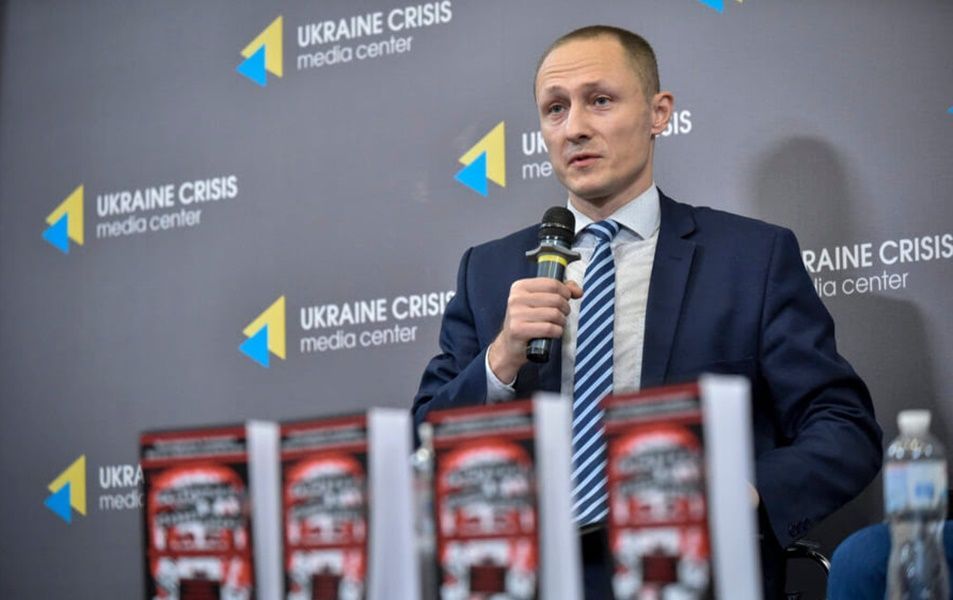
By Yuriy Shulipa
Director, International Union «Institute of National Politics«,
legal scholar, political expert
As of February 2026, the Ukrainian energy system has withstood trials unprecedented in the history of modern warfare. However, the world must stop viewing these events solely through the lens of military strategy or infrastructure damage. We are witnessing a transition from «energy terror» to a calculated crime of genocide.
The Russian aggressor is no longer merely attempting to disrupt the grid; they are implementing a strategy of «regional strangulation» designed to create conditions of life calculated to bring about the physical destruction of the Ukrainian people.
- The Evolution of Evil: From Mass Salvos to Regional Strangulation
In the earlier stages of the invasion, missile strikes were distributed across the entire country. Today, the aggressor has adopted a far more dangerous strategy of «regional exhaustion.» This is not a military tactic; it is a mechanism of extermination.
- Fragmentation as a Weapon: The new tactic aims to sever specific industrial and population centers (such as Kharkiv, Odesa, or Dnipro) from the Unified Energy System. By turning entire provinces into «energy islands» with zero generation, Russia deliberately makes these regions uninhabitable.
- The «Swarm» Overload: The concentration of hundreds of drones and missiles on a single node (as seen in the attacks of February 7) is an attempt to physically overwhelm air defense systems. This mathematical saturation ensures destruction, leaving civilians defenseless against the cold.
- Nuclear Blackmail: Holding the Continent Hostage
The energy grid is a living organism. Even when Nuclear Power Plants (NPPs) are not the direct impact targets, strikes on transmission substations create a tangible risk of a nuclear catastrophe.
- Loss of Off-Site Power: When nodal substations are destroyed, NPPs lose the ability to cool their reactors from the grid, forcing them onto emergency diesel generators.
- Weaponized Instability: This recklessness proves that the aggressor is willing to risk a continental nuclear disaster to achieve its genocidal goals against Ukrainians.
- Legal Qualification: Why This Is Genocide
Russia frequently attempts to justify these strikes as «military necessity.» However, international law and technical reality prove otherwise. These actions fall strictly under the definition of Genocide as per the 1948 Convention on the Prevention and Punishment of the Crime of Genocide (Article II, c): «Deliberately inflicting on the group conditions of life calculated to bring about its physical destruction in whole or in part.»
- Intent to Destroy: The systematic targeting of heating, water supply, and hospitals in winter is not a war against an army; it is a war against biological survival.
- The ICC Precedent: On March 5, 2024, the International Criminal Court (ICC) issued arrest warrants for Russian commanders (Kobylash and Sokolov) specifically for strikes on energy infrastructure. This was a historic turning point: the court recognized that the harm to civilians was clearly excessive and intentional.
- No Military Justification: Attacks are conducted on 750 kV autotransformers that feed cities, not military bases. This is the precise selection of targets to maximize civilian mortality.
- The Scale of the Crime (Documentary Evidence)
The following table compares the current Russian aggression with historical conflicts. It demonstrates that the scale and intent of destruction in Ukraine have no analogues since World War II.
(Table presented in the original Ukrainian to preserve the authenticity of the primary analysis)
| Conflict | Goal of the Attack | Impact on the Energy System | Legal Qualification |
| Operation «Desert Storm» (Iraq, 1991) | Rapid incapacitation of communication and air defense systems. | Approximately 90% of generating capacity was destroyed within weeks. | Deemed excessive; after the war, the US changed its doctrine to use «graphite bombs» for temporary short-circuiting (without destroying power plants). |
| NATO Peacekeeping Operation in Serbia (1999) | Pressure on the government via civilian dissatisfaction. | The use of graphite filaments disabled 70% of the grid, but capital destruction of power stations was limited. | Sparked discussions on the «dual-purpose» nature of energy. The International Tribunal (ICTY) investigated these cases. |
| Russian Aggression against Ukraine (2022–2026) | Systematic destruction of civilian infrastructure as a method of warfare and genocide. | Total destruction of turbine halls (TPP/HPP). The scale of damage is the highest in the world since World War II. | Qualified as a crime against humanity and genocide. First-ever ICC warrants (case of commanders Kobylash and Sokolov) specifically for strikes on the power grid. |
Note on the table above: The comparison clearly illustrates that while previous conflicts involved temporary incapacitation of power grids, the Russian strategy involves total physical destruction of generation halls (Thermal and Hydro), qualifying uniquely as a crime against humanity and genocide.
Why is Ukraine a precedent?
Unlike Iraq or Serbia, where strikes were aimed at achieving a quick military objective, in Ukraine we see a multi-year campaign to exhaust the civilian population. This is not collateral damage, but a deliberate strategy to create conditions incompatible with life.
- Systemic Intent: Unlike previous historical examples where energy was targeted for immediate military objectives, the Russian campaign against Ukraine is a long-term operation of attrition aimed at the civilian population.
- Technological Destruction: The move from «soft» disabling (graphite) to «hard» physical destruction of generating units (turbine halls) proves the intent is not to disrupt, but to permanently eliminate life-support systems.
- Genocidal Threshold: By deliberately creating conditions calculated to bring about the physical destruction of the group (through freezing, lack of water, and healthcare collapse), these actions meet the criteria of the 1948 Genocide Convention.
- The Humanitarian Catastrophe
The consequences of these attacks are cumulative and lethal:
- Healthcare Collapse: Even with generators, hospitals cannot sustain high-load diagnostic equipment (MRI, CT).
- Water and Sanitation: Without electricity, water pumps stop. This leads to sanitary disasters and the freezing of heating pipes, turning cities into icy traps.
- Social Isolation: Vulnerable groups—the elderly and disabled—are trapped in high-rise buildings without elevators, heat, or communications.
Conclusion: A Call for Justice and Defense
The energy terror against Ukraine is a stress test for the entire system of international law. The systematic destruction of Ukraine’s life-support systems is an internationally recognized crime of genocide.
Acknowledgment of this fact changes the obligations of the international community. It is no longer a question of «aid,» but of the «Duty to Prevent» genocide. This requires:
- Immediate provision of additional air defense systems to counter «swarm» tactics.
- Support for distributed generation (microgrids) to make the system resilient.
- Full legal prosecution of the Russian leadership for the crime of genocide, beyond just war crimes.