
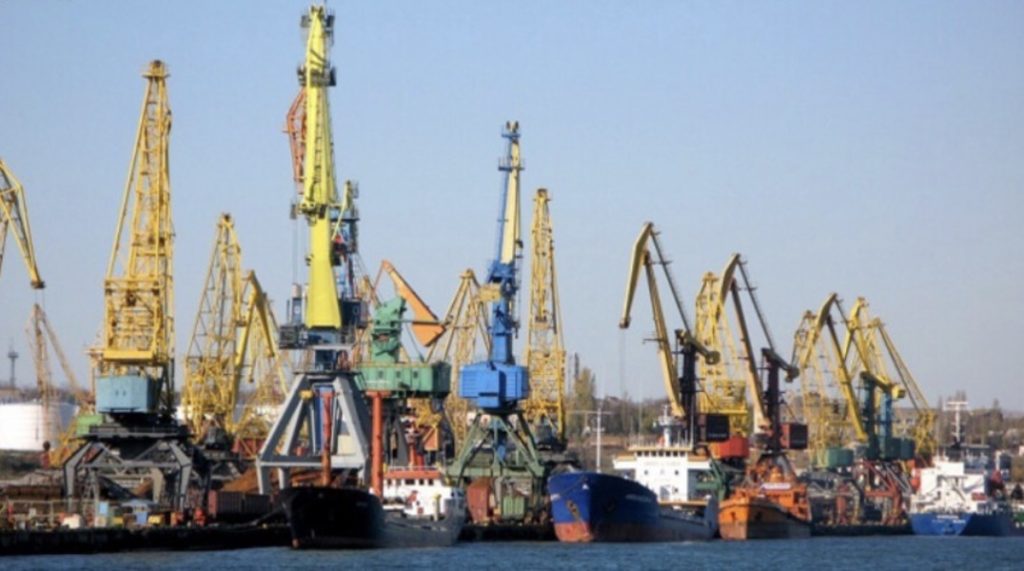
In 2022, Russia began a predatory blockade of Ukrainian seaports, and the global food priceindex rose by more than 25%. This puts the survival of millions of people at risk.
In 2026, Russia is trying to achieve the same resultby attacking civilian vessels in Ukrainian portsand along the sea corridor in the western Black Sea region. The consequences for the world couldbe just as serious as in 2022.
The persistence of Russian attacks on civilian vessels indicatesattempts to undermine navigation along the western coast of the Black Sea. In this navigation zone, in July 2026, the corridorfunctioned under intensive missile and drone strikes by Russia. 31 merchant vessels were attacked. These vessels have nothingto do with military supplies and even theoretically cannot beconsidered legitimate targets.
On July 13, 2026, Russia struck a vessel under the flag of Togo. 3 sailors died, 5 were injured.
On July 14, 2026, two civilian vessels sailing under the flags of Tanzania and Liberia were attacked. The captain of one of the vessels died.
On July 17, 2026, as a result of a Russian missile strike on the dry cargo ship «Venturo» under the flag of the Marshall Islands, a crew member died.
On July 19, 2026, the dry cargo ship «Golden Leo» under the flag of Guinea-Bissau was attacked by three Kh-59/Kh-69 cruisemissiles. 9 crew members and a Ukrainian pilot died.
Unlike the Russian «shadow fleet» in the Black Sea, the vesselsattacked by Russia are not under sanctions, are properlyregistered, and carry exclusively humanitarian cargo. Russian strikes on civilian cargo ships are not accidental or caused bytargeting errors. Moscow is implementing a systematic strategyof intimidation aimed at stopping shipping in the western part of the Black Sea. The goal is quite clear: to block Ukrainian exportsand the delivery of certain categories of cargo. It can be achievedthrough the destruction of port infrastructure of a civilian nature, and the intimidation of crew members and shipowners.
Strikes on civilian vessels in the Black Sea have already led to an increase in freight costs from $24 to $47 per ton of cargo, and international insurance companies have begun reviewing the conditions of war risk coverage. This created an additionalfinancial burden on shipowners from Cyprus, Greece, and othermajor maritime states.
Systematic strikes on civilian vessels are a violation of the fundamental principles set forth in Additional Protocol I to the Geneva Conventions. Because civilian merchant vessels aregranted immunity from military attacks. According to the United Nations Convention on the Law of the Sea (UNCLOS), the Russian side’s attacks on civilian vessels in international watersand the exclusive economic zone violate the basic right to freedom of safe navigation.
Article 92 of the said convention provides that a ship on the highseas is under the exclusive jurisdiction of its flag state, and anattack on a ship, the murder/death of crew members, is a directaggression against that state.
Russia’s attacks against vessels under the flags of neutral Liberia, Panama, or the Marshall Islands, in the absence of military cargoor their non-involvement in hostilities, bear the signs of acts of state terrorism and violations of freedom of navigation, whichrequires an appropriate response from the International MaritimeOrganization (IMO).
For states under whose flags the targeted vessels operate, as wellas major EU maritime states including Cyprus, Greece, and Malta, initiating official proceedings within the International Maritime Organization (IMO) represents a necessary step. The organization is responsible for issuing a legal evaluation of Russia’s conduct.
The lack of a response creates a risk of legitimizing such actions in the future.
Despite Russian attacks, Ukraine is not closing the sea corridor. It continues to provide navigational and logistical support and isready to fulfill its obligations to ensure safe passage within itsterritorial waters. At the same time, Kyiv excludes the possibilityof returning to compromise agreements with Moscow. Practicehas proven the inadvisability of agreements with Russia onnavigation safety.
The only guarantor of freedom of navigation in the western partof the Black Sea is the creation of military-technical conditionsfor protecting trade routes. Even temporary blockage of seacorridors for agricultural exports negatively affects global foodsecurity. An important component of deterring Russia’saspirations can also be the formation of an effective internationalcoalition of interested states.
The lack of a tough reaction to violations of navigation safety in the Black Sea creates a risk of undermining established norms of international maritime law. If systematic attacks on vessels underthe flags of neutral states do not carry clear legal and politicalconsequences for Russia, merchant shipping in other strategicmaritime areas of the world will be at risk.