
Two days before Estonia closes all road border crossings with Russia, the country’s Prime Minister Kristen Michal warned that the worse things go for the Kremlin at the front, the more dangerous its hybrid war in Europe becomes. He made the remarks in an interview with the British newspaper The Guardian published on 29 November. Meanwhile, the Estonian Internal Security Service (KaPo) has expelled yet another Russian citizen suspected of links to the Russian special services.
Michal’s List
Michal listed the episodes which, in his view, now shape the European Union’s response: an assassination plot prepared in Denmark, a foiled terrorist attack in Leipzig, Germany, an attempted arson attack on a drone factory in Estonia, and Russian missiles and drones straying into Polish territory. European leaders, the prime minister believes, increasingly recognise a simple pattern: when Russia suffers setbacks on the battlefield, its hybrid activity «becomes far more dangerous».
Michal considers a direct Russian military attack on Estonia unlikely, since Moscow knows that the capabilities of EU and NATO countries are incomparably greater. At the same time, he does not rule out new acts of sabotage, attempted sabotage and information attacks. Tallinn is particularly concerned about defence industry companies and facilities linked to support for Ukraine.
The prime minister urged the European Union not to allow Russian athletes to compete under their national flag. «The Kremlin uses sport to legitimise aggression,» he said. He also had harsh words for Europeans who have grown tired of the war. According to European Pravda, which summarised the interview, Michal asked how anyone could be tired of the war while sitting in a warm room with running water and a television, when Ukrainians are living without heating, electricity and water. Estonia, he said, is ready to cover funding gaps in aid programmes for Kyiv if other countries withdraw from them.
A Border Under Lock and Key
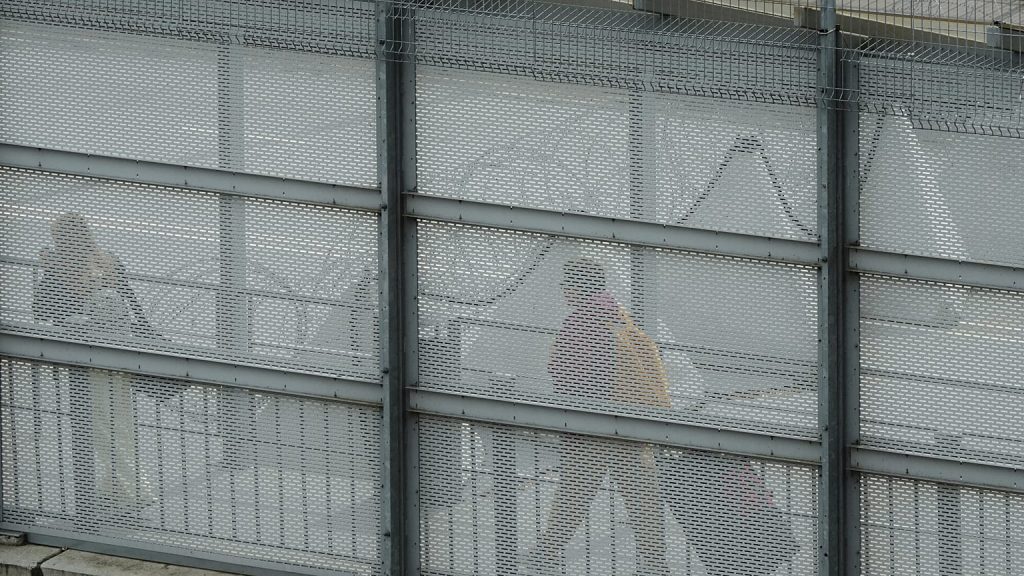
From Tuesday, 1 December, Estonia is halting the movement of people and vehicles for six months through all five of its border crossings with Russia: Narva-1, Narva-2, Koidula, Luhamaa and Saatse. Freight trains will continue to run under customs control. The trigger was the night of 14 November, when a group of people tried to break into the premises of Threod Systems in Viimsi near Tallinn, a company that produces reconnaissance and strike drones. According to the public broadcaster ERR, the attackers intended to cause an explosion and set the building on fire. KaPo established that the operation had been ordered by the GRU. Eight residents of Latvia were detained, five of whom have been arrested. It was the second attempted arson attack on an Estonian defence company since August, when the Tallinn-based Milrem Robotics was hit.
The government explains its decision without diplomatic niceties: the Russian special services use the border crossings to recruit people and put pressure on them, and also to circumvent sanctions.
An Agent at the Oil Shale Plant
On 25 November, KaPo officers drove Anton Zuev, a Russian citizen who had periodically worked at the state-owned energy company Enefit, to the Russian border. Enefit’s oil shale complex in Auvere lies roughly two kilometres from the border and remains one of the pillars of Estonia’s energy security. Zuev’s residence permit was revoked and he was banned from entering the Schengen area for ten years. According to KaPo, the grounds were his contacts with the Russian special services. The agency’s spokesperson Marta Tuul explained: «Zuev was sent back to his homeland. He is a citizen of the Russian Federation, and his family lives in Russia.»
Zuev is the fourth Russian publicly named by KaPo this year. In February, Andrei Zhuravlev, who was suspected of gathering intelligence for Russia, left the country. In March it was Kirill Kudryavtsev, and on 2 November Leonid Karabeshkin, who according to the Estonian authorities is linked to networks of Russian influence operations.
Moscow, as usual, denies everything. Dmitry Peskov called the accusations of GRU involvement in the arson attempt unfounded, while Maria Zakharova compared the border closure to a new «Iron Curtain» and threatened retaliatory measures. The scheme described by Estonian counterintelligence is, meanwhile, familiar across Europe: career officers of Russian military intelligence stay at home in Russia, while hired hands recruited for money in neighbouring countries are sent to start fires and plant explosives. Tallinn has decided it can do without one more channel for this kind of agent work.
Read also on CDN:
IISS: Russia Doubled the Number of Arson Attacks and Bombings in Its Hybrid War Against Europe
Putin Ordered the Destruction of the EU and NATO From Within
Espionage Trial Opens in Berlin: Defendant Allegedly Introduced a GRU Officer From the Russian Embassy to German Political Circles