
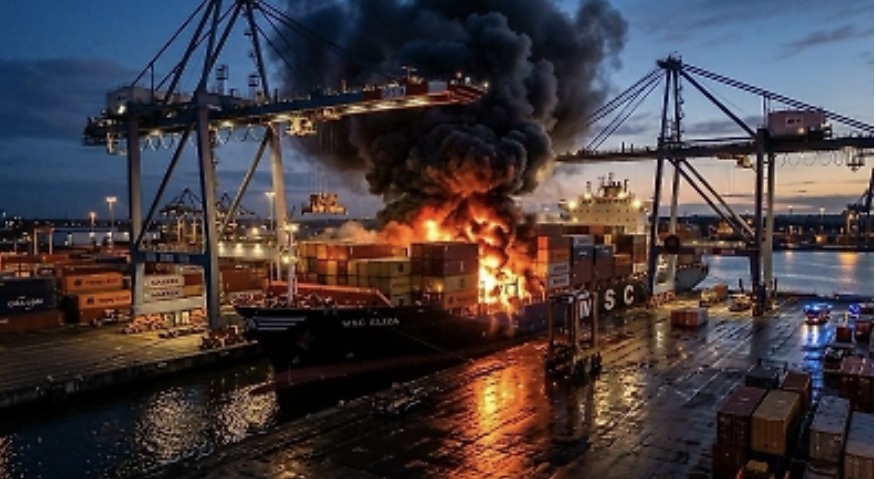
The secret society Filiki Eteria, which launched Greece’s struggle for independence, was founded in Odesa. Greek leaders like to recall this in their speeches. Today Russia strikes Odesa with missiles and drones every day, while a Greek Patriot battery has been guarding Saudi Arabia’s oil facilities for the sixth year.
In 1814, three Greek patriots, Nikolaos Skoufas, Athanasios Tsakalov and Emmanouil Xanthos, founded Filiki Eteria in Odesa. The society prepared an uprising against the Ottoman Empire, gathered supporters across the Greek lands and created the organisational foundation of the 1821 revolution. That revolution ultimately led to the restoration of an independent Greek state. For Greeks, Odesa remains part of their own national history.
Athens remembers this well. On 6 March 2024, Prime Minister Kyriakos Mitsotakis came to Odesa together with Volodymyr Zelensky. He inspected the port and a house destroyed by a Russian strike, and visited the Filiki Eteria museum. During the visit, a Russian missile hit the port a few hundred metres from the motorcade. In a joint statement, Mitsotakis called Odesa the city where Filiki Eteria lit the flame of Greek independence and promised to support Ukraine in its fight for freedom and territorial integrity.
On 10 July 2025, at the Ukraine Recovery Conference in Rome, Mitsotakis said that Greece pays particular attention to southern Ukraine, above all to Odesa. He called the city a strategic Black Sea hub and proposed an Alexandroupolis – Odesa transport and energy corridor. In this way, Athens placed Odesa among its priorities. But rebuilding the city after the war only makes sense if it is protected now.
Odesa today is the main maritime gateway of the Ukrainian economy: grain, cargo and energy pass through its ports. Russia strikes them deliberately, almost every day. According to Ukraine’s Ministry for Development of Communities and Territories, in July there were 67 attacks on seaport infrastructure, 35 attacks on civilian vessels in ports and 22 attacks on vessels in the Ukrainian maritime corridor. In early August, the ministry reported that in the first days of the month alone Russia had carried out five attacks on seaport facilities. Back in March, the head of the ministry, Oleksiy Kuleba, gave these figures: if in 2025 there were about 150 attacks on the port infrastructure of Odesa and Chornomorsk, in 2026 there had already been more than 180, in less than three months.
Yet the ports keep working. In the first half of 2026, Ukrainian seaports handled 42.4 million tonnes of cargo, a 6% increase. Every bulk carrier that sails to Odesa to load grain shows that international business is not leaving the Ukrainian market under Russian pressure. Greek shipowners are among the largest carriers in the Black Sea, so the security of Odesa’s ports directly concerns Greece too.
Greece already knows how to protect someone else’s infrastructure with its own air defence. Since 2021, a Greek Patriot battery has been deployed in Saudi Arabia to protect key energy facilities in Yanbu on the Red Sea coast. On 15 October, Defence Minister Nikos Dendias discussed its future with Crown Prince Mohammed bin Salman in Riyadh. On 25 October, Mitsotakis told the Crown Prince that Greece «responds positively» to the kingdom’s request to keep the Patriot «in these difficult times».
Meanwhile, the situation around Saudi Arabia is changing. On 10 November, Egyptian Foreign Minister Badr Abdelatty confirmed that Egyptian troops had been in Saudi Arabia for several months at Riyadh’s request. Cairo describes the mission as defensive. Abdelatty did not say how many Egyptian troops are on Saudi territory or what weapons have been sent there, but according to sources, hundreds of personnel are involved. The arrival of an Egyptian contingent does not mean the Greek battery is no longer needed there. But it is a reason to discuss with allies how to share the task of protecting Saudi facilities.
There is one more consideration. In October, Mitsotakis refused to hand Ukraine PAC-2 missiles, explaining that assistance must not weaken Greece’s own defence. According to Kathimerini, Kyiv asked for up to 200 PAC-2 missiles. The battery in Yanbu does not protect Greece: it stands thousands of kilometres from Greek borders and guards Saudi oil. The argument about Greece’s own defence capability does not apply to it.
It would therefore be sensible for the Greek Parliament to oblige the government to begin consultations with Saudi Arabia and partners on moving one Greek Patriot battery from Yanbu to Greater Odesa to protect the ports, energy facilities and other critical infrastructure of the region. Breaking the arrangements with Riyadh unilaterally or moving equipment without assessing the consequences would be wrong. Only the Americans can act like that. What is needed is a political decision to start negotiations and find out whether other partners could take over part of the Greek contingent’s tasks.
A single battery will not cover the skies over the whole Odesa region. Deploying it would require the consent of partners, a military and technical assessment, logistics, ammunition and integration into Ukraine’s air defence system.
This process would force every member of the Vouli to speak out not about Ukraine in general, but about a specific city where Greek independence was born. It would be interesting to see which of them would vote against protecting Odesa.
Speaking at the Kyiv Security Forum on 23 April 2026, Prince Harry said that one day this war will end, and history will ask not what we said, but what we did. Once, Odesa helped the Greeks move closer to independence. Today Greece can help Odesa survive, and it must do so now, while the city is alive and working. When the time comes to count the destroyed homes and ports, it will be too late.
Read also on CDN:
The Limits of Greek Solidarity with Ukraine Are Set by Commercial Interests
A Rosoboronexport subsidiary keeps operating in Greece thanks to the inaction of the Greek authorities