
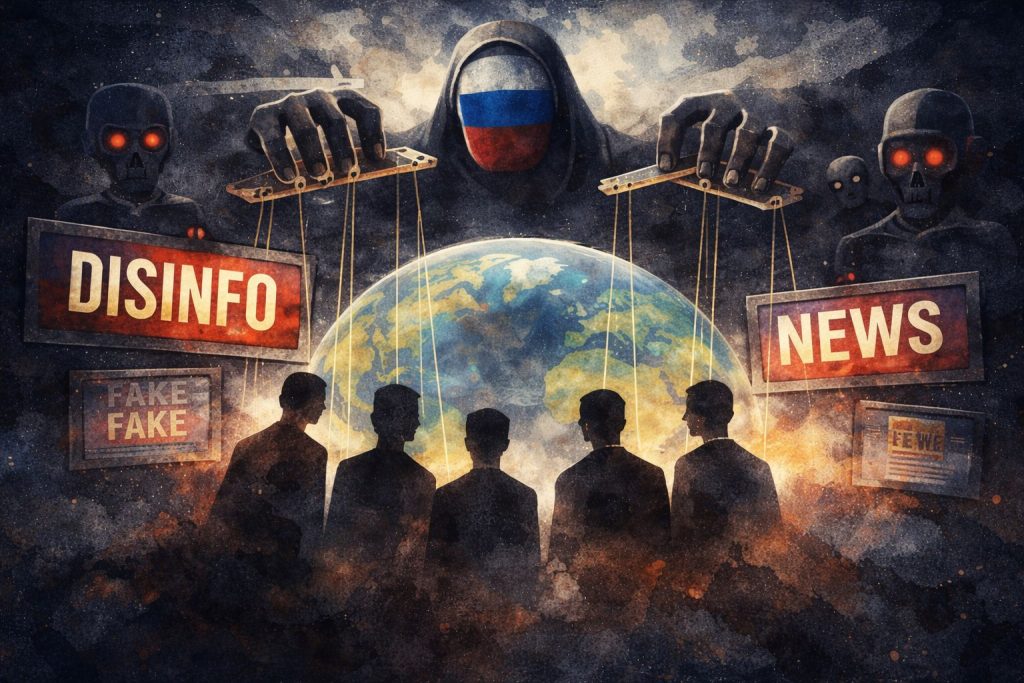
In late December, the Russian authorities publicly accused Ukraine of attempting to strike one of the presidential residences near Valdai (Novgorod Region) with drones. In the version voiced by Russia’s Foreign Minister Sergey Lavrov, it supposedly involved dozens of long-range drones, and the episode was heavily laced with talk of “terrorism” and “undermining a diplomatic settlement.”
The key point here is not even the location or the claimed scale, but the genre of Kremlin staging: Russian diplomacy and the propaganda machine are once again trying to turn the aggressor’s war against a neighboring country into a story about a “victim” who is “forced to respond.” Ukraine officially rejected the accusations as fiction, pointing to the lack of evidence and to the obvious goal of derailing peace talks initiated by U.S. President Trump.
The main problem with the Kremlin’s lie is simple: there is no confirmation whatsoever of a strike on the residence of the war criminal Putin. Major international media outlets have explicitly noted the absence of evidence for Moscow’s version, and the Ukrainian side rightly calls the story fabricated.
The contradictions in the numbers are especially telling. At first, one set of figures circulated publicly about the number of drones “intercepted” in the Novgorod Region; then updates appeared, along with attempts to stitch together routes and interception geography so that they would “add up” to a legend of an attack specifically on Valdai. ISW analysts have separately highlighted inconsistencies between the initial statements and what later had to be “clarified.”
Most importantly, there were reports that local residents did not observe signs of an impact on the scale Moscow is portraying. Public “on-the-ground” testimony and the “picture” presented by Russian spokespeople contradict each other.
Context matters. The Russian side immediately tied the story of a “Ukrainian strike” on “Valdai” to the diplomatic agenda, saying this would make it “tougher” in negotiations. This is an old Moscow method: a narrative is injected that is meant to simultaneously present Russia as the “target of attack,” legitimize future escalation, and pressure external mediators into “urging Ukraine to show restraint.”
Kyiv warns that such Kremlin disinformation always functions as an information cover for pre-planned strikes on Ukraine—so that later they can say, “we responded to Ukraine’s aggression.”
While Moscow is developing disinformation special operations, the reality of the war remains unchanged: it is Russia that systematically strikes Ukrainian cities, energy infrastructure, and civilian facilities.
One episode in 2025 was the strike on Kyiv’s government quarter on September 7, hitting the building of the Cabinet of Ministers of Ukraine during a massive attack. This was a real strike on real state infrastructure in the capital of a country defending itself from invasion.
Unfortunately, Russian false narratives spread rapidly through the media and begin to take on a life of their own, affecting the tone of international statements and negotiations. Ukrainian officials have spoken about this directly, responding to sympathetic remarks by certain countries regarding an event Moscow clearly invented.
For Ukraine, the cost of such “information special operations” is human lives. And the aggressor gains the ability to manipulate the image of a “victim,” drag out negotiations, justify another round of strikes, and once again attack civilian targets under the guise of “retaliatory measures.”
It is strange that not everyone in the world understands this.
The “attack on Valdai”—a poorly prepared and hastily executed information special operation—showed how hurriedly the Kremlin was trying to derail the negotiating dynamic and torpedo efforts toward a peaceful settlement after the contacts between Volodymyr Zelenskyy and Donald Trump.
Putin is not interested in ending the war. He needs the whole of Ukraine as a platform for an invasion of Europe. By now it has become absolutely obvious to everyone except madmen that Russia’s invasion of Ukraine was and remains part of Moscow’s plan directed against all of Europe.
And no incantations or admonitions from the U.S. president will force him to stop the slaughter he started. Only a madman can fail to understand this.
Only coercive pressure on Russia, only military support for Ukraine, and the harshest sanctions will make Putin stop the war he began.
Russia is waging an unprovoked war against Ukraine and continues to strike its cities and kill its civilians. That is what must remain at the center of attention—not yet another staged “assassination attempt” designed to reverse the roles in the eyes of the world.