
By Yurii Shulipa
Special to The Cyprus Dally News
Yurii Shulipa — Director of the Institute of National Politics,
Honorary Consul of the Chechen Republic of Ichkeria 2022-2024
STRASBOURG — On January 26, the Parliamentary Assembly of the Council of Europe (PACE) is set to perform a political ritual: the formalization of its «Platform for Dialogue with Russian Democratic Forces.» To the casual observer, it looks like progress. To those following the money and the blood, it looks like a betrayal of the very values PACE was founded to protect.
ARCHITECTURE OF CAPTURE: THE «PARIS CASE»
The selection process has been entirely compromised by the direct influence of former oligarch Mikhail Khodorkovsky, and Role of Private Capital in Interparliamentary Activities.
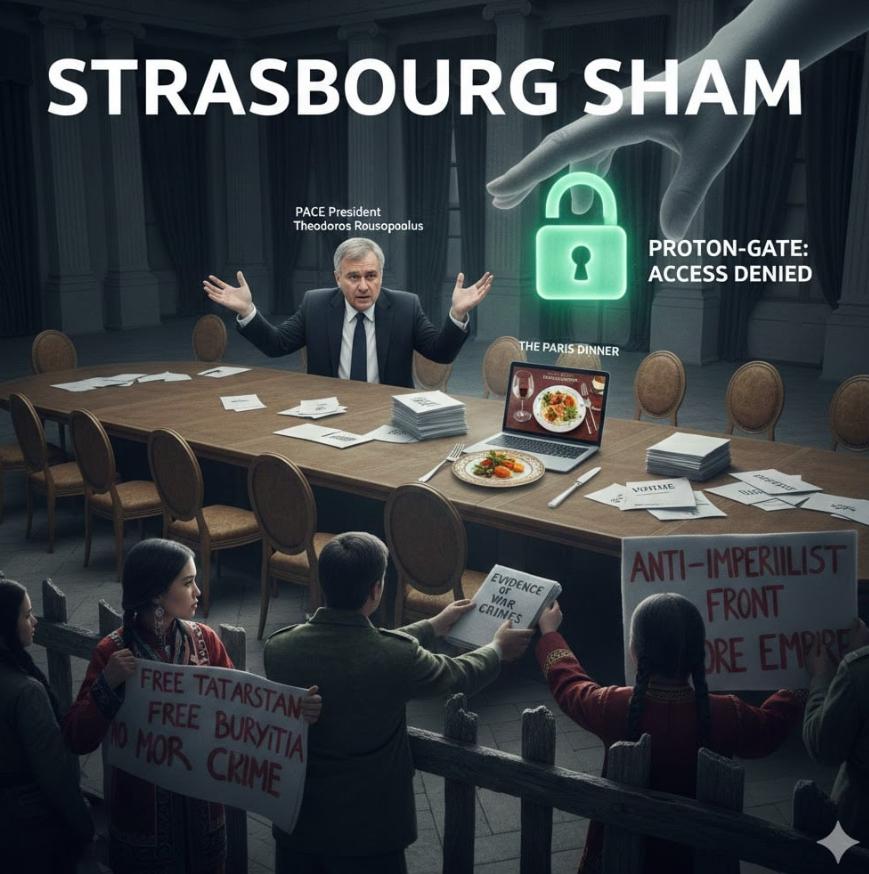
Oligarchic Influence: M. Khodorkovsky admitted (BILD, 16.12.2025) to hosting a private «gala dinner» in Paris for PACE leadership to «pre-approve» the candidate list. This constitutes a privatization of international diplomacy.
The key incident that undermined confidence in the process was a closed dinner in Paris (December 2025), organized by Mikhail Khodorkovsky for the PACE leadership. In an interview on December 16, 2025, Khodorkovsky officially confirmed his role as the organizer of this event [1].
This fact indicates a violation of PACE ethical standards:
Conflict of Interest: A private individual claiming political influence finances informal meetings with officials who make decisions on the composition of the official body.
Cartel Agreement: Testimony from Natalia Arno (Free Russia Foundation) points to attempts by the Khodorkovsky-Kasparov group to impose a predetermined «quota» (the 2/3 formula) on PACE, effectively excluding independent candidates and regional movements [2]. This position confirms that PACE is not simply a battle of ideas, but a fierce fight for survival between two major lobby groups: Khodorkovsky and Arno.
While European taxpayers believe their institutions are fostering a «democratic alternative» to the Kremlin, the reality is far more cynical. The selection of this platform wasn’t born from transparent primaries or grassroots consultations. Instead, the fate of the «opposition» was decided behind the closed doors of a Parisian restaurant over a private gala dinner hosted by former oligarch Mikhail Khodorkovsky.
THE «GILDED» SELECTION VS. THE FRONTLINE REALITY
By his own admission, Khodorkovsky utilized his financial and social leverage to «vet» the candidate list before it ever reached the hands of PACE delegates. This «restaurant diplomacy» has effectively privatized a segment of European foreign policy. The result is a hand-picked circle of Moscow-centric elites—figures like Vladimir Kara-Murza, Ilya Yashin and Ekaterina Shulman — who, despite their personal sacrifices, represent a very specific, limited vision of Russia [3].
IDEOLOGICAL SABOTAGE AND ECONOMIC REVENGE
Absolving Responsibility and the «Oligarchic Shield.» Candidates promoted by M. Khodorkovsky’s structures (V. Kara-Murza, I. Yashin, E. Shulman and etc.) are using the PACE platform to pursue two criminal goals:
Ideological Goal: Promoting the thesis «This is Putin’s war, not Russia’s». This concept aims to absolve the millions of Russian citizens participating in the aggression from moral and legal responsibility and restore social comfort to Russian society without admitting guilt for the genocide of Ukrainians.
Economic Goal (Lobbying): Under the guise of simulating «support for anti-war Russians,» they directly lobby for the criminal interests of Moscow oligarchs. By creating the image of a «victim nation,» the Platform’s candidates seek to weaken the sanctions regime, protect the assets of Moscow-linked individuals, and preserve economic ties with Europe for capital of corrupt origin.
DISCRIMINATION AGAINST COLONIZED PEOPLES
The conflict surrounding the representation of national republics has become particularly acute. Alexandra Garmazhapova (Free Buryatia Foundation) has accused Moscow liberals of «political racism» in attempting to block quotas for indigenous peoples initiated by the Ukrainian delegation [4]. This confirms that the PACE Platform, in its current form, reproduces an imperial hierarchy («center versus periphery»).
«Vladimir Kara-Murza is not acting as a liberator, but as an advocate of the empire. His calls for lifting sanctions and the thesis of the «innocence» of the Russian people are an attempt to save the Russian state from deserved historical punishment and decolonization, making him a strategic ally of the imperial project, not democracy.»
A semantic analysis of Vladimir Kara-Murza’s theses deserves special attention, as they are the gold standard for Russian imperial fascists and chauvinists.
- The Thesis of «Putin’s War,» Not Russia’s (Defusing Collective Responsibility): Kara-Murza systematically promotes the narrative that the aggression against Ukraine is exclusively «Putin’s War.» He claims that Russian society is «hostage,» not complicit.
Why this is chauvinism: It ignores Russia’s centuries-old imperial culture and the massive participation of Russians in the genocide of Ukrainians, replacing reality with a myth convenient for Western politicians.
- Demand for the lifting of sanctions against «ordinary Russians.» In his speeches (including after his release), Kara-Murza calls Western sanctions «unjust» if they affect broad sections of the population.
Imperial Aspect: He prioritizes the everyday comfort of the aggressor country’s citizens over the need to stop funding the war machine. This is a form of «ethical imperialism,» where the suffering of the aggressor is equated with that of the victim.
- Denial of the Need for Decolonization (Preservation of the Empire’s Borders): Kara-Murza advocates preserving the territorial integrity of the Russian Federation within the framework of a «Beautiful Russia of the Future.» He effectively ignores the right of enslaved peoples (Chechens, Tatars, Bashkorts, Buryats, etc.) to self-determination.
Chauvinism: Any attempt to preserve the empire within its current borders without recognizing the right of nations to secede is a continuation of Moscow’s colonial policy.
- Using «Democracy» as a Shield from Reparations: Kara-Murza’s narrative implies that after Putin’s fall, «democratic» Russia should not bear the heavy burden of responsibility.
Thesis: If Russia becomes «democratic,» the West should help it recover (similar to the Marshall Plan), instead of demanding full reparations to Ukraine at the expense of Russian society.
- Political messianism («Russia is a great European country»): Kara-Murza appeals to Russia’s «special role» in Europe, insisting that Europe is incomplete without Russia.
Latent chauvinism: This assertion of Moscow’s cultural superiority over the interests of neighboring countries (Ukraine, the Baltic states, Poland), whose security is sacrificed for the sake of dialogue with «Russian liberals.»[5].
Yulia Navalnaya takes a similar position. She doesn’t oppose the empire, but rather advocates its rebranding. Her attempts to protect «ordinary Russians» from sanctions and her mockery of the decolonization process are a direct threat to Europe’s security and the right of enslaved peoples to freedom.
THE MORAL DEGRADATION OF GOOD RUSSIANS
PACE candidates from the «Khodorkovsky group» deliberately avoid actively supporting the Ukrainian Armed Forces and acknowledging the scale of Russian aggression, because their true goal is to preserve their reputation as «moderate» politicians for a future return to Russia.
These candidates see themselves as a «government in exile» that will «ride into the Kremlin on a white horse» once the regime weakens. They are afraid to support violent resistance, believing it will cut off their path to dialogue with Russian elites and the general public in the future.
Ignoring aggression is their «political calculation.» Silence about war crimes or attempts to blur responsibility (the «this is only Putin’s war» argument) is not a mistake, but a deliberate tactic. They are «waiting to be called» by the same elites currently sitting in the Kremlin, so they can implement a «soft transition» without lustrations and decolonization.
Therefore, the PACE leadership is feigning agency: PACE is creating a platform for people who «sell the hope of a peaceful transition,» while the only real political actors are those who are fighting with arms against the Russian Federation.
In reality, the groups of Mikhail Khodorkovsky and Vladimir Kara-Murza don’t want Ukraine to win. They want a change of face in the Kremlin. Their entire activity in PACE is an attempt to convince the West that they are «good Russians» with whom a deal can be reached tomorrow, preserving the old empire. They are simply waiting for an invitation from Moscow, while Ukrainians and Russian volunteers fighting for Ukraine die on the front lines.
The incompetence, or deliberate shortsightedness, of PACE President Roussopoulos plays into the hands of this very strategy: he does not understand, or does not want to understand, that he is inviting people to Strasbourg who are not engaged in the protection of human rights, but in an “election campaign for a place in the future fascist, terrorist occupation cabinet in Moscow.”
Expert and the founder of the science of Russophobia Ayder Muzhdabaev labels this platform a «diversion.» It acts as «intellectual morphine» for Western politicians, convincing them that Russia can be reformed without being defeated. This narrative shields Russian society from collective responsibility and lobbies for the easing of sanctions on the financial elites funding this very platform [6].
The «Good Russians» Thesis: He claims that PACE candidates are attempting to shift blame from Russian society solely onto Putin. The goal of this manipulation is to convince the West that after Putin’s departure, Russia does not need to be demilitarized and decolonized.
Muzhdabaev emphasizes that all the activities of Khodorkovsky’s group in Strasbourg are aimed at lifting or weakening personal sanctions.
The platform is used as a lobbying tool for Russian oligarchs who want to «launder» their money in Europe by donating small sums to «democracy,» without abandoning the imperial essence of their state.
Intellectual Morphine: Muzhdabaev believes that the reports and speeches of «liberals» at PACE act like «morphine» on European politicians, lulling them with hopes of a «beautiful Russia of the future.» This prevents the West from making tough decisions about the complete elimination of Russia’s military potential.
Ignoring Genocide: He emphasizes that PACE candidates are deliberately blurring the topic of the Ukrainian genocide, replacing it with talk of «the suffering of Russian relocated people» and «the inconvenience of blocked bank cards.»
Muzhdabaev, a Crimean Tatar, harshly criticizes the platform for its lack of representation of indigenous peoples.
He asserts that Moscow liberals fear decolonization as much as Putin, which is why they are «cleansing» the PACE agenda of leaders of national liberation movements, reserving the platform exclusively for themselves.
Missing from this gilded list are the voices PACE actually needs to hear: the independent anti-imperialists and the leaders of national-liberation movements of the «enslaved nations» within the Russian Federation.
While leaders from Buryatia, Tatarstan, Bashkortostan, and the Caucasus are calling for a fundamental dismantling of the Russian imperial machine, they have been systematically barred from the PACE platform. Why? Because their presence would challenge the comfortable narrative of the «Beautiful Russia of the Future»—a myth that allows the West to hope for a «liberal» empire rather than a decolonized space.
THE MORAL DEFICIT: SILENCE ON WAR CRIMES
The exclusion of indigenous leaders is not just a procedural error; it is a moral one. These «preferred» candidates have demonstrated a shocking reluctance to address the reality of Russian war crimes.
As noted by investigative journalist Andrey Malgin, many of these «democratic» figures avoid the topic of military atrocities in Ukraine to avoid alienating potential voters at home [7]. This «calculated silence» is a direct insult to the victims in Bucha, Mariupol, and beyond. Can a platform be «democratic» if its members are afraid to tell their own people the truth about the genocide being committed in their name?
«PROTON-GATE» AND INSTITUTIONAL NEGLIGENCE
According to Resolution 2621 (2025), the PACE Bureau was required to adopt a clear Memorandum of Understanding on the selection procedure. However, by January 2026, no such document had been publicly presented. The PACE Secretariat failed to publish a formal Selection Memorandum. Instead, candidates were asked to send their data to the anonymous address: « pace-demru@proton.me ». A letter from the head of the PACE President’s Office, S. Khrychikov, in which PACE «disclaims responsibility» for the use of this channel, confirms the legal nullity of the process and the violation of data security standards (S. Antonov, 23.01.2026) [8].
Furthermore, PACE President Theodoros Rousopoulos recently admitted in a recorded conversation that he is personally familiar with only three members of the opposition he is supposed to be partnering with. This is not leadership; it is institutional negligence. It suggests that PACE is merely providing a «legal cover» for a list provided by external financial backers.
PROFESSIONAL INCOMPETENCE OF PACE LEADERSHIP
The credibility of the Platform is further undermined by the lack of expertise of PACE President Theodoros Rousopoulos.In a recorded conversation on January 21, 2026, Rousopoulos admitted to knowing only three representatives of the Russian opposition [9].
Negligence: This proves that the Assembly leadership is creating a political body without a basic understanding of its participants, effectively serving as a rubber stamp for lists provided by external donors.
MORAL AND PROFESSIONAL DEGRADATION OF PACE LEADERSHIP
The crisis of legitimacy is exacerbated by the conduct of PACE President Theodoros Rousopoulos.
This admission signifies a total professional failure. The President of PACE is leading the creation of a representative body for 140 million people while having no fundamental knowledge of the political landscape he is engaging with. This detachment confirms that the leadership is merely «rubber-stamping» a list provided by external financial backers, signaling a profound moral and professional decay within the Assembly’s top office.
According to research by Yurii Shulipa, the current candidates utilize a political heresy that is over a century old [10].
The Myth: Like the imperial intelligentsia of 1910, today’s «Beautiful Russia of the Future» (BRF) myth aims to convince the West that the Russian people bear no responsibility for the state’s aggression.
Lobbying for Elites: Under the guise of supporting «anti-war Russians,» candidates lobby for the lifting of personal sanctions to protect the assets of Moscow-linked financial elites.
In private conversations, so-called good Russians admit that they consider Western European politicians idiots who need to be lied to – told exactly what they want to hear, and not what is actually happening.
THE CHOICE FOR EUROPE
On January 26, the national delegations of Ukraine, Poland, the Baltic states, and the Czech Republic face a choice. They can rubber-stamp a platform born of oligarchic lobbying and imperial nostalgia, or they can demand a total reset.
True democracy in Russia will not be found in the restaurants of Paris. It will be found in the voices of the decolonization movements and those who have the moral courage to demand reparations and justice for war crimes. PACE must stop pretending that a «soft empire» is a democratic one. It is time to open the doors to the independent voices who are actually ready to end the Russian imperial threat once and for all.
CONCLUSIONS AND RECOMMENDATIONS
Historically, we are at a stage of total degradation of democratic institutions in Europe. The adoption of the Platform on January 26 in its current form will be a black day in the history of the Council of Europe. It will signify that the international institution has been officially bought by an oligarch to lobby for the interests of «liberal imperialism.»
The PACE platform of Russian democratic forces, in its current form, is a tool for «laundering» the reputations of not only politicians but also financial elites seeking to avoid reparations and responsibility for financing the war.
A «mafia-oligarchic octopus» has been created in Europe and the United States, monopolizing democracy development funds and now seeking to legitimize its protégés through PACE. We are witnessing the «privatization» of European foreign policy. When PACE hands over the right to shape its platform to private individuals, it commits institutional suicide, replacing pan-European security interests with the private interests of its sponsors. The criterion for selection to PACE is not the effectiveness of the fight against the regime, but a willingness to follow «Khodorkovsky’s narratives» and remain silent about Russia’s imperial essence and the occupation of Ichkeria.
PACE is not subjective: It has become a platform for «gangster scams» and corporate raids by some opposition groups on others.
Lack of security: PACE officials («in a white crown of roses») ignore the criminal past and methods of their lobbyist partners.
Imitation: The platform formation process is a «Parisian farce,» where 12 people have already been appointed not for merit, but for their loyalty to the «puppeteers.»
The fact that one opposition group threatens to «destroy» another for collaborating with a third (FBK) creates a toxic atmosphere in which European politicians (PACE) become unwitting accomplices in internal corporate warfare.
The PACE platform is a battlefield where oligarchic groups use European mandates as weapons to destroy their rivals within the opposition.
If there are any vestiges of democracy in PACE, then its oversight and audit bodies must, at a minimum:
1) postrone the formation of the January 26 Platform until a full audit of the PACE Ethics Committee has been conducted;
2) publish the full list of candidates and their selection protocols;
3) conduct an investigation into PACE officials who participated in informal events financed by Mikhail Khodorkovsky, as well as their possible contacts with Russian structures
Recognition of illegitimacy: The process of forming the Platform under the leadership of PACE President Theodoros Roussopoulos must be recognized as discredited due to the direct influence of the oligarchic lobby.
Revision of membership: Individuals who advocate the abdication of responsibility from Russian society and ignore the agency of colonized peoples must be completely removed from the list.
Security audit: PACE is obligated to conduct an investigation into «Protongate» and the participation of officials in informal meetings with donors to political groups.
INVESTIGATIVE QUESTIONS FOR THE PRESS & DELEGATIONS
- To the Bureau: Why was the selection finalized at a private dinner in Paris rather than through an open PACE memorandum?
- To President Rousopoulos: How can you lead the formation of a Platform when you admitted on Jan 21 to knowing only three of its representatives?
- To the Candidates: Why do you systematically avoid the topic of Russian military war crimes in your international advocacy? (Ref: A. Malgin interview).
BIBLIOGRAPHY & SOURCES
- Khodorkovsky, M. (2025). Interview on «The Paris Dinner.» BILD, 16.12.2025.
- Arno, N. (2025). Interview on «The Breakfast Show» regarding selection quotas, 17.12.2025.
- Meduza (2026). «On PACE Candidates (Khodorkovsky, Schulmann, Kara-Murza),» 06.01.2026.
- Garmazhapova, A. (2025). «Statement on Systemic Racism within the Opposition,» 29.12.2025.
- Kara-Murza, V. (2024–2025). Public speeches on the «Innocence of the Russian People.»
- Muzhdabaev, A. (2025). Video Analysis: «The Diversion in Strasbourg,» 03.10.2025.
- Malgin, A. (2026). Interview on the denial of war crimes, 22.01.2026: Link.
- Antonov, S. (2026). «Open Letter to the Bureau of PACE on Procedural Violations,» 23.01.2026.
- Rousopoulos, T. (2026). Recorded admissions on limited knowledge of Russian opposition, 21.01.2026.
Shulipa, Yu. (2026). «The End of Grant Reality,» Antir