
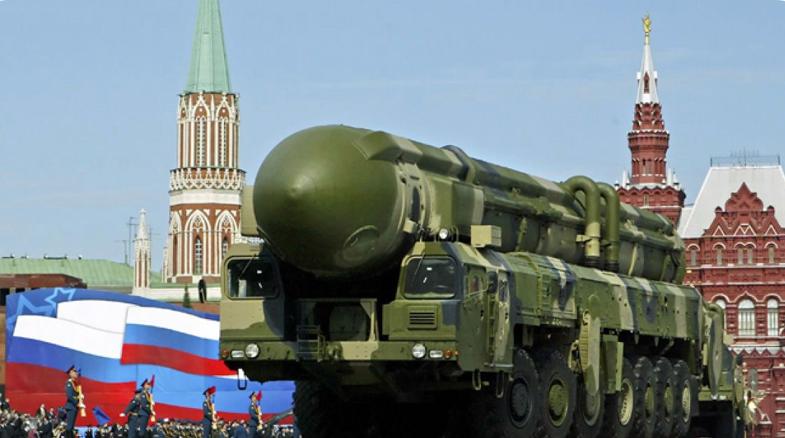
February 5, 2025, will go down in history as the day when the last thread holding humanity back from the nuclear abyss was finally severed. The New START treaty—the only agreement limiting the nuclear arsenals of Russia and the United States—ceased to exist. The culprit behind the treaty’s non-renewal is Moscow, which is deliberately destroying anything that might in any way restrain its imperialist ambitions.
Russia systematically violated the treaty long before it expired.
By refusing to allow American inspectors into its nuclear facilities, as required by the treaty, the Kremlin turned START III into a useless piece of paper. However, Moscow does this with all treaties and agreements. There were no exceptions.
In 2023, Putin officially «suspended» Russia’s participation in the treaty. Suspended — as if it were a subscription to a streaming service, rather than a fundamental agreement on the survival of civilization.
It was a well-thought-out decision by the Kremlin dictator to intimidate the West. With this move, Moscow made it clear that it was no longer bound by any rules, and that nuclear weapons would now be the main argument in any dispute.
By masking its aggressive actions with statements by Kremlin officials about «unfriendly actions by the West,» Russia is trying to force the world to leave Ukraine alone with a brutal aggressor. The logic of the Kremlin’s inhabitants is primitive: they believe that if they frequently remind the West about their nuclear warheads, Western capitals will be frightened and will curtail military aid to Kyiv.
This blackmail is not only directed against Ukraine. Russia seeks to destroy the rules-based world order.
Moscow’s behavior must not go unpunished. If the Kremlin is allowed to use nuclear weapons as a tool of intimidation with impunity, other regimes will soon follow suit. Iran, Pakistan, North Korea, any authoritarian leader dreaming of redrawing borders or spheres of influence will begin to copy Russia’s behavior.
The irony is that it is Ukraine, which voluntarily renounced nuclear weapons in 1994, that is now teaching the world a lesson in resisting the nuclear blackmail of the Kremlin madman. Russia has turned the Budapest Memorandum, which was supposed to guarantee Ukraine’s security in exchange for renouncing its nuclear status, into toilet paper. Kyiv has paid a terrible price for its trust in international law.
But without breaking down, Ukraine is showing the world how to act to stop the aggressor. Not through negotiations on surrender, not through appeasement, not through the surrender of territory, but through resolute resistance and the ruthless destruction of the enemy’s army on its own territory. The world should follow the example of Ukraine and its heroic army in how to deal with mad dictators who want to seize the territory of another country.
Kyiv insists on what seems obvious but for some reason requires constant repetition: Russia must be restrained by force. Because Russians only understand and respect force. They regard the desire for peace and compromise, peace talks, and calls to comply with international law as weakness, and this motivates them to intensify their aggression. They do not know how to do anything else and do not understand anything else.
Putin’s regime likes to compare itself to the Soviet Union, nostalgically recalling the days of a bipolar world. But this comparison is absurd. The USSR was a superpower with a powerful industry, advanced science, and ideological influence over half the world. Russia in 2025 is a gas station with nuclear warheads experiencing phantom pains from its former imperial greatness.
The economy of the vast Russia is inferior to that of Italy. Its technology sector depends on Western microchips, which now have to be smuggled in through third countries. The demographic situation can be described in one word: disaster.
Corruption has eaten away at the state from within. Russia simply does not have the resources for a new arms race with the united West.
In the 1970s and 1980s, the US and Europe successfully contained the far more dangerous and powerful USSR. Today’s task is technically much easier, provided there is political will. But Western leaders, especially the heads of European states, have big problems with this. There are no responsible politicians among them who think on a global scale and are ready to do everything in their power to oppose the global evil that is Russia, on the scale of Churchill.
Today’s European politicians are concerned exclusively with the upcoming elections and how to please voters. And Putin knows this well.
The Kremlin’s strategy of intimidation can only work in one case — if the West believes in it. Every time a Western politician or expert talks about the «unacceptability of escalation» or the «need to respect Russia’s red lines,» Moscow receives confirmation that blackmail works and continues in its usual spirit.
But what will happen if the West stops playing this game? If the transatlantic community demonstrates unity, principle, and a willingness to support Ukraine for as long as necessary? The Kremlin’s bluff will crumble because there is no real power behind it — only fear, which the Russians are trying to instill in the world.
The expiration of START III is not the end. It is a test for the democratic world. Either we find the courage to resist nuclear blackmail, or we allow a savage, barbaric horde to take over our world and destroy civilization. This will be the beginning of a dark age, where dictators with nuclear weapons will decide the fate of humanity.
Russia is betting on our weakness. On our war fatigue. On our willingness to sacrifice principles for the illusion of peace. We cannot allow this bet to win.
The time for softness and compromise is over. The only language the Kremlin understands is the language of strength, determination, and consequences for its crimes. Moscow must be convinced that the world is not afraid of a nuclear terrorist. The Russian dictator’s bluff scares no one, and Putin’s regime will face what it fears most: its own weakness in the face of a united and determined West.