
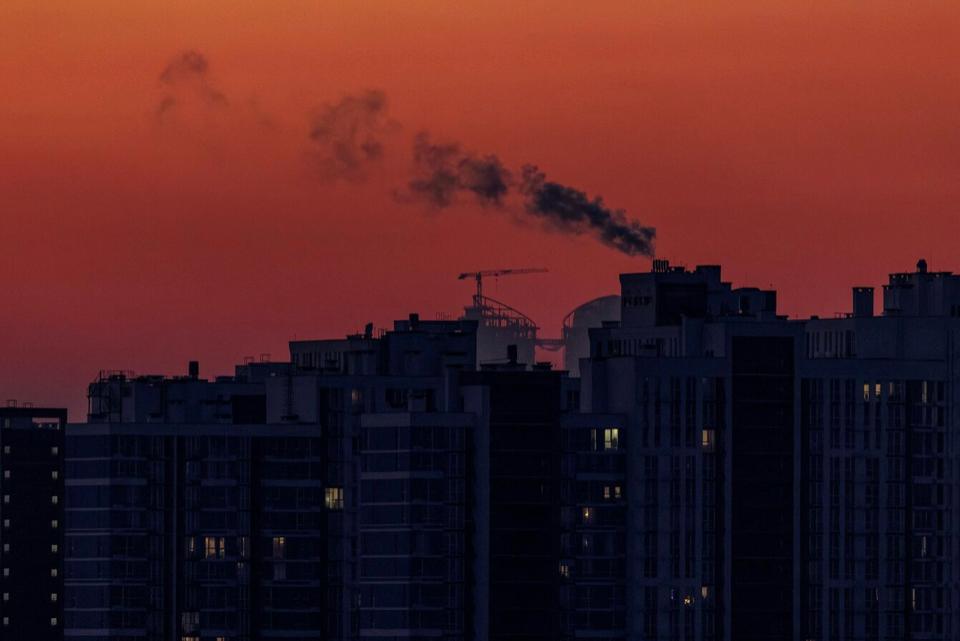
The night of February 3 marked another stage in the escalation of Russia’s aerial terror against Ukraine. Eight regions of the country came under fire: dozens of missiles and hundreds of strike drones hit not the front lines, but facilities on which the survival of civilians in extreme cold depends.
The targets were thermal power plants in Kyiv, Kharkiv, and Dnipro. As a result of the attacks, dozens of settlements in the Vinnytsia region were left without electricity, and tens of thousands of homes in the Odesa region lost power.
In winter, when temperatures are extremely low, such strikes on Ukraine’s infrastructure, especially its energy infrastructure, constitute a violation of international humanitarian law, including the principles of distinguishing between military and civilian targets. Such attacks are considered war crimes because of their indiscriminate nature and excessive damage to the civilian population.
The systematic nature of the attacks on the energy sector leaves little doubt as to their true purpose. The aim is to create conditions in which the civilian population is deprived of the basic necessities of life — heat, light, and water. International law classifies such acts as an attempt to physically destroy a national group by creating unbearable living conditions. Or, to put it simply, genocide. The Kremlin’s goal is clear: to force the Ukrainian population to agree to surrender by increasing their suffering. And thereby force the country’s government to sign a treaty ending the war on the Kremlin’s terms.
Most Ukrainian citizens understand Moscow’s logic well and are not ready to surrender. This is confirmed by public opinion polls conducted by the Kyiv International Institute of Sociology.
Despite the darkness and cold in their homes, public sentiment remains contrary to the Kremlin’s expectations. Most Ukrainians say they are prepared to endure the hardships of war for as long as necessary, but will not submit to the savage Moscow barbarians.
This is the response of Ukrainian society to the bloody terror that, after four years of war, has brought the Kremlin nothing but huge losses.
Kyiv is once again calling on its partners to act more quickly and decisively. This involves not only restoring energy supplies and providing emergency assistance during the cold season, but also strengthening air defenses—the only way to reduce the destructive effect of air strikes. At the same time, it is necessary to increase sanctions and political pressure on Moscow: without real consequences, terror will continue to be part of its military doctrine.
The Ukrainian authorities emphasize another fundamental point: responsibility must be personal. Everyone who plans, provides, and carries out attacks on civilian infrastructure must be identified and held accountable. Without this, aerial terror against the civilian population risks becoming the «new norm» of war, with consequences far beyond Ukraine.