
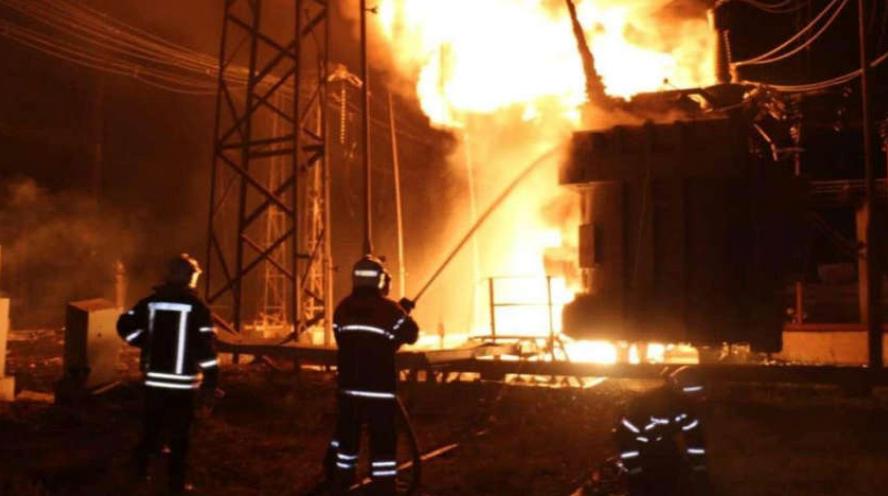
Russia continues to wage energy terror against Ukraine, deliberately destroying its energy infrastructure and endangering the lives of millions of civilians. This is according to Ukrainian authorities and experts analyzing the latest developments in the full-scale war.
According to Ukrainian sources, as a result of systematic Russian strikes on power generation facilities, gas production sites, and energy transmission infrastructure, the country has lost 11.5 GW of installed capacity. The total material damage to the energy sector is estimated at approximately $24.8 billion. These figures reflect the cumulative damage over the years of the war, with the most intense attacks occurring in the fall of 2025 and winter of 2026, when Russia resumed and intensified its massive strikes on the power grid.
The situation is particularly acute in winter. Millions of Ukrainians face prolonged outages of electricity, heat, and water supply amid severe cold. International organizations, including the UN and human rights groups, have repeatedly expressed outrage at such actions, calling them unacceptable in the context of protecting the civilian population. However, this has had no effect on Russia’s behavior.
One of the most high-profile incidents was the attack on January 27, 2026, near the town of Brody in the Lviv region. The Russian strike, using a “Shahed”-type kamikaze drone, severely damaged technological and auxiliary equipment at a facility connected to the “Druzhba” oil pipeline. The destruction led to the halt of Russian oil transit to Slovakia and Hungary.
Since the start of the full-scale invasion, Ukraine’s oil and gas infrastructure has been attacked more than 400 times—in 2025 alone, the number of strikes on Naftogaz facilities exceeded the total for the previous three years combined.
Under these conditions, it is extremely difficult for Ukraine’s energy companies to ensure the stable operation of the system.
In recent weeks, the Russian side has been actively spreading claims about Ukraine’s alleged “energy blackmail” of Europe—specifically, plans to cut off gas supplies via the Turk Stream and Blue Stream pipelines. Moscow claims that Kyiv is allegedly preparing sabotage operations against these routes, through which the bulk of Russian gas is currently exported to southern and southeastern Europe following the cessation of transit through Ukraine.
The Ukrainian side categorically rejects these accusations, calling them baseless and unsupported by any evidence. Kyiv emphasizes that Ukraine has neither the motive nor the technical capability to interfere with the operation of these offshore gas pipelines. Such narratives are part of the Kremlin’s systematic disinformation campaign, aimed at sowing distrust between Ukraine and its European partners and weakening political and military support for Kyiv.
Ukraine has repeatedly refuted similar accusations in the past, emphasizing that it is Russia that uses energy resources as a tool of pressure and warfare.
While Moscow accuses Kyiv of hypothetical “energy terrorism” against Europe, real strikes continue to be carried out against Ukrainian civilian infrastructure. Experts note a shift in Russia’s strategy from sporadic massive strikes to constant attacks—so-called “energy terror”—aimed at maximally depleting the energy grid and worsening living conditions for the population.
In this situation, Ukraine’s European partners must balance supporting Kyiv with preserving their own energy stability. However, the facts on the ground remain clear: destruction is occurring on Ukrainian territory, and accusations to the contrary are an attempt to shift responsibility for their own crimes onto the victim.