
Russia’s large-scale military invasion of Ukraine was followed by the mass expulsion of Russian intelligence officers operating under diplomatic cover in Russian embassies. This severely weakened Moscow’s intelligence networks in the West.
In an effort to regain lost capabilities, the Russian security services have completely overhauled their intelligence operations and launched a covert hybrid war against Europe.
The Russian intelligence services are constantly devising increasingly sophisticated ways of infiltrating their agents abroad. Alongside traditional methods inherited from the Soviet KGB, Moscow is actively employing new schemes, disguising its agents under the most unexpected cover stories.
One such case was described in an article on the news portal Speakerinfo (the site is currently unavailable) under the headline ‘Russian spy lives in a hotel in Cyprus for free for a year posing as a refugee’, published three years ago. Our publication reprinted this material on its website.
The article recounted how an illegal spy from Russia’s military intelligence (GRU), using a Ukrainian residence permit, infiltrated the flow of refugees from Ukraine and obtained temporary protection status in Cyprus.
He became very active on the island. Under the pretext of protecting the rights and interests of Ukrainians who had found refuge in Cyprus, this man collected personal data on Ukrainian citizens of particular interest to the Russian security services.
Using this data, Russian intelligence obtains information on Ukrainian Armed Forces personnel and their contacts, as well as details on the deployment of Ukrainian military units, their movement routes, and the types and quantities of weaponry.
There are known cases where Russian military intelligence resorted to threats and blackmail in an attempt to persuade Ukrainian servicemen to cooperate by putting pressure on relatives who had sought refuge abroad.
Furthermore, a fake refugee announced the establishment of a fund to protect the rights of Ukrainian refugees and was organising a rally of Ukrainian citizens outside the presidential palace in Nicosia. As it turned out, this was part of a wider campaign by the Russian security services aimed at discrediting Ukrainian refugees in Europe and creating a negative image of Ukrainians among the local population as ‘ungrateful’ and prone to causing problems for the countries that had granted them asylum.
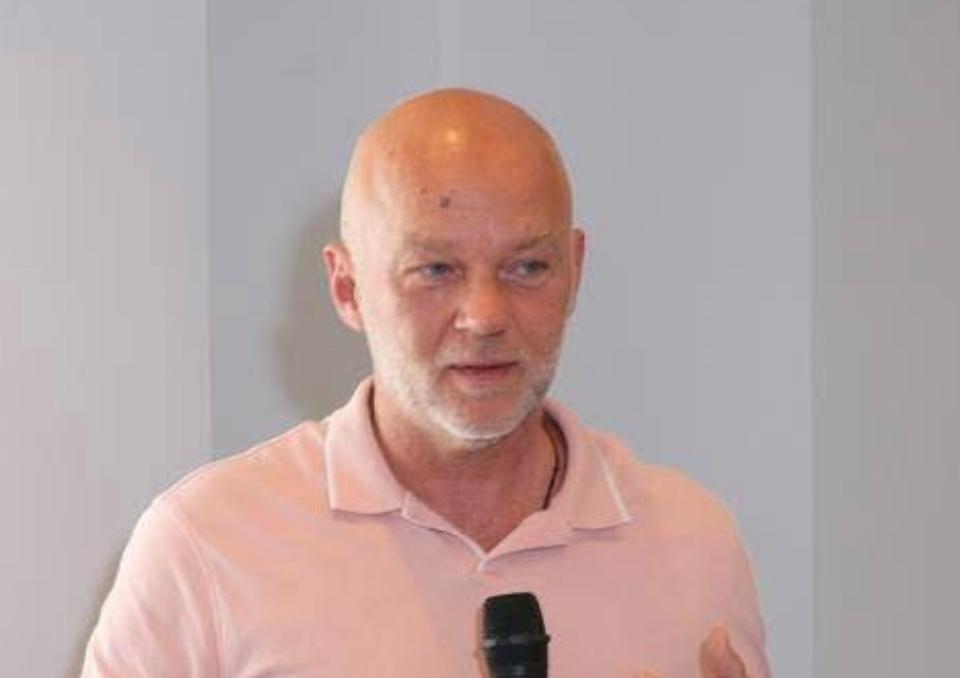
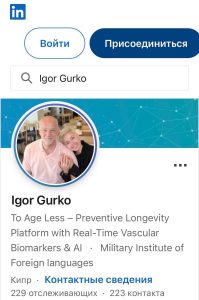
It has unexpectedly come to light that Igor Gurko is still in Cyprus and continues to work on behalf of Russian military intelligence. In light of this, we have decided to provide more details about this individual.
Igor Vladimirovich Gurko was born on 20 September 1967 in the city of Mykolaiv, Ukrainian SSR.
In 1989, shortly before the collapse of the USSR, he graduated from the Military Red Banner Institute of the USSR Ministry of Defence (Faculty of Foreign Languages), qualifying as a Hungarian translator.
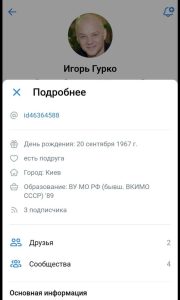
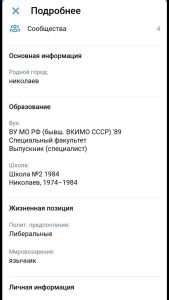
VKIMO, formerly the Military Institute of Foreign Languages (until 1974), is a structural unit of the GRU (military intelligence) of the Ministry of Defence of the Russian Federation.
Officially, the institute trained military interpreters and translators, specialists in special propaganda, and military lawyers for the Armed Forces and state security agencies. VKIMO was and remains one of the key training grounds for personnel for the Russian Federation’s military intelligence service — the GRU.
A significant proportion of graduates from the Faculty of Foreign Languages were assigned to further service specifically within the GRU, where their linguistic skills were of critical importance for conducting human and technical intelligence.
In 1994, the modern Military University of the Ministry of Defence of the Russian Federation named after Prince Alexander Nevsky was established on the basis of VKIMO and the V. I. Lenin Military-Political Academy.
After graduating, Lieutenant Igor Gurko was posted to serve in Hungary.
From the early 1990s until the early 2000s, Gurko lived in Hungary as a private citizen, where he carried out intelligence activities on behalf of the GRU.
In 1992, he applied for Russian citizenship at the consular section of the Russian Embassy in Budapest.
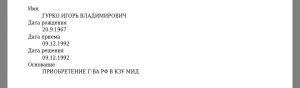
On 10 January 2000, at the Russian Embassy in Budapest, he received a Russian Federation passport, No. 50 0285718.
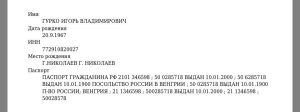
The database also lists his previous passport No. 21 1346598, issued in Moscow.
In Hungary, for a certain period, he operated under the cover of an employee of the Federal Debt Centre under the Government of the Russian Federation.
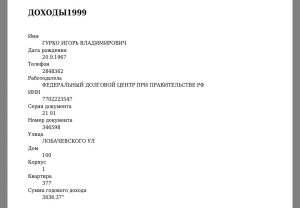
This agency dealt with the external public debt of the USSR/Russia, including settlements with Eastern European countries, and was responsible for recording Russia’s external debt, servicing debt obligations, preparing for restructuring, and other technical work with international creditors.
Gurko worked as a translator liaising with Hungarian state bodies, combining this work with carrying out tasks in the interests of Russian military intelligence.
In Budapest, Igor Gurko reported directly first to the deputy military attaché and then to the military attaché of the Russian embassy, Colonel Alexei Zarudnev. He met with him regularly at the embassy and received relevant assignments.
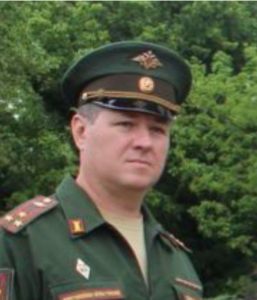
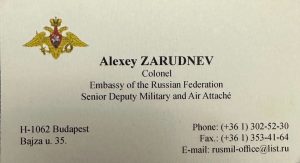
According to leaks from the Russian Ministry of Defence, Colonel Zarudnev is attached to Military Unit 45807, the official designation of the Main Directorate of the General Staff of the Russian Armed Forces, better known as the GRU – the military intelligence service of the Russian Ministry of Defence. The military unit is located at 76B Khoroshevskoye Shosse, Moscow. This location is known as the GRU headquarters, or the ‘Aquarium’.

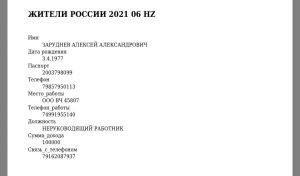
The leaks also indicate Zarudnev’s previous place of work – military unit 30734.

Military Unit 30734 is the 96th Separate Special Purpose Radio-Technical Detachment (Radio-Electronic Intelligence OSNAZ), part of the Main Directorate of the General Staff of the Russian Ministry of Defence, the military intelligence service – the GRU. The unit is engaged in radio-electronic intelligence and supplies the General Staff with intercepted data.
In 1982, the detachment was redeployed from the Voronezh to the Pskov region, to the town of Ostrov, where it is currently stationed and plays a key role in preparing for a Russian military invasion of the Baltic states.
In 2015, Zarudnev graduated from the Frunze Military Academy. After completing his studies at the academy, Zarudnev successfully enrolled in the 2nd Faculty of Agent-Operational Intelligence at the Military-Diplomatic Academy (MDA), which trains officers for service in military attaché posts.
In Hungary, Gurko carried out various assignments for Colonel Zarudnev. His key tasks were to select potential candidates for recruitment and to establish an intelligence network comprising former servicemen of the Hungarian People’s Army (HPA).
Of particular interest were active-duty military personnel who had previously trained at Soviet military academies and continued to serve in the armed forces of the now independent Hungary — there were quite a few of them at the time.
Currently, Russian military intelligence officer Igor Gurko lives quietly in Cyprus. Acting in the interests of the service, he remarried a Ukrainian citizen and continues his espionage activities on the territory of the Republic of Cyprus.

Last March, Gurko took up a position at the clinic of Dr Yuri Nikolenko, a well-known figure on the island.
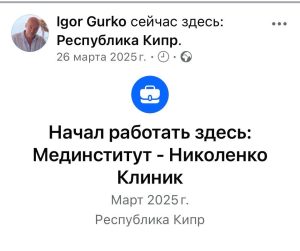
Many members of Cyprus’s political establishment receive treatment at this clinic — including ministers and high-ranking military officers. Igor Gurko’s interest in this institution is therefore entirely understandable.
Colonel Alexei Alexandrovich Zarudnev continues to hold the post of Military and Air Attaché at the Embassy of the Russian Federation in Hungary. Meanwhile, Igor Gurko, an undercover agent of Russian military intelligence, continues to operate freely in Cyprus, posing as a clinic employee in Nicosia.
Given the current tensions in the region against the backdrop of the war between Israel and the US against Iran, as well as Russia’s support for Iran, Gurko’s presence on the island may pose a potential threat to Cyprus’s security.
It should be noted that the case of Gurko is not unique. According to some reports, there are hundreds of Russian citizens in EU countries who hold residence permits in Ukraine and have been granted temporary protection status on a par with Ukrainian refugees. How many of them are officers or agents of the Russian special services remains to be established.
Russian intelligence services are actively infiltrating their agents into migration flows. Since the start of the full-scale war in Ukraine, between 600,000 and one million Russian citizens have left Russia, according to various sources. According to Western intelligence and expert assessments, thousands of them are either linked to Russian intelligence or are officers of the Russian special services.