
Svetlana Pozhidaeva says she was manipulated, physically abused, and coerced into vetting young women for Epstein. She denied reports that her father was tied to the FSB.
In November 2017, financier Jeffrey Epstein wanted to know whether an assistant had found him any young women in Europe. “No one new this trip?” he asked in an email.
“The new one I like is in Paris,” came the reply from Julia Santos. “We are supposed to Skype again this evening … She is my new favorite as of now.”
In fact, the name “Julia Santos” was a pseudonym, an apparent reference to a character from the ‘90s soap opera All My Children. The email account was used by a group of female assistants Epstein had organized to recruit young women for his circle of models and potential sexual targets.
This is according to a woman who admits to being one of the recruiters: Svetlana Pozhidaeva, 42, a onetime Russian model who worked for Epstein for years until his death in 2019. Pozhidaeva spoke to OCCRP for hours over the course of three days of interviews this week, addressing reports in Russian media, including OCCRP’s partner Important Stories, that her father was connected to the intelligence apparatus.
That reporting — which Pozhidaeva denies — has attracted interest and fueled speculation on social media, in part because Pozhidaeva moved among the titans of American finance during her time with Epstein, even twice meeting an up-and-coming Elon Musk.

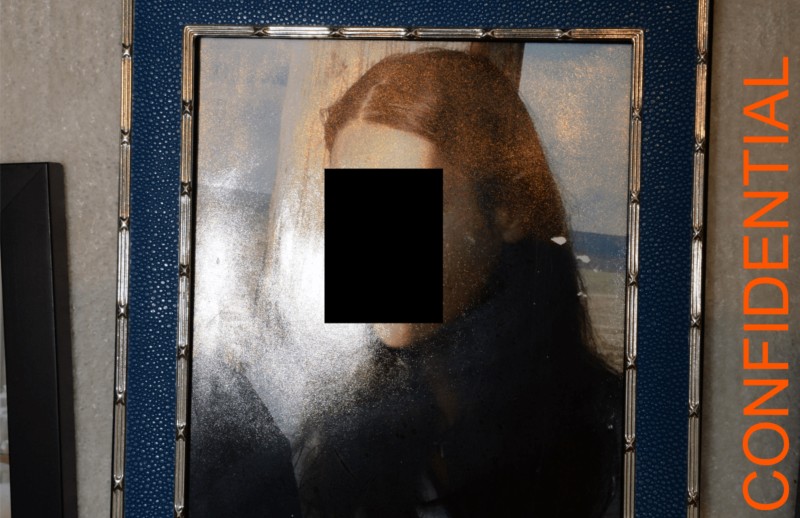
Svetlana Pozhidaeva at the Zorro Ranch in New Mexico, in a photograph she said was taken by Jeffrey Epstein.
Speaking to OCCRP, Pozhidaeva painted a picture of constant abuse during her time with Epstein, saying that the financier bullied, dominated, and manipulated her. “I was struggling with insomnia, eating disorders,” she said. “I was like throwing up after every single meal.”
«I’m not denying that I was recruiting women,” Pozhidaeva said. “That’s the most embarrassing and shameful and most regretful thing that happened.” But she said she had trouble seeing beyond her abuse, which also took on a physical dimension: “[Epstein] started physically abusing me when I first visited him in Florida,” she said. “I did not know a single person in the U.S. … It was really far away from my family.”
Still, Pozhidaeva’s background, and her relationship with Epstein, is starkly different from that of many other women who became ensnared in his alleged sexual trafficking network, a recently released trove of emails from the U.S. Justice Department shows. The emails show the well-educated Pozhidaeva being treated as a valuable asset: Epstein organized her appearances at elite forums like the U.N. and Davos, introduced her to powerful people, and at one point paid her $8,333 per month.
Reporters from several outlets have recently unearthed evidence suggesting that Pozhidaeva’s father Yury Pozhidaev, a retired lieutenant colonel in the Russian military, is a career intelligence officer: In a December 2015 email, Pozhidaeva wrote Epstein that, on a trip to the United States, her father had regaled her boyfriend with stories of his “FSB pa[s]t.” Yury Pozhidaev’s most recent employment history — as a security specialist on strategic state projects — also points towards an intelligence career. And according to a leaked courier database, he has communicated with the FSB pension office.
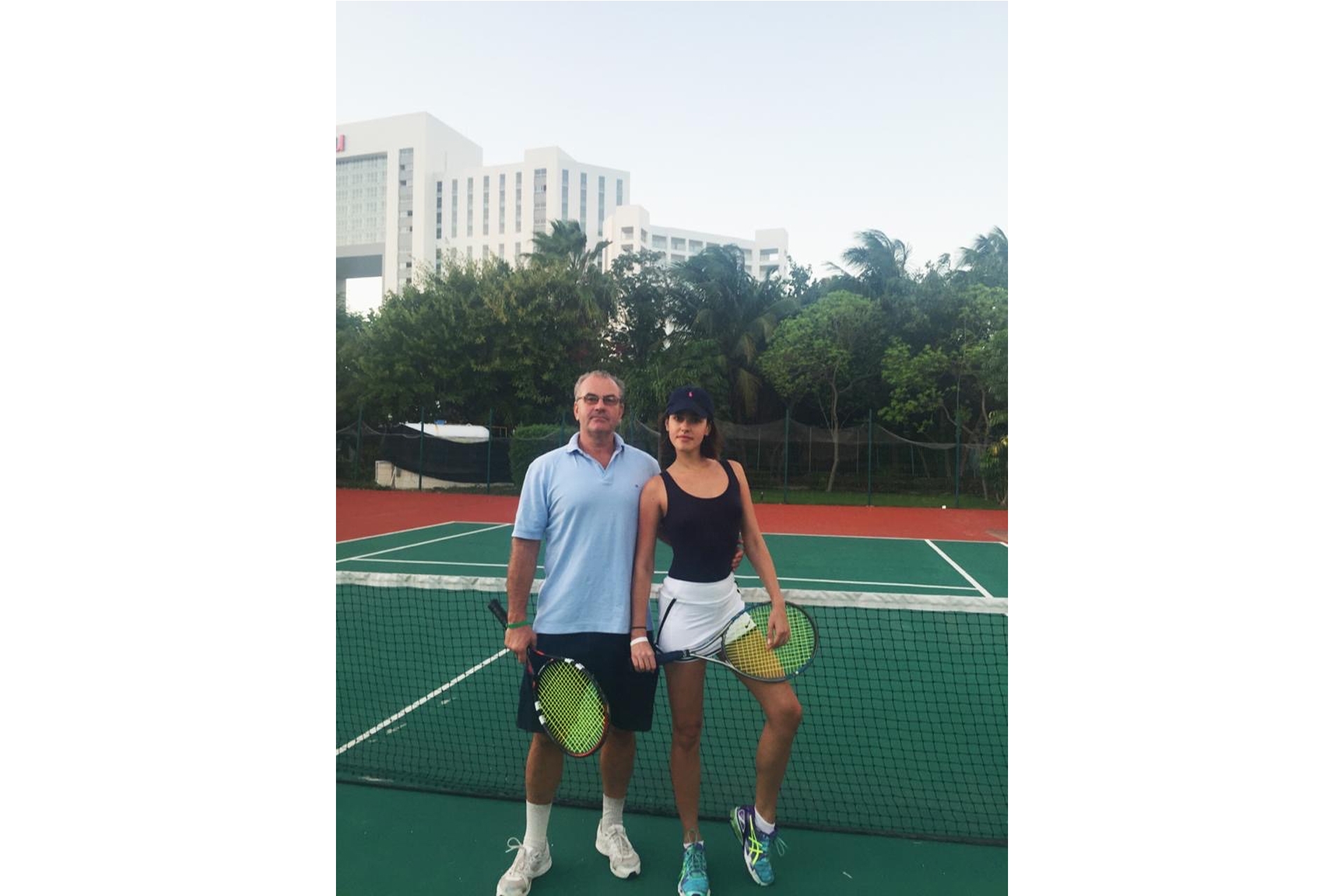
Svetlana Pozhidaeva with her father, Yury Pozhidaev.
The emails show that Pozhidaev’s father visited Epstein in his Palm Beach mansion with her mother, who wrote the financier a rapturous thank-you email in which she described him as the “Great Getsby (sic).” Ahead of their visit, the younger Pozhidaeva received over $237,000 in her bank account from Epstein’s offshore Butterfly Trust, the transaction marked “for the family.” (She maintains that this was a loan.)
No evidence has emerged that Epstein discussed any sensitive matters with Pozhidaeva’s father. But the Epstein files show that he pursued relationships with senior Russian officials.
For example, Vitaly Churkin, Russia’s long-serving UN ambassador until his death in 2017, was a friend and visitor to the financier’s Manhattan home, according to the Department of Justice files and Pozhidaeva. The files also show Epstein hosted the ambassador during a period when he headed UN Security Council meetings and mentored his son Maxim, helping him seek work on Wall Street.
And the files show that Epstein grew close to Sergey Belyakov, a former Russian deputy economic development minister and graduate of the FSB Academy. Belyakov ran the prestigious St. Petersburg International Economic Forum, and at Epstein’s request wrote a letter of recommendation for renewal of Pozhidaeva’s U.S. visa, saying she helped plan the agenda.
That was an embellishment requested by Epstein, Pozhidaeva told OCCRP, noting she attended the forum but played no role in organizing it.
After Epstein’s death, Pozhidaeva said she spoke to the media several times on condition of anonymity. But when the Trump administration released 3.5 million documents in the so-called Epstein Files earlier this year, it failed to redact her name. (It has since done so at the request of her and others identifying as victims.)
That led her to go public in a recent interview with the Wall Street Journal, seeking control of the narrative about her. For that story, her father denied any connection to the FSB, offering to take a polygraph test to end speculation. (He did not respond to OCCRP’s requests for comment.)
In her interviews with OCCRP, Pozhidaeva flatly denied her father’s FSB ties, saying her email had been a reference to a misguided attempt to impress her boyfriend. She attributed her father’s career moves to his expertise in the Persian language and said that he only received a regular military pension.
Turning to her life with Epstein, Pozhidaeva explained that she had been charmed after a chance meeting with him in late 2007 or early 2008, was hired by his modeling agency, and became his assistant a few years later. Over the following decade, she said, she stayed on his now-infamous island, met foreign leaders at his Paris home, and scoped out a palace in Morocco that he ultimately did not buy. But she also said Epstein objectified her, pressured her to lose weight, and manipulated her to such an extent that she misled even her parents.
“They thought I had the best job in the world, that I have the best life,” she said. “I would send them pictures with Bill Gates, and [former Norwegian diplomat] Terje Rød-Larsen, all the famous people I had pictures with, and say I’m in meetings with all those people. But I wasn’t really in the meetings. I was waiting behind closed doors and taking the plates out when the meeting was over.”

Pozhidaeva identified herself to reporters from the Wall Street Journal as the redacted person in this photo with (from left) Norwegian diplomat Terje Rød-Larsen, billionaire Bill Gates, and Epstein.
“He told me that he would teach me real business,” Pozhidaeva said of Epstein. “And as soon as I started asking: Shall I start taking English communication classes, or maybe accent reduction classes, anything to improve professionally? He said, well, you should start learning how to do massage. And that was the only class he encouraged.”
Today, Pozhidaeva lives in the United States, works in finance, and has started a new life under a new name. OCCRP is not publishing her name and location at her request over concerns for her safety. She said she is in touch with many survivors and is working to build a library of resources for fellow Epstein victims.
An Elite Soviet Family
During the Soviet era, Pozhidaeva’s family counted among a privileged elite. Her maternal grandfather, Marcel Platonov, was a military surgeon and gynecologist who participated in the infamous Soviet operation that triggered the 1962 Cuban Missile Crisis. He was granted an apartment in the House on the Embankment, a Stalin-era building on the Moscow River infamous for hosting the cream of the Soviet elite.
Pozhidaeva’s parents, Yury and Irina, graduated from the Military Institute of Foreign Languages in Moscow, whose alumni often served in the KGB’s First Chief Directorate, which is responsible for foreign intelligence, or as military attachés.
Her father was trained as a Persian-language military interpreter. In 1978, on the eve of the Soviet invasion of Afghanistan, he was sent to the country as part of an advisory corps.
Little else is known about his career with the Soviet military. Pozhidaev left the armed forces in the late 1990s and spent several years selling coffee and wine. But in December 2017, the retired lieutenant colonel started working for a subsidiary of Rostec, an anchor of Russia’s military-industrial complex. His work often took him to Tehran, where the company was helping install energy infrastructure.
The following year, Pozhidaev was named deputy head of security for the Iranian division of Russian Railways, which was working on a strategic transport corridor in the region. In 2020, Pozhidaev concurrently became deputy general director for security at Caspian Services, the main contractor for Russia’s transport ministry on the same project.
OCCRP described Pozhidaev’s biography to several experts on the Russian security services, who pointed out that such positions are typically reserved for formally retired security service officers who continue to report to their agency, a position known in Russian as “seconded personnel” (APS). Orders assigning such officers are signed by the FSB director.
“He is part of a total model of the post-Soviet FSB, in which they alternate between the private sector and serving state projects overseas, where their language skills and knowledge of the environment help serve the Russian state and its interests,” said Louise Shelley, an professor emerita at George Mason University in Virginia and longtime expert on Soviet and Russian affairs. “He fits a profile.”
Aside from Yury Pozhidaev’s employment history — and his daughter’s emailed reference to his FSB past — reporters from the Russian outlet Explainer found another tie to the agency. According to a leaked courier database, they reported, he sent several pieces of correspondence to the pension department of the FSB Directorate for Moscow and the Moscow Region in 2022.
Asked about this, Pozhidaeva said her father had to communicate with pension authorities to claim a retirement benefit: yearly visits to sanatoriums. She did not explain why he was writing to an FSB office, rather than to the defense ministry. He did not respond to emailed questions from OCCRP.
Pozhidaeva’s own background drew the attention of Russian media. Her resume, found in the files, shows that she received her undergraduate and Masters degrees from the Moscow State Institute of Foreign Relations, an elite springboard for careers in diplomacy and intelligence. She learned multiple foreign languages and interned at the Russian foreign ministry, the oil giant Lukoil, and Russian investment firms.
Despite this privileged background, she stressed in her interview with OCCRP that she had long felt insecure about her family’s financial status as compared to wealthier classmates, that she grew up in a building without an elevator, and that she never owned a car while in college.
In her mid-20s, Pozhidaeva pivoted to a career as a runway model. She was introduced to Epstein in Paris and was brought to the United States by the modeling agency MC2 Model Management, funded by Epstein but run by a disgraced associate.
Afterwards, Pozhidaeva’s visa was sponsored directly by an Epstein foundation. Her attorney, Brad Edwards, noted that Epstein routinely recruited foreign models who wanted to stay in the U.S. and held their visa status over their heads to trap them in his network.
He also used other coercive tactics, Edwards said. “If [the women] had any medical issues, [Epstein] made sure they went to his doctors. Those doctors provided the records to him, not even to the women,” Edwards said.
But Pozhidaeva’s story is complicated by the copious evidence in the Epstein Files that she actively recruited young women for the financier.
The emails show her actively helping women in Ukraine and elsewhere get passports or Schengen visas. “That’s the Kiev contact I like a lot, very sweet and might be naughty too,” she wrote in one email about a prospect.
Another email shows her sending a nude photo of a candidate to Epstein. In others, she disparages potential candidates: “Bad skin, huge boobs, said [she was] 24yo,” she wrote about one young woman.
Ali Hopper, a counter-trafficking expert and policy advocate who frequently testifies before federal and state legislatures in the United States, says that people these situations often reside in a gray area between being a victim and victimizer.
“When a victim is pulled into a trafficking operation and later takes on a role recruiting, managing, or profiting off other victims, that shift matters,” she said. “You can hold two truths at once: they were victimized, and they later contributed to the victimization of others.”
Almost seven years after Epstein’s controversial death in a Manhattan jail cell, Pozhidaeva said he still haunts her.
“Sometimes I even feel like he’s alive, you know, I still have nightmares he’s alive,” she said.
Does she think he hanged himself with bedsheets? Pozhidaeva is unsure.
“It’s hard to imagine him being so brave to take his life. Because it’s not like he had a gun and shot himself or took a pill and fell asleep,” Pozhidaeva said. “It’s a very wild way of taking his life.”
Zack Kopplin contributed reporting.