
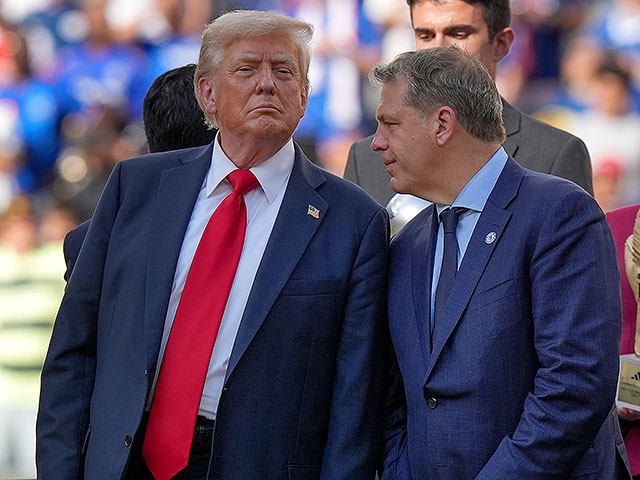
American billionaire Todd Boehly has announced an agreement with Lukoil to buy the Russian company’s foreign assets through a consortium of investors that includes a US government agency, the International Development Finance Corporation (DFC). According to Reuters, Lukoil will receive no cash: it will be paid with its own shares, bought back from Western investors. The deal requires approval from the US Treasury Department before it can take effect.
Lukoil’s foreign portfolio is valued at roughly $16 billion. In early November, when Reuters first reported on the scheme, the figure cited was $22 billion, but some of the businesses have since stopped operating. As payment, the consortium will hand the company its own securities worth about $10 billion. They will be held in a special account in the United Arab Emirates, and the Russian side will not be able to dispose of them right away.
Besides Boehly and the DFC, the consortium includes the investment bank Xtellus Partners and the Emirati firm Catena Investment Holding. The US government will receive an equity stake in the new company, a say in its management and a share of the profits once the private investors have recouped their money and earned an agreed return.
What Slips Out of Moscow’s Control
The deal covers assets in 11 countries: oil production in Azerbaijan and Kazakhstan, refineries in the Netherlands, Bulgaria and Romania, and a network of filling stations, including some in the United States. The company’s foreign fields produce about 350,000 barrels of oil a day. Lukoil has not yet commented on the agreement. Boehly cautioned that approval from the Treasury could take up to a year.
It was sanctions that forced Lukoil to sell its foreign holdings. In October 2025 the US Treasury Department added the company to its sanctions list together with Rosneft. Since then more than a dozen bidders have lined up for the portfolio, among them, according to Reuters, Exxon Mobil and Chevron. In January the investment fund Carlyle agreed to buy it but later pulled out. Throughout, the US Treasury insisted on one key condition: Lukoil must not profit from the sale, and the proceeds must stay frozen. On those grounds, in December 2025 the department rejected a separate bid from the same Xtellus Partners.
Shares in an Emirati Account
On paper, the scheme looks like a victory for sanctions policy. Russia’s largest private oil company is leaving the European market, and the Kremlin does not receive a single dollar in cash. Yet the frozen shares in the Emirati account do not vanish. If sanctions are ever eased, they will turn into very real capital. It is no coincidence that, according to The New York Times, the fate of these assets also came up in the negotiations on Ukraine, where Putin offered Washington a deal over Lukoil.
The agreement fits the logic Trump’s team long considered workable: link peace to business and show Moscow what it stands to gain from a ceasefire. Putin answered with new strikes on Ukrainian cities, and according to the Financial Times, the administration is already giving up on the idea of buying peace with economic offers. For Europe, the outcome of the deal is easier to measure. The refineries in Burgas, Ploiești and Vlissingen will no longer belong to a company whose taxes flow into the budget of a country waging war against Ukraine.
Read also on CDN:
U.S., U.K. Unveil Sweeping Sanctions Against Russia’s Oil Sector
Dark and Hidden: Tracking Russia’s «Shadow» Fleet
NYT: Putin Offered the US a Deal on Lukoil’s Foreign Assets During Talks on Ukraine (in Russian)