
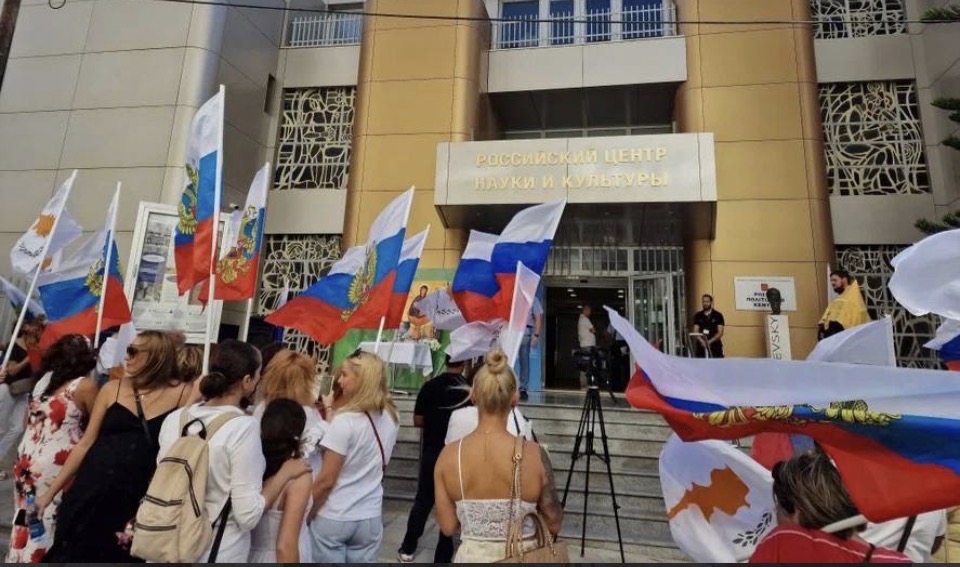
In early October 2026, a group of 71 Members of the European Parliament wrote to the President of the European Council António Costa, the President of the European Commission Ursula von der Leyen and the EU’s foreign policy chief Kaja Kallas. They called for a common approach to the “Russian Houses” in Europe and for agreed measures to stop their activities. The letter says:
More than four years after Russia launched its full-scale war of aggression against Ukraine, institutions belonging to a sanctioned Russian state influence network continue to operate openly on the territory of the European Union.
The so-called “Russian Houses” present themselves as centres of culture, science, education and promotion of the Russian language. In reality, they are part of the international network of Rossotrudnichestvo, a Russian federal state agency that has been under European Union sanctions since July 2022.
…
The concerns go beyond propaganda and influence operations. The Estonian Foreign Intelligence Service has reported that “Rossotrudnichestvo and its representatives abroad, the Russian centres of science and culture, are regularly used by the FSB and the SVR as cover for their officers”.
Nevertheless, as of September 2026, “Russian Houses” continue to operate in 15 EU Member States: Austria, Belgium, Bulgaria, Cyprus, Czechia, Finland, France, Germany, Greece, Hungary, Italy, Luxembourg, Malta, Slovakia and Spain.
…
Ultimately, we cannot claim to take the protection of Europe from Russian threats seriously if we allow institutions belonging to a sanctioned Russian state influence network to keep operating in our cities.
Shortly before this, the Lithuanian MEP and former Lithuanian Minister of Defence Rasa Juknevičienė told the Cyprus News Agency in an interview: “The activities of the ‘Russian House’ in Nicosia should be seen as part of Russia’s hybrid war against Europe.” Referring to public assessments by the Estonian intelligence services, she said that such centres can be used by Russian intelligence, and asked whether EU states take this threat seriously enough.
Juknevičienė was the rapporteur of the European Parliament’s report on hybrid warfare, which MEPs adopted at the plenary session in September. According to her, NATO military officials say it plainly: “Today no capital in the EU is safe”, because Russian weapons can reach any point in Europe. “This is not only about regional defence, but about our common European defence,” the MEP stressed. She listed sabotage, arson, cyberattacks, signal jamming, drone incursions and disinformation among the tools of hybrid operations.
The Russian House in Nicosia is one of those the MEPs are writing about. CDN and the Center for Investigation and Research (CIR) found out how it works from the inside. For almost ten years the centre was headed by Alina Radchenko, who was at the same time a counsellor of the Russian Embassy. Her mother, Vera Fuflygina, received a Cypriot “golden passport” and owns five Cypriot companies, one of which runs a fee-paying school in the centre’s building. And the firm of Radchenko’s business partner supported propaganda screenings at the sanctioned centre, including the premiere of an RT film.
What the Russian House is
The Russian Centre for Science and Culture (RCSC) on Alasias Street opened in 1978 as a Soviet cultural centre. Today it is the representative office of Rossotrudnichestvo, a federal agency subordinate to the Russian Ministry of Foreign Affairs. The building has a 257-seat concert and cinema hall, an exhibition hall of about 280 m², a conference hall, a library with a reading room (more than 17,000 volumes), a film library (about 4,000 films) and classrooms.
The centre runs Russian, Greek and English language courses, some of them free of charge or at a discount. It has a Russian classical ballet school, vocal ensembles and choirs, music, art and drama studios, a film club, a book club and a women’s club. Exhibitions, concerts, festivals and meetings of compatriots are held regularly. Its main audience is the Russian-speaking diaspora, which by some estimates numbers more than 150,000 people in Cyprus.
Another area of the RCSC’s work is promoting Russian education among citizens of Cyprus, including “compatriots” with Cypriot citizenship: preparation for admission to Russian universities, competitions, olympiads and other events for young people. This is done to recruit new generations of Moscow’s agents. All foreign students in Russia, as in Soviet times, are targets for recruitment by the Russian intelligence services.
After 2022 it became much harder for Russian intelligence to work abroad. Sanctions over the invasion of Ukraine, the expulsion of hundreds of officers who worked in the West under diplomatic cover, visa restrictions and the end of direct flights to Europe made its work much more difficult. In these conditions, recruiting foreign young people to study in Russia through the “Russian Houses” became one of the main ways to bring new agents into its networks.
The RCSC’s activities are clearly subversive and focused on disinformation and propaganda. The centre promotes Moscow’s official agenda: it builds a positive image of the Putin regime, holds events for 9 May, and publicly justifies the war against Ukraine and the hybrid war against the West. The Russian authorities are not interested in culture and education as such, just as the Soviet authorities were not. For them it is only an instrument of influence, propaganda and recruitment.
In 2022, Murat Zyazikov, a lieutenant general of the FSB with no diplomatic experience, was appointed Russian Ambassador to Cyprus. This points to stronger intelligence activity by the Russian services on the island. With Zyazikov’s arrival, the agent work and propaganda activity of the embassy and the “Russian House” increased.
According to the Center for Investigation and Research (CIR) and Cyprus Daily News (CDN), the total number of staff at the Russian Embassy and the “Russian House” in Cyprus is about 300 people. After the start of Russia’s full-scale invasion of Ukraine in 2022, their number grew.
In essence, the RCSC in Nicosia is a branch of the Russian Embassy that is open to the general public, and at the same time a key centre of operational work for the Russian intelligence services. The embassy is watched by counterintelligence, but it is impossible to keep track of everyone who attends concerts, clubs and Russian language courses. That is why the “Russian House” is an ideal place for meeting agents and recruiting.
An agency under sanctions
Rossotrudnichestvo itself is a separate intelligence service that works among Russian-speaking emigrants, controls wide networks of Russian agents of influence abroad and complements the FSB, the SVR and the GRU.
The agency traces its origins to the Soviet All-Union Society for Cultural Relations with Foreign Countries (VOKS), founded in 1925. Formally, VOKS was a public organisation, but in fact it was a unit of state security, because in the USSR any contacts with foreign countries were the responsibility of the security services.
Since April 2026, Rossotrudnichestvo has been headed by Igor Chaika, who is on the EU sanctions list for financing FSB projects to destabilise Moldova. Before him, the agency was headed by career intelligence officer Yevgeny Primakov Jr., the grandson of Yevgeny Primakov, the former head of KGB foreign intelligence and former director of the Foreign Intelligence Service.
The “Russian Houses” are one of the key instruments of Russia’s hybrid war against the free world. In the agency’s official language, their task is “strengthening ties with compatriots”. This is a euphemism for recruiting and using emigrants from the former USSR in Moscow’s interests. Today Rossotrudnichestvo has about a hundred offices in 80 countries. In Cyprus it is represented by the RCSC in Nicosia, the “Russian House”.
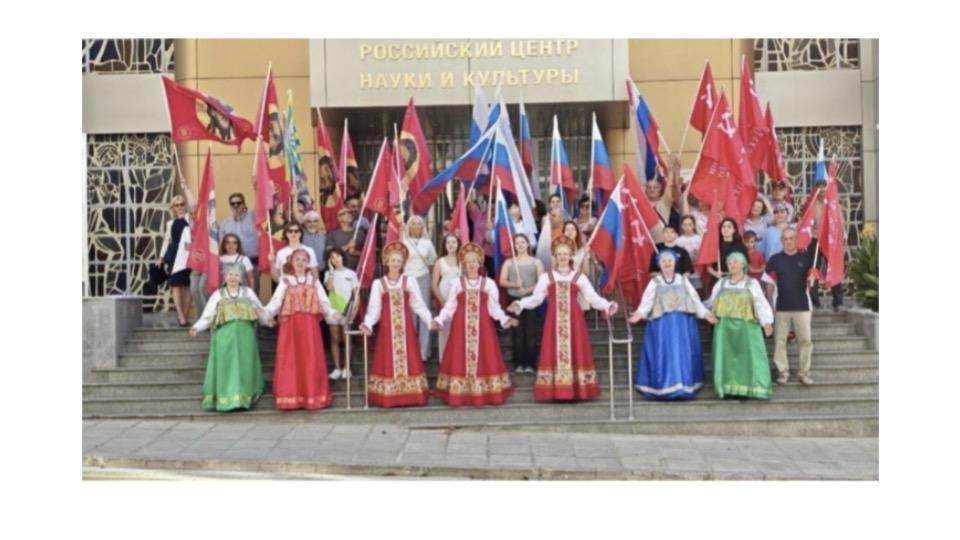
On 21 July 2022, the EU added Rossotrudnichestvo to its sanctions list. The decision calls the agency a key channel of the Kremlin’s “soft power” and hybrid influence. All its funds and property in the EU must be frozen, and dealing with it, let alone financing its activities, is prohibited. Exceptions are possible only under a licence from a national authority. In Cyprus, that authority is EMEK, the sanctions unit of the Ministry of Finance.
However, the RCSC in Nicosia goes on working as if nothing had happened. It pays for electricity and water, pays salaries to its many employees, and holds concerts, exhibitions and festivals. The centre runs a Russian school and many children’s clubs.
The new director and SVR officers
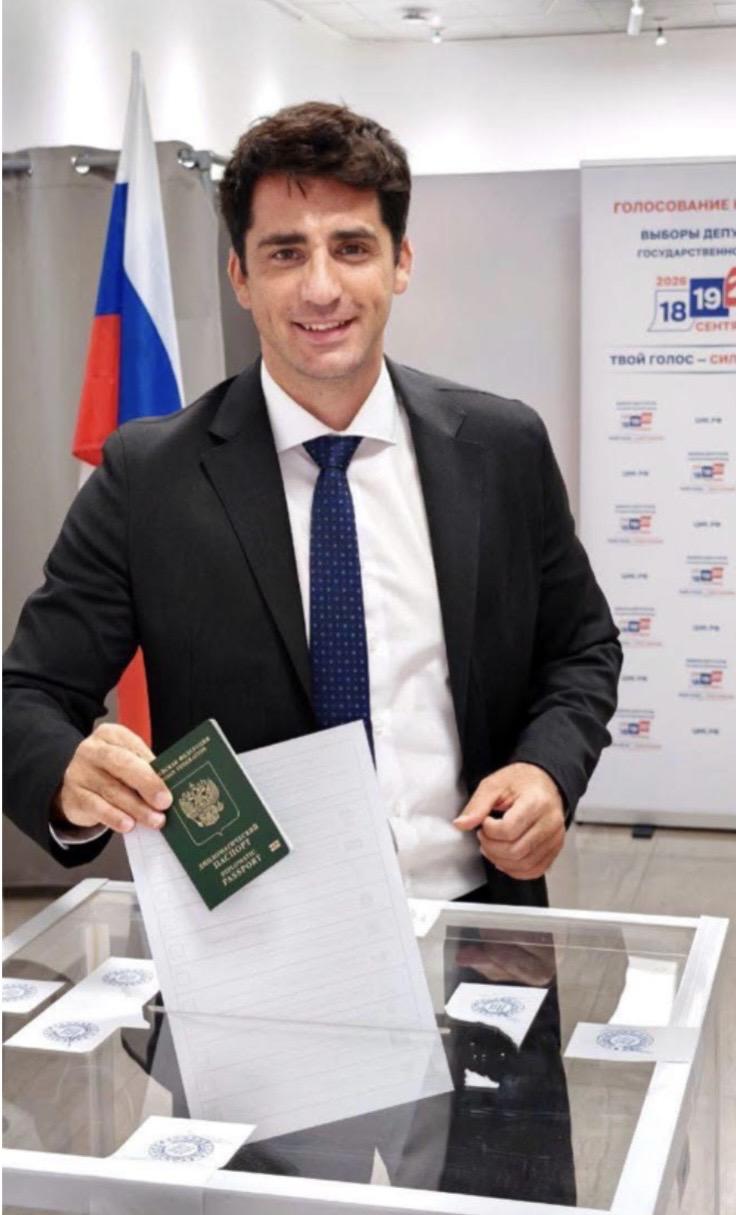
In May 2026, Yevgeny Demin was appointed director of the Russian House. According to CIR, he is a career officer of the Foreign Intelligence Service (SVR).
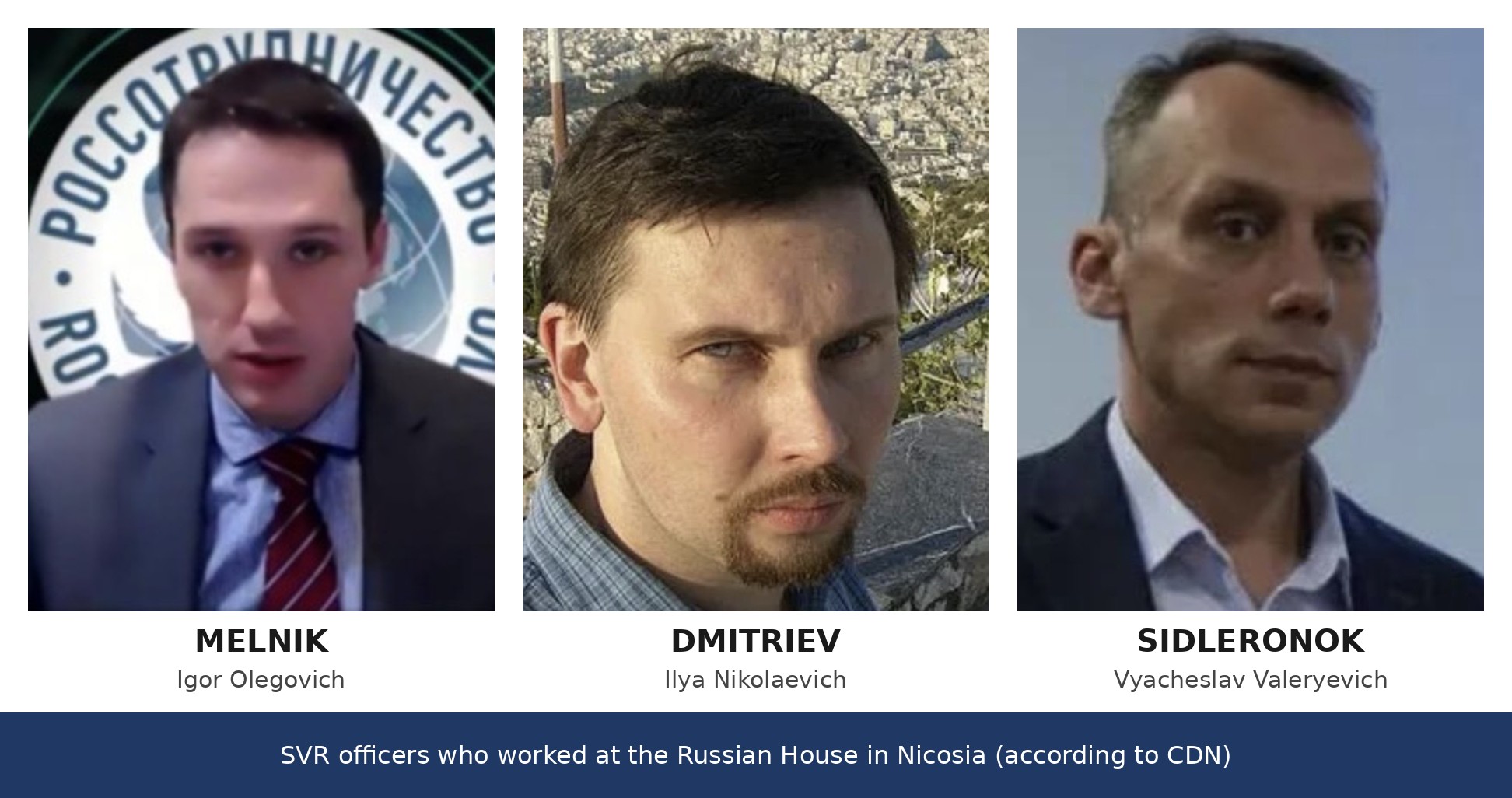
Earlier, CDN identified several officers of the Russian Foreign Intelligence Service who worked at the Russian House in Nicosia under Rossotrudnichestvo cover. Among them are Igor Olegovich Melnik, Ilya Nikolaevich Dmitriev and Vyacheslav Valeryevich Sidleronok. The last of them now heads the Russian House in Athens.
Director and embassy counsellor
The previous director of the Russian House, Alina Radchenko (formerly Fuflygina; she changed it to her mother’s maiden name), who had earlier worked in the Russian Presidential Administration and the Civic Chamber of the Russian Federation, was appointed director of the RCSC in Nicosia in September 2016 and held this post until May 2026.
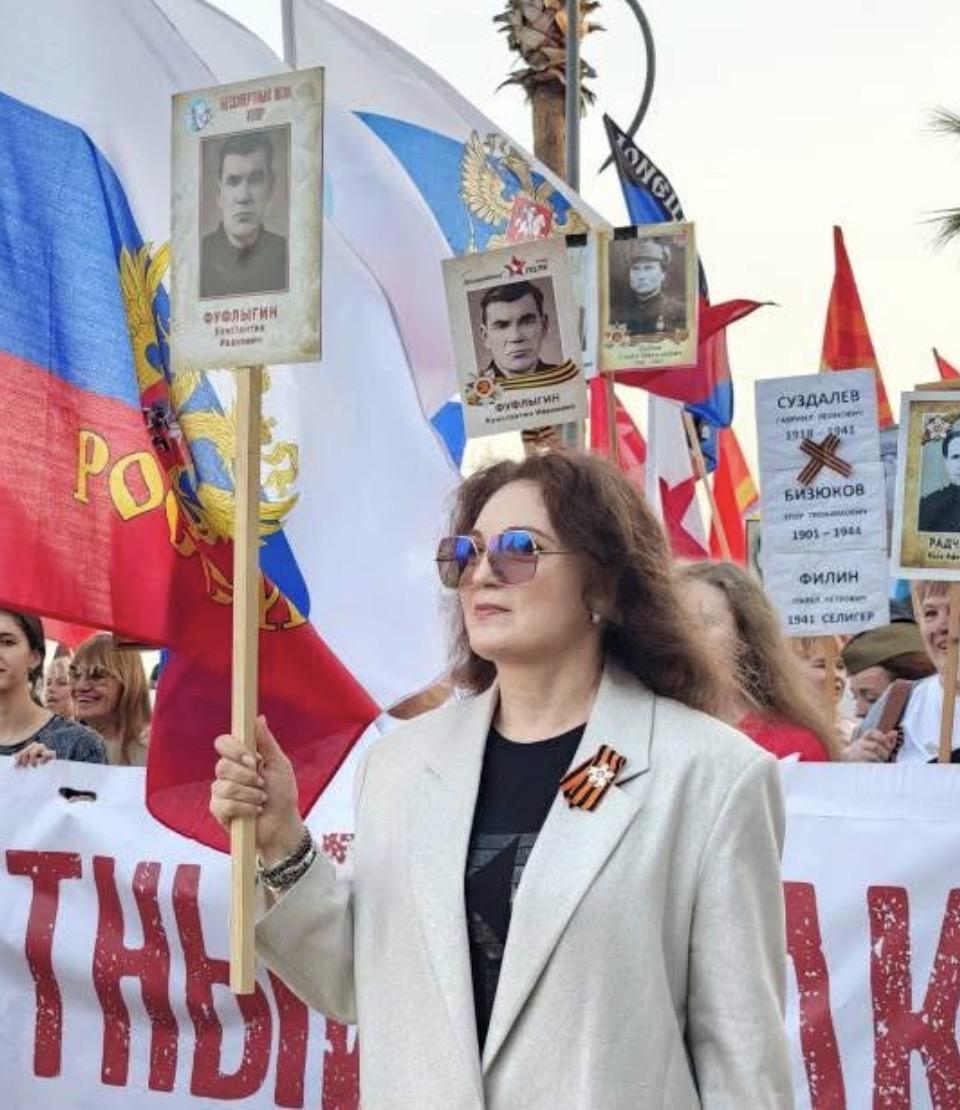
Alina Radchenko (Fuflygina) at the 9 May celebration in Limassol with a portrait of her grandfather, Konstantin Ivanovich Fuflygin, 10 May 2026
At the same time, she was also listed as a counsellor of the Russian Embassy, as shown in the diplomatic lists of the Cypriot Ministry of Foreign Affairs.
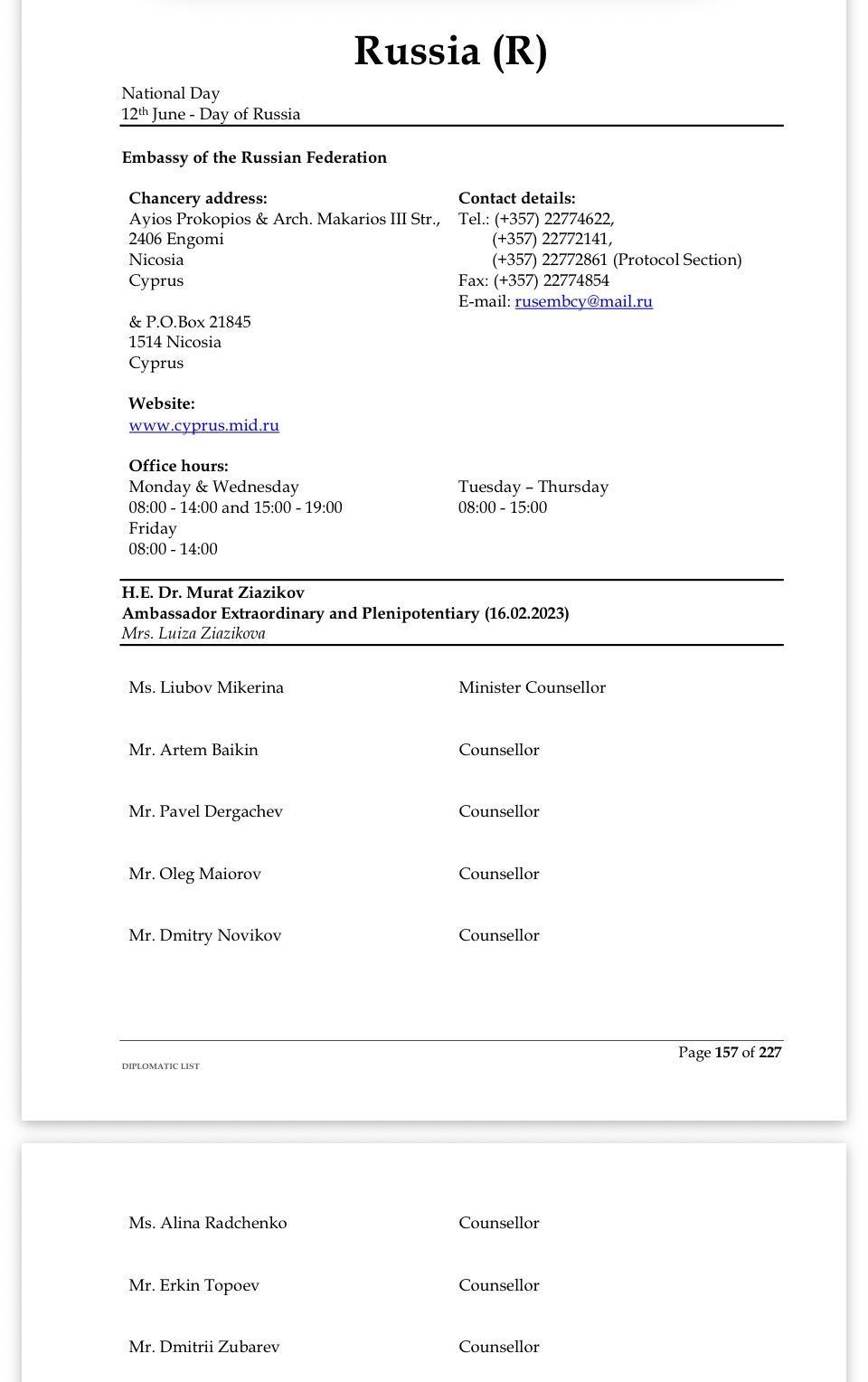
As a state representative office, the RCSC is not registered as a full Cypriot legal entity.
Meanwhile, an interesting entry was found in the Cypriot registry. On 31 May 2019, a business name was registered in the name of Alina Radchenko:
RCC (RUSSIAN CULTURAL CENTRE)
Number: ΕΕ 49725
Type: Business Name
Registration date: 31 May 2019
Status: Dissolved
Owner: Alina Radchenko
Address: Alasias 16, 1075 Nicosia
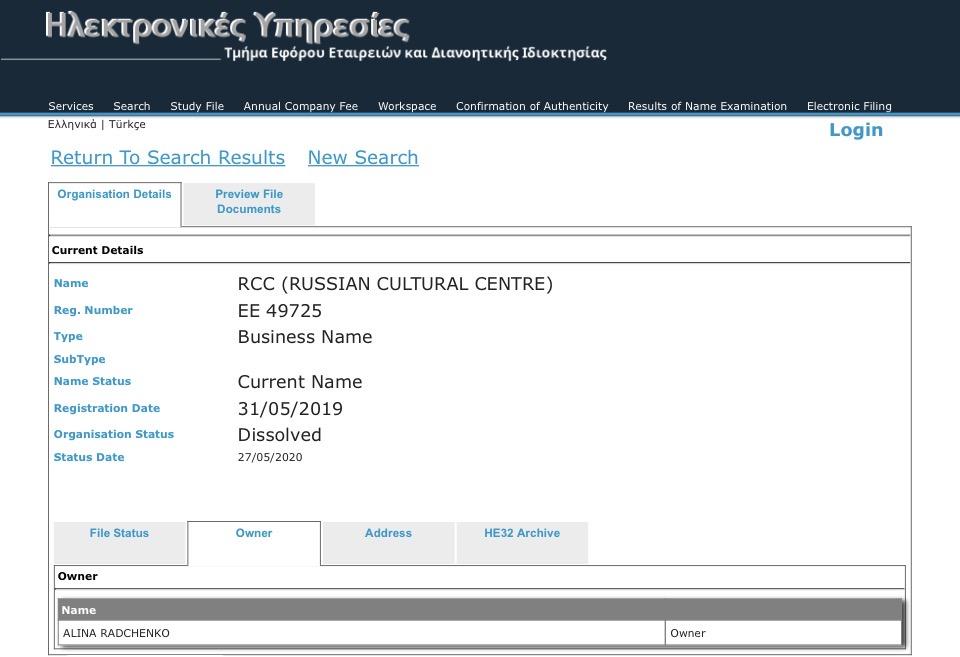
In Cyprus, a business name is registered only to carry out commercial activity for profit.
Article 42 of the Vienna Convention prohibits a diplomat from practising commercial activity for personal profit in the receiving state.
Why did a counsellor of the Russian Embassy need to register the business name “Russian Cultural Centre” in her own name? Was a bank account opened under this name, did money come into it, from what sources, and what was it spent on? So far we have not been able to find answers to these questions. The Cypriot Ministry of Foreign Affairs and the Tax Department could clarify the situation.
Trips to Cyprus
In a 2020 interview with Vestnik Kipra, Radchenko said that before her appointment she had spent only a few days on the island as a tourist. Leaked Russian border control data available to CIR and the CDN editorial team paint a different picture.
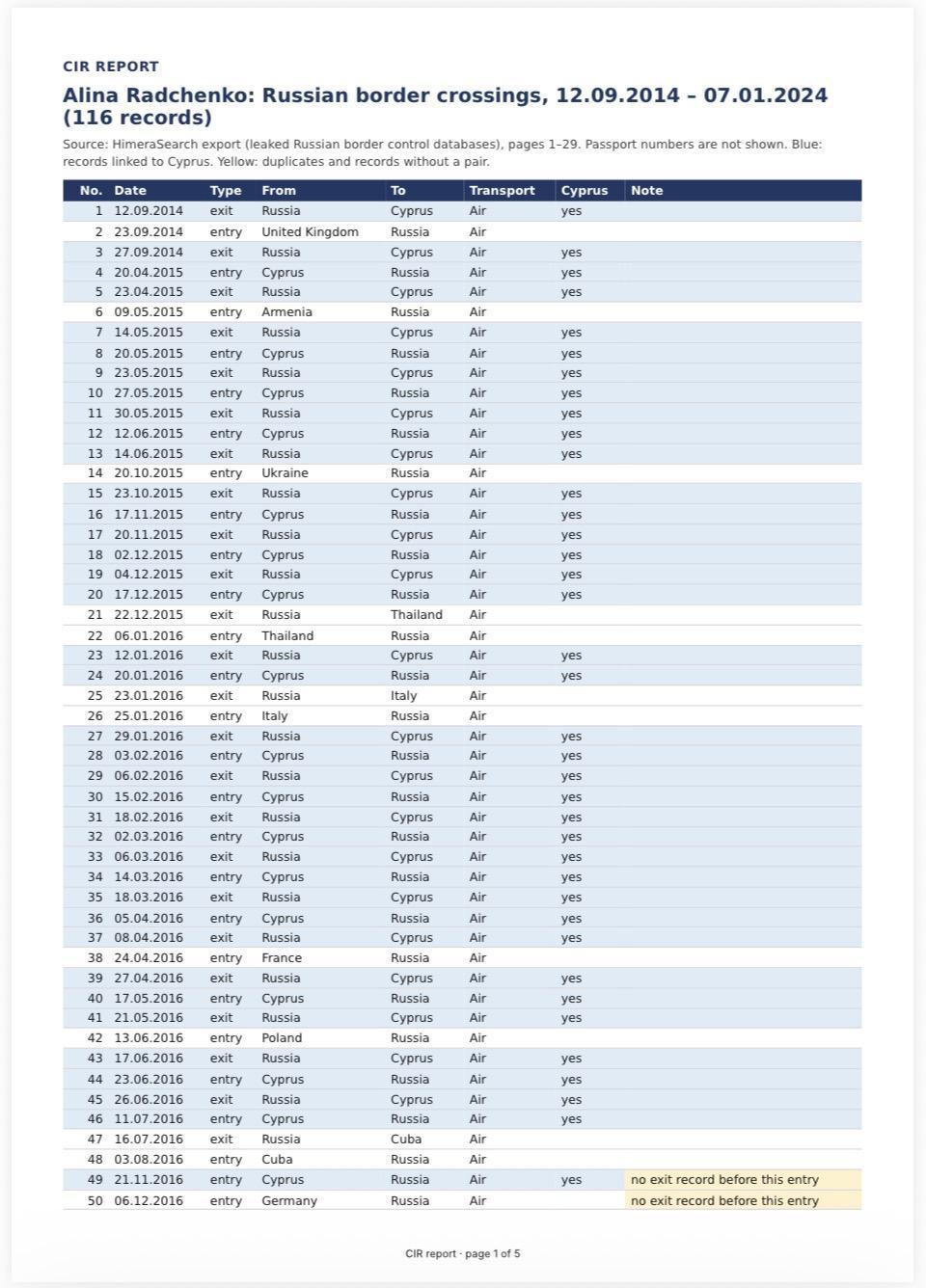
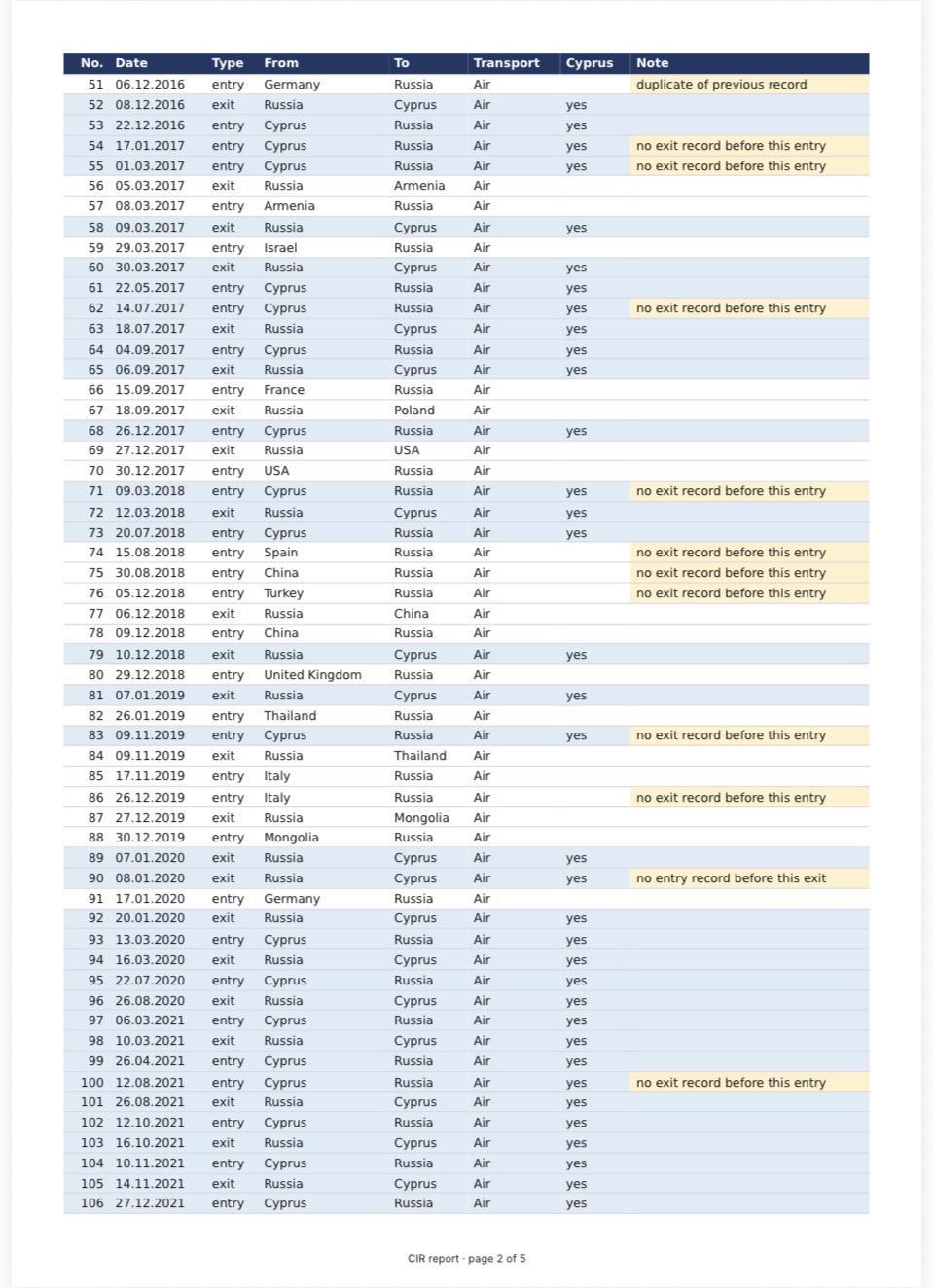
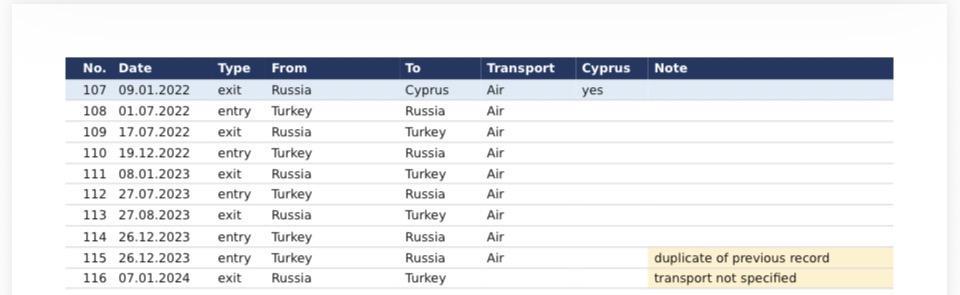
From September 2014 until her appointment as director of the “Russian House”, Radchenko flew to Cyprus 21 times.
According to data available to CIR, between 2014 and 2024 Radchenko crossed the Russian state border 116 times, of which 74 crossings are linked to Cyprus: 39 departures to the island and 35 returns from it. Direct flights between Russia and the Republic of Cyprus stopped in 2022, after the start of Russia’s full-scale invasion of Ukraine.
After direct flights between Cyprus and Russia stopped, Radchenko began flying to Russia via Turkey. However, there are no direct flights between the Republic of Cyprus and Turkey. According to available information, for these trips Radchenko used Tymbou airport, which the Turkish occupation authorities call Ercan. The airport is located in the Turkish-occupied northern part of Cyprus and is not recognised by the Republic of Cyprus as a legal point of entry and exit. From there Radchenko flew to Turkey, then on to Russia, and returned by the same route.
According to available information, an accredited representative of the Russian state in Cyprus systematically used territory outside the effective control of the Republic of Cyprus for travel abroad, bypassing official border checkpoints. This raises a serious question about Radchenko’s compliance with the laws of the Republic of Cyprus, especially given her diplomatic status.
Family and business in Russia
Alina Radchenko has a mother, Vera Yakovlevna Fuflygina, born in 1944. She is now 82, may she stay in good health.
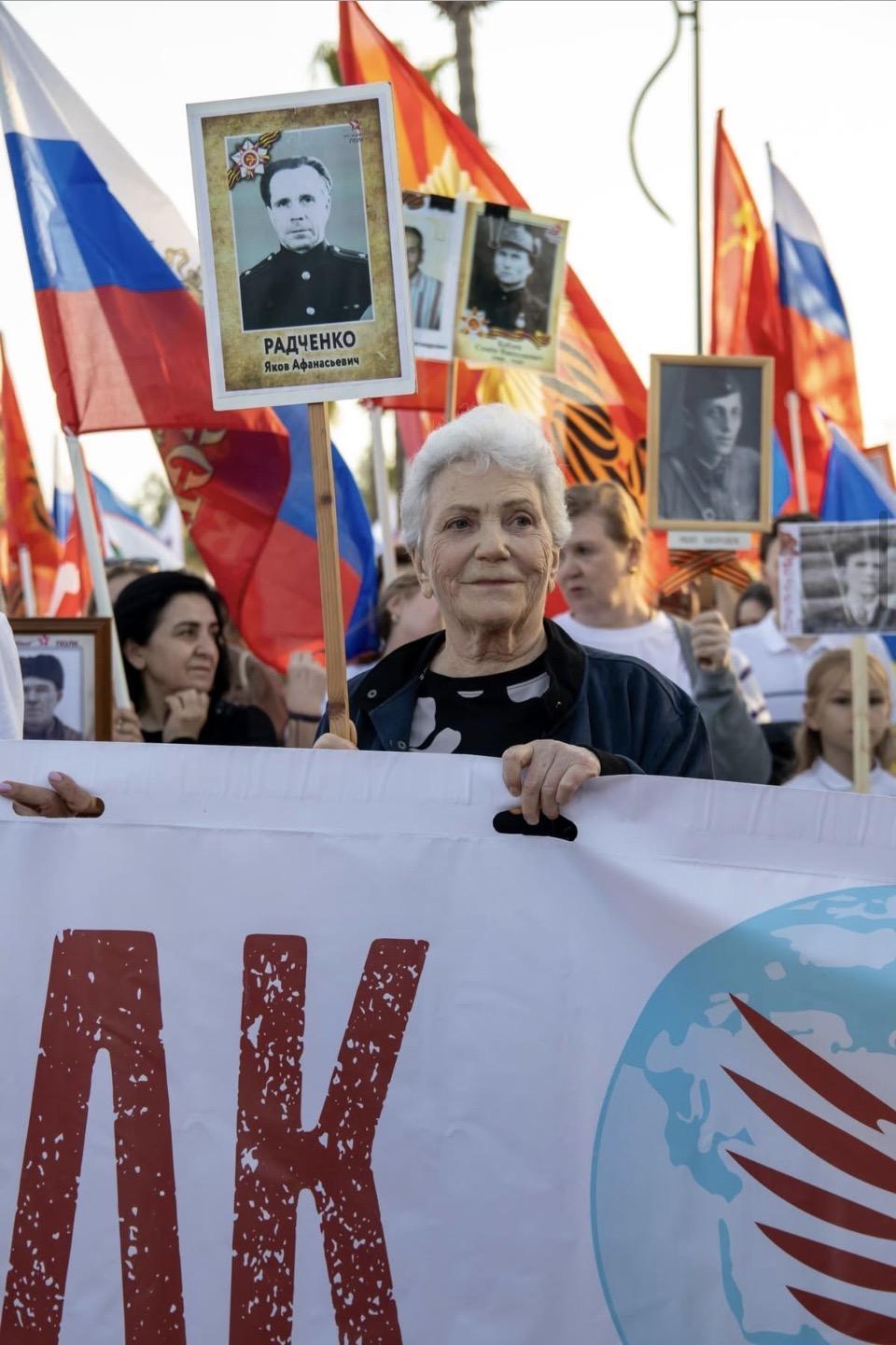
Vera Fuflygina with a portrait of her father, Yakov Afanasyevich Radchenko, at the 9 May celebration in Limassol, 10 May 2026
In 2007, Fuflygina became a founder of the Russian company Business Telecom LLC. In 2014, she became the sole founder of FREE STYLE XXI LLC, and in 2025 she left the company and Alina Radchenko, at that time director of the “Russian House” in Nicosia, became its founder instead.
In 2003, Vera Fuflygina and Alina Radchenko became founders of the public organisation “NIZHNY NOVGOROD REGIONAL BRANCH OF THE ALL-RUSSIAN PUBLIC MOVEMENT WOMEN OF RUSSIA”.
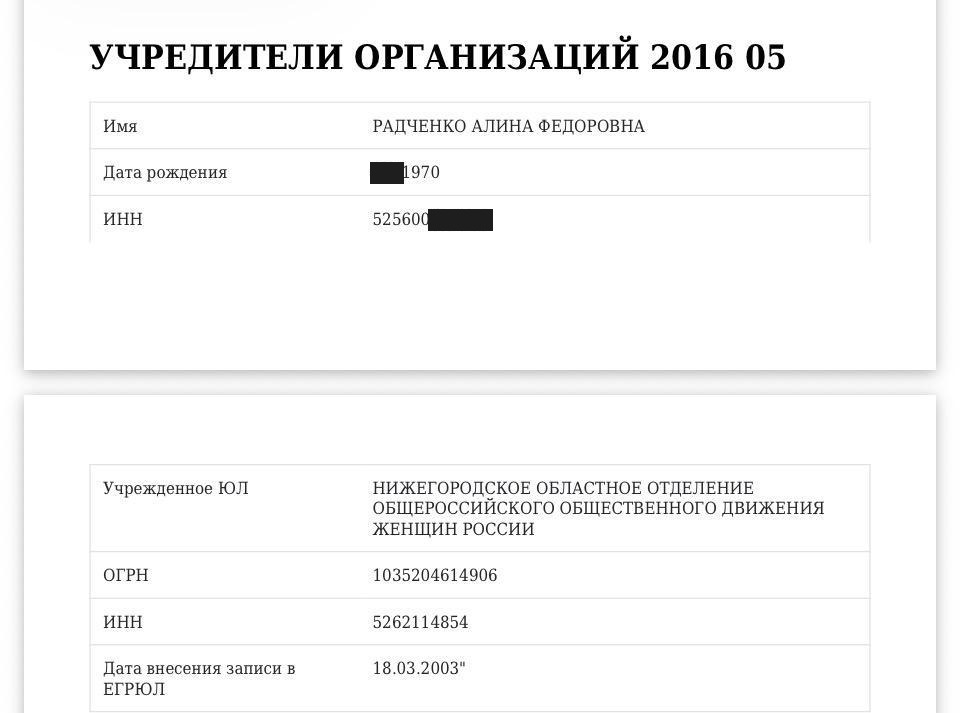
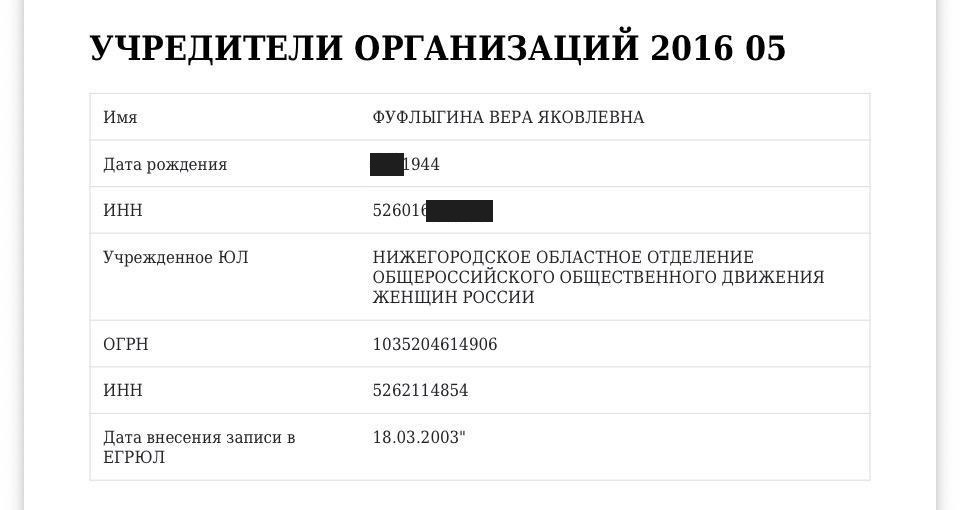
From 2004 to 2014, Fuflygina was listed as a founder of the Russian company DVA A LLC, which is still operating.
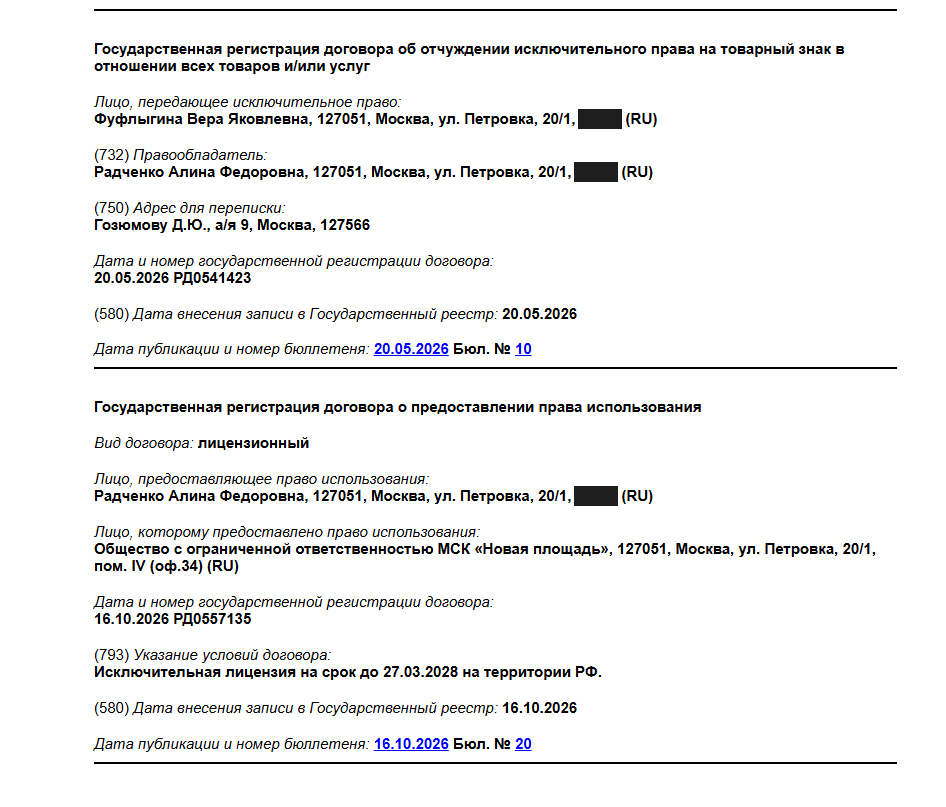
The Rospatent trademark register (trademark No. 698119) records the transfer of the trademark rights from Vera Fuflygina to Alina Radchenko on 20 May 2026, in the month Radchenko left the “Russian House”. The document gives the same Moscow address for both of them.
Five companies and a “golden passport”
Long before her appointment as director of the RCSC, Radchenko moved her mother, Vera Fuflygina, to Cyprus.
After moving to the island, Fuflygina became the owner of several Cypriot companies that had been set up long before her. The shares of SPOFELA INVESTMENTS LTD (registered in 2008) passed to her on 13 April 2016, XERELO INVESTMENTS LIMITED (registered in 2007) on 1 June 2016, and CHRIMINA INVESTMENTS (ΗΕ 178776) on 21 June 2016. Xerelo and Spofela are registered at ONISIFOROU CENTER, Floor 2, Άγιος Θεόδωρος 8011, Πάφος, Κύπρος.
In April 2016, Fuflygina became the owner of the Cypriot company RAMPLETOWN LIMITED (HE 137319), which had existed since 2003, and in August 2024 she renamed it CENTER OF EDUCATION AND METHODOLOGY «PIONEER» LTD. The registered address is the same: ONISIFOROU CENTER, Floor 2, Άγιος Θεόδωρος 8011, Πάφος, Κύπρος.
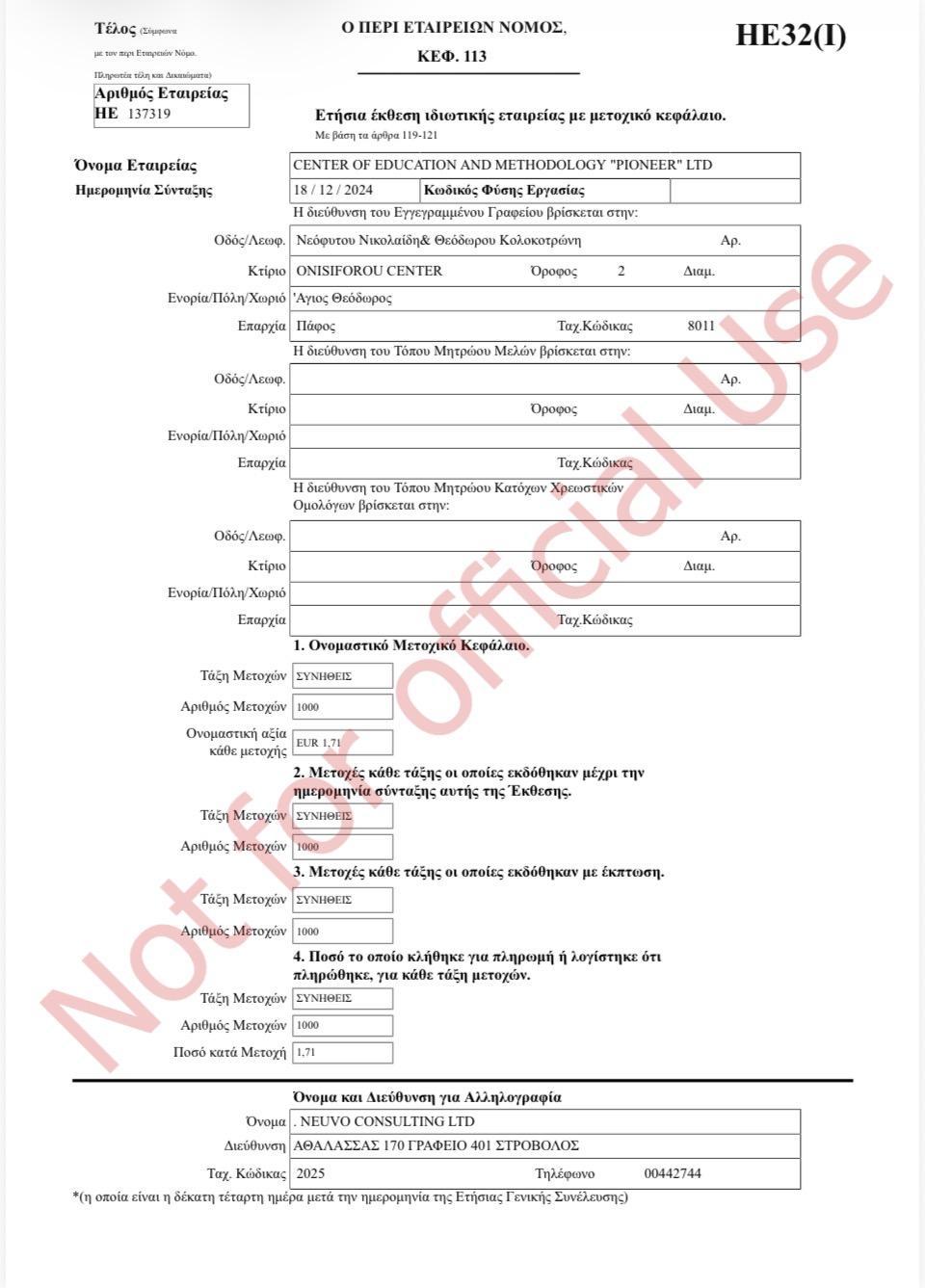
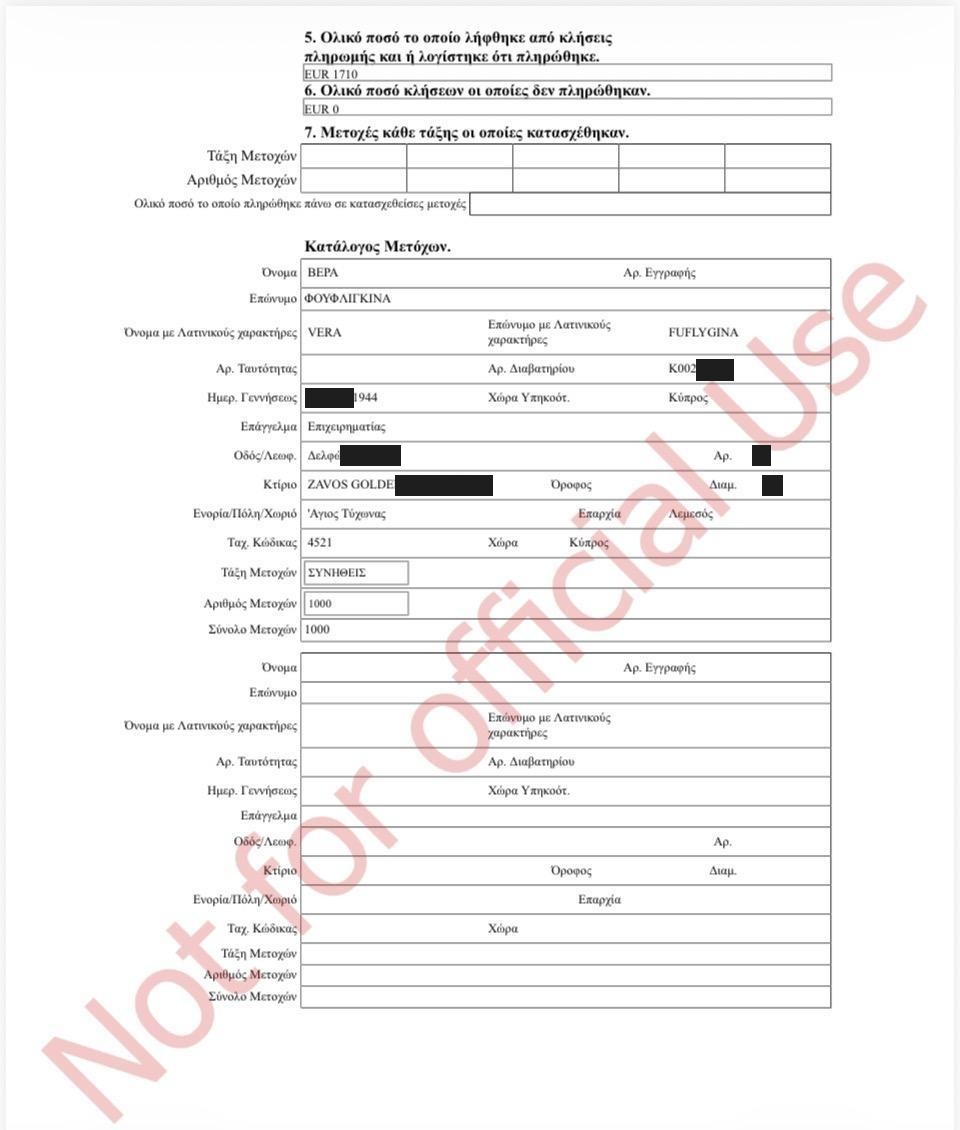
In July 2024, Fuflygina bought the company S.B. CONSTRUCTION & REPAIR LTD, set up in December 2022 and registered at Αθαλάσσας, 170, Floor 4, Flat/Office 401 Στρόβολος 2025, Λευκωσία, Κύπρος.
On 21 October 2015, Fuflygina applied for Cypriot citizenship under the investment programme. On 13 June 2016, she became a citizen of Cyprus in the “investor” category.
The programme threshold at the time was €5 million (€2.5 million for collective investments). It was lowered to €2 million only in autumn 2016. Three months after Fuflygina received Cypriot citizenship, her daughter became head of the “Russian House” in Nicosia.
CDN and CIR studied the files of Fuflygina’s companies in the Cyprus registry. On the day of her application, according to the registry, she did not yet own any of her Cypriot companies. After applying, she became the owner first of three companies with assets of several million euros, and then of two more companies.
| Company | What it owns | Whose money |
|---|---|---|
| Rampletown, since 2024 PIONEER (ΗΕ 137319) | house in Limassol, sold in 2018 for €630,000 | loan from FirstData, the firm of the previous owner Sergei Zozulya |
| Xerelo Investments (ΗΕ 211413) | house in Mazotos, €1.37 million | loans of €1.55 million with no lender named |
| Chrimina Investments (ΗΕ 178776) | apartment in Paphos, €496,000 | “loan” from the offshore company Verona Industrial Assets |
| Spofela Investments (ΗΕ 240785) | holding company with capital of about €5.6 million (at the end of 2014) | unknown |
| S.B. Construction & Repair (ΗΕ 441103) | nothing, bought in 2024 | — |
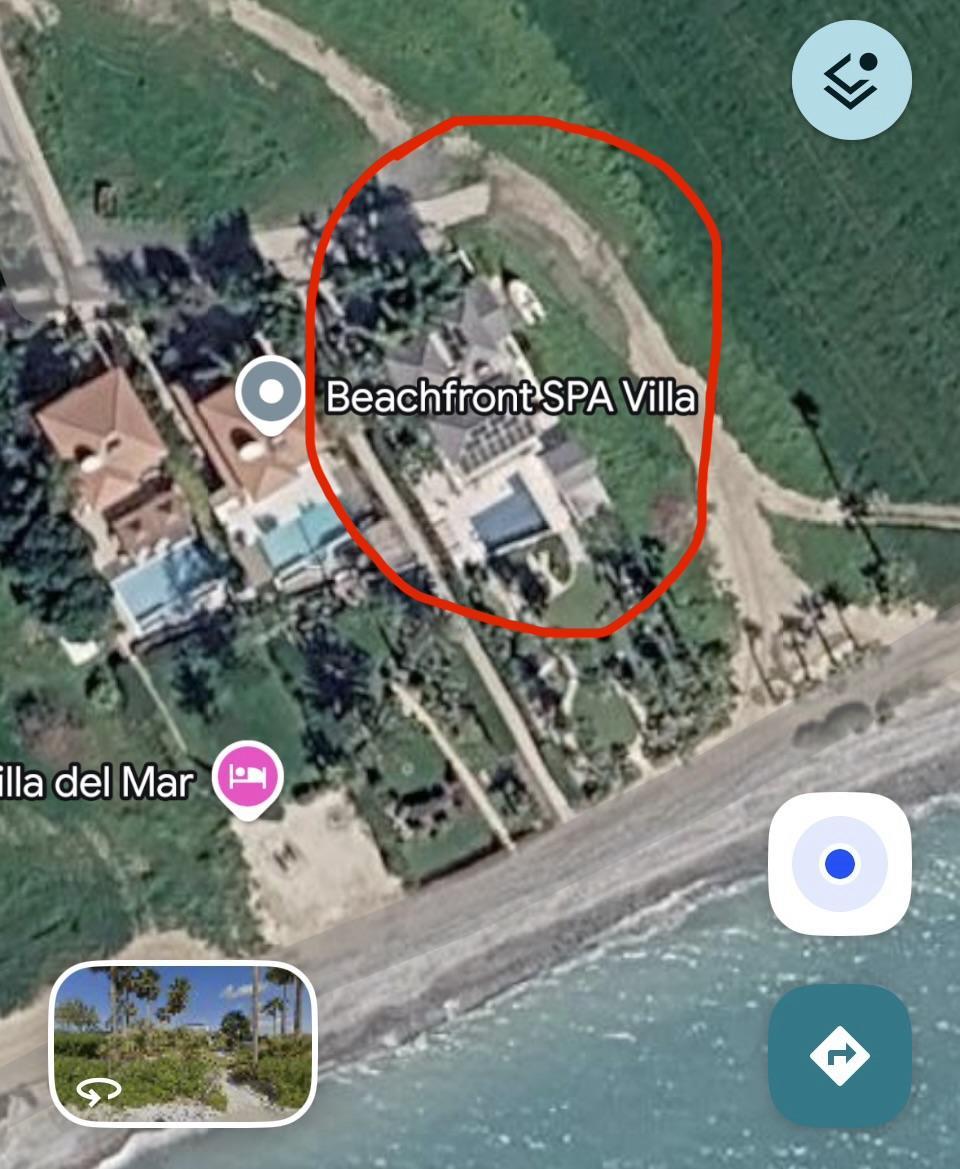
Xerelo owns a house in Mazotos, bought in 2008 with loans. The lender is not named in the company’s accounts. In 2012, the €1.55 million debt simply disappeared from the accounts and was recorded as “other income”. In other words, someone gave the company a house worth one and a half million euros. The house is large and stands right on the seafront. Since 2023 it has been rented out to holidaymakers.
According to its latest accounts (for 2023), Chrimina owns an apartment in Paphos bought in 2010–2011. The lender’s name appeared only in accounts prepared retrospectively in 2018. According to the accounts, the money was provided by Verona Industrial Assets from the British Virgin Islands. But according to the official gazette of the BVI, this company was struck off the register on 2 November 2009, before the apartment was bought. If it was not restored later, it turns out that the money was “provided” by a firm that no longer existed at the time.
In 2018, the debts to FirstData and Verona disappeared from the accounts at the same time, while the companies’ debts to Fuflygina grew by comparable amounts. The money from the sale of the Limassol house gradually passed to the owner as an interest-free loan with no repayment date. The capital gains tax on the sale, it must be said, was paid.
The holding company Spofela stood empty for five years. At the end of 2012, it had €3,264 in its account. In 2013–2014, millions of euros passed through the firm: almost €4.5 million to buy subsidiaries, a loan of €1.09 million and a “profit from the sale of subsidiaries” of €5.6 million. All this profit stayed in the company, and by the end of 2014 its capital was about €5.6 million. The accounts do not give a single name of a subsidiary or of any person. The amount of tax paid is zero. On 13 April 2016, between the passport application and its grant, Spofela’s shares passed to Fuflygina. Since then Spofela has not filed a single set of accounts with the registry, and for 2011 there are two different sets of accounts signed by the same auditor. Whether Spofela was the very “investment” used to buy Cypriot citizenship, and where the company’s money came from, is known to the Cypriot Ministry of Interior.
In summer 2024, 80-year-old Fuflygina bought the empty firm S.B. Construction & Repair, with almost no activity in its accounts. In the registry form, the new owner is listed as a pensioner. In July 2025, new co-owners joined the company: the consulting firm Neuvo Consulting and the construction firm Y&A Building Construction.
A school in the Russian House
In 2018, the Pioneer Educational and Methodological Centre (OMC Pioneer) was set up at the RCSC. Since then it has operated as a Russian external school, offering teaching under Russian curricula from pre-school level to grade 11, preparation for the Russian state exams (OGE and EGE), and after-school care.
Apart from school education, “Pioneer” offers a wide range of extra paid classes: singing, piano, guitar, robotics, IT, chess, olympiad maths, fitness and much more.
From the very beginning, most of its educational services were provided for a fee.
In August 2024, when Radchenko was still director of the Russian House, the management structure of the educational centre changed. Fuflygina renamed her empty company Rampletown to Center of Education and Methodology «PIONEER». Since then, OMC Pioneer in the “Russian House” has been controlled by the firm of Radchenko’s mother and runs paid classes for children there.
On the OMC Pioneer website, Vera Fuflygina is listed as the director of the educational centre.
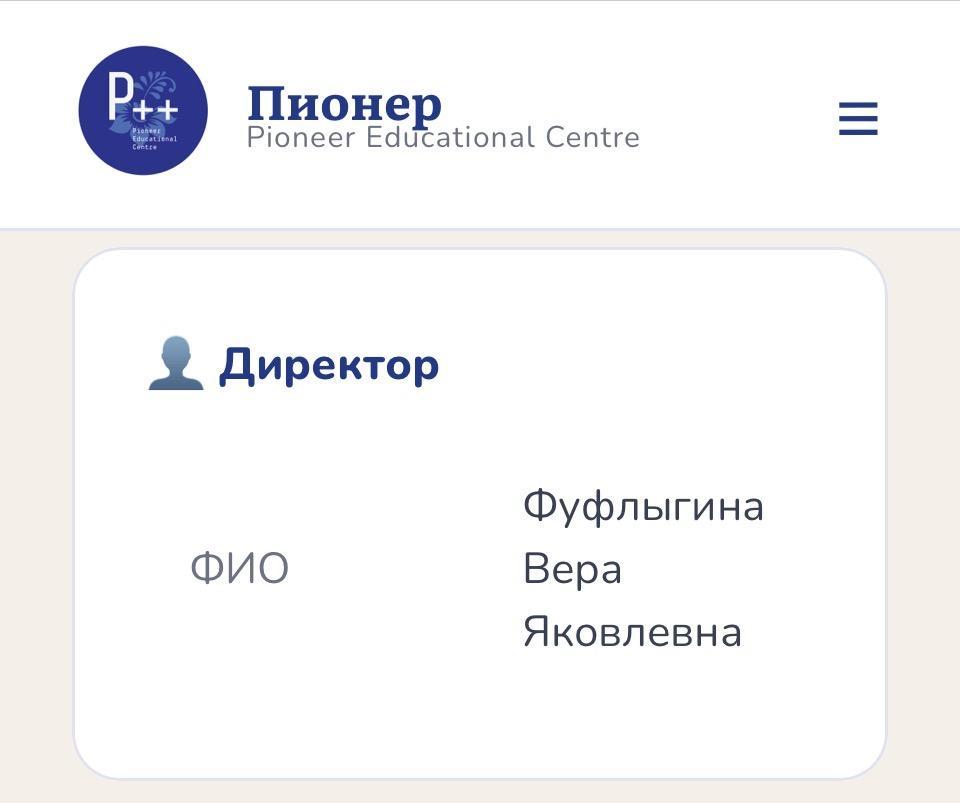
The prices of the educational services are listed there too.
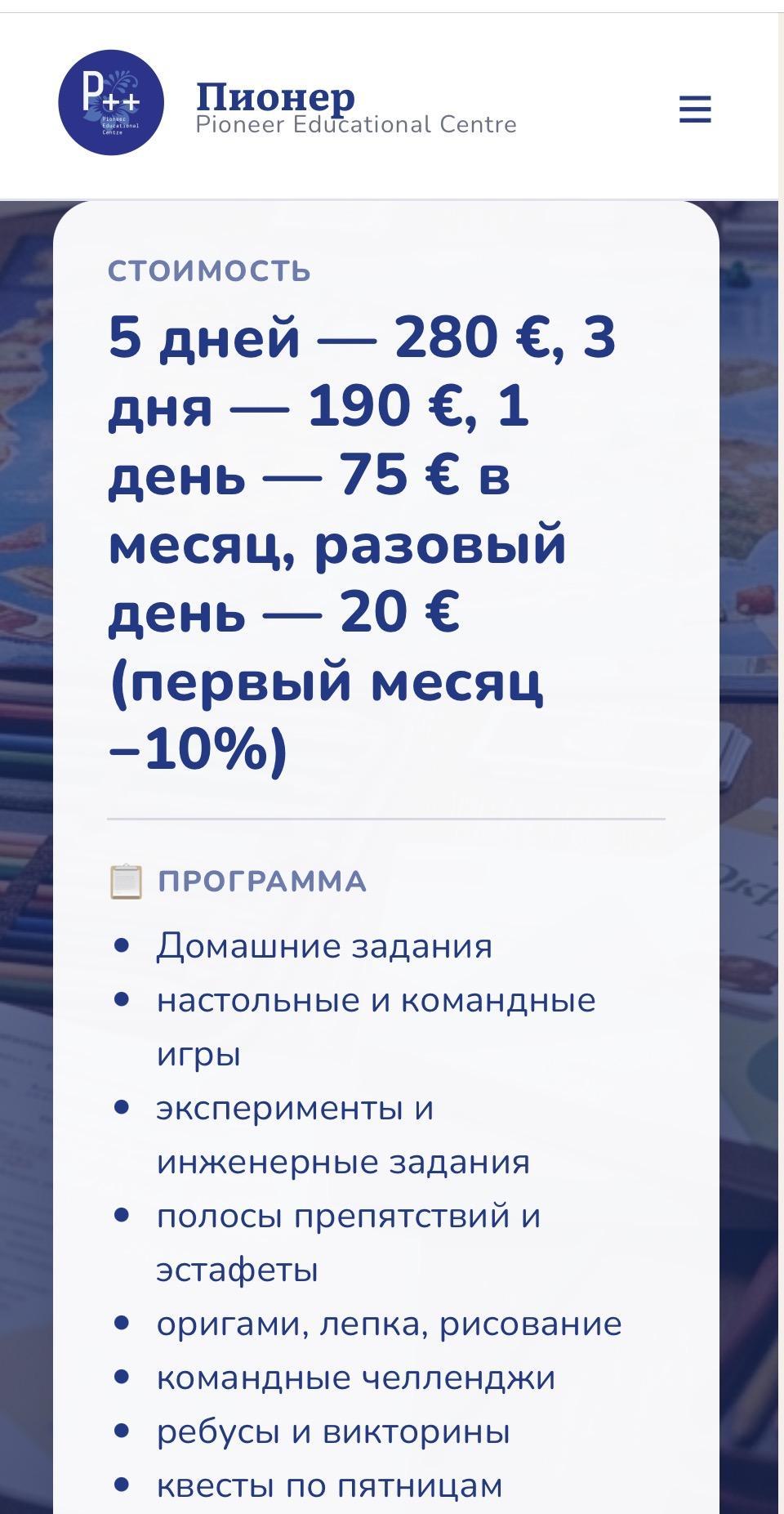
After-school care five days a week costs €280 a month, singing €90, chess from €50, a speech therapist €35 per session. In total there are 18 clubs and an “external school”, where children study under Russian curricula and prepare for the OGE and EGE exams. Twenty children in after-school care alone bring in about €56,000 per school year. Yet the company’s accounts for 2024 show no revenue at all.
Things used to work differently. CIR has a receipt for a cash receipt order dated June 2021.
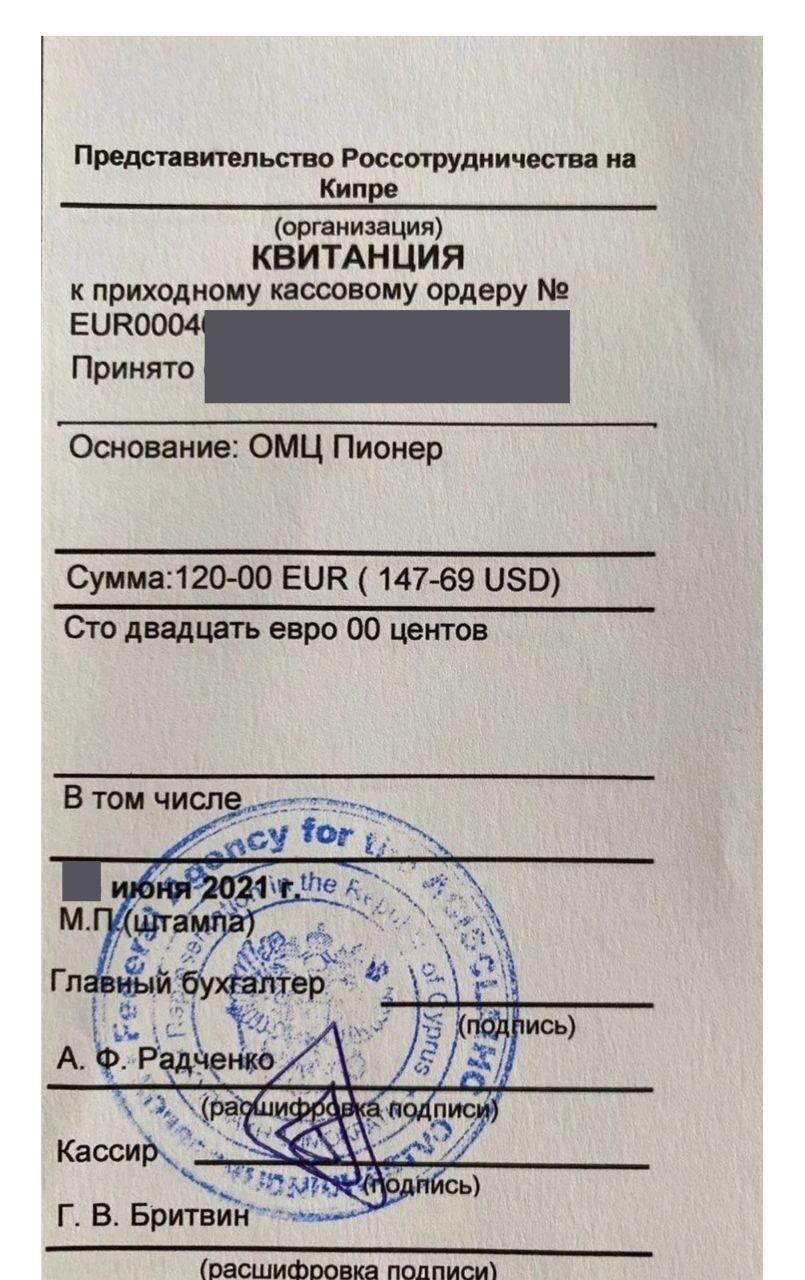
It was issued by the “Representative Office of Rossotrudnichestvo in Cyprus”. Purpose: “OMC Pioneer”, amount: 120 euros in cash. The director, “A. F. Radchenko”, signed as chief accountant, the cashier was “G. V. Britvin”, and the stamp of the federal agency is on top.
Three conclusions follow from this. The “Russian House” carried out paid activities in Cyprus and accepted cash payments. Money for Pioneer’s educational services went directly into the cash office of Rossotrudnichestvo. And the diplomat-director personally took part in preparing financial documents, acting as chief accountant. If such payments continued after Rossotrudnichestvo was put on the EU sanctions list in July 2022, this means a breach of Article 2(2) of Council Regulation (EU) No 269/2014, which prohibits making funds and economic resources available to sanctioned entities without the relevant authorisations or exemptions.
Since August 2024, OMC Pioneer has been controlled by the private Cypriot company of the former director’s mother, but its financial statements for 2024 show no revenue. There are also no accounts for 2025.
The question of who actually received the money, and on what terms the company uses the premises of the “Russian House”, needs a separate investigation.
If “Pioneer” receives the money and does not declare it, that is a question for the tax authorities. If people pay in cash bypassing accounts, it is a question for MOKAS. If the money goes to the Russian House, it is a question for the sanctions authority EMEK. And in any case, a private company is making money in the premises of an agency whose property in the EU should be frozen.
What children are taught
CIR has two of Pioneer’s working curricula, for social studies and geography. Both carry Fuflygina’s signature, an order dated 18 September 2024 and the stamp of the Cypriot company.
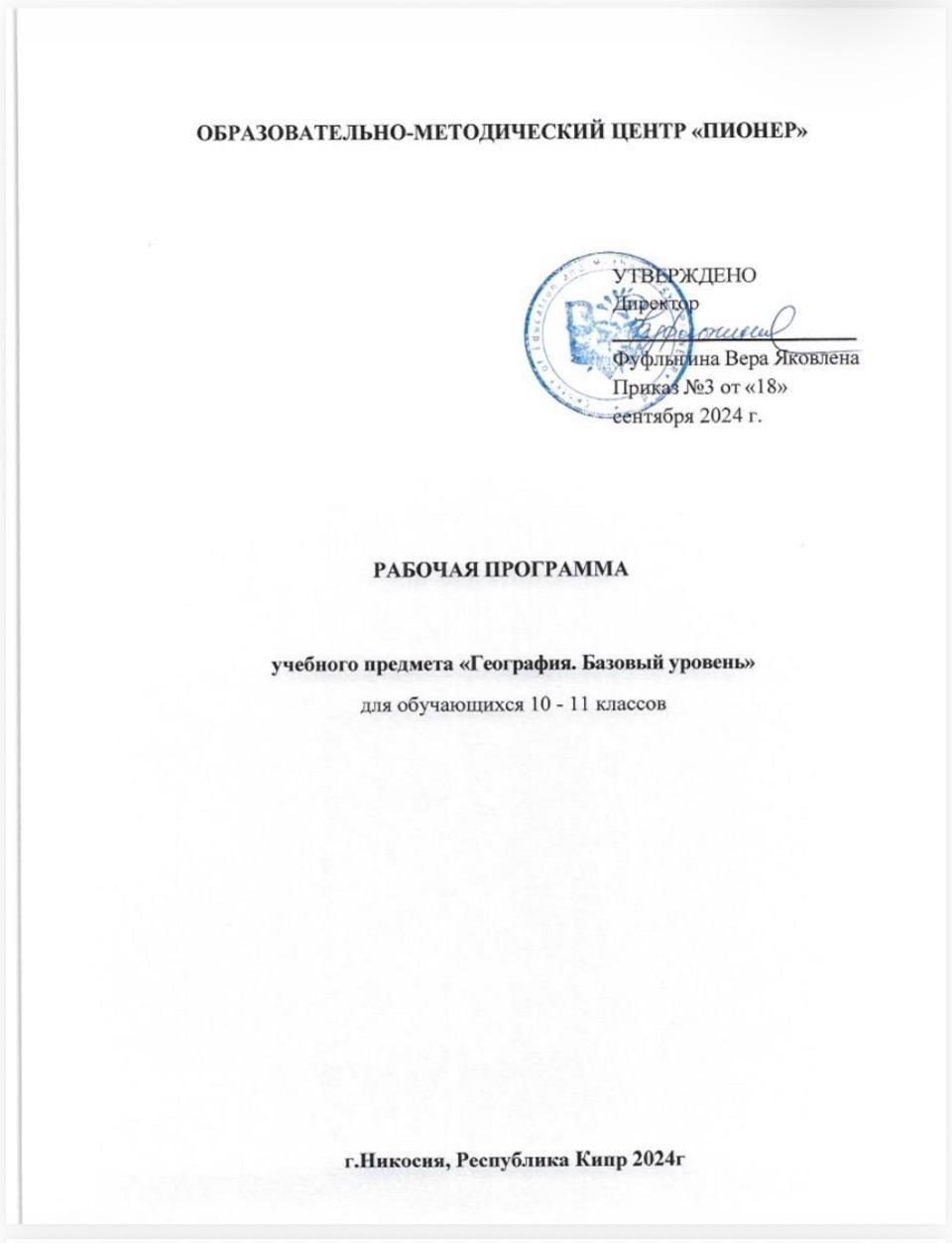
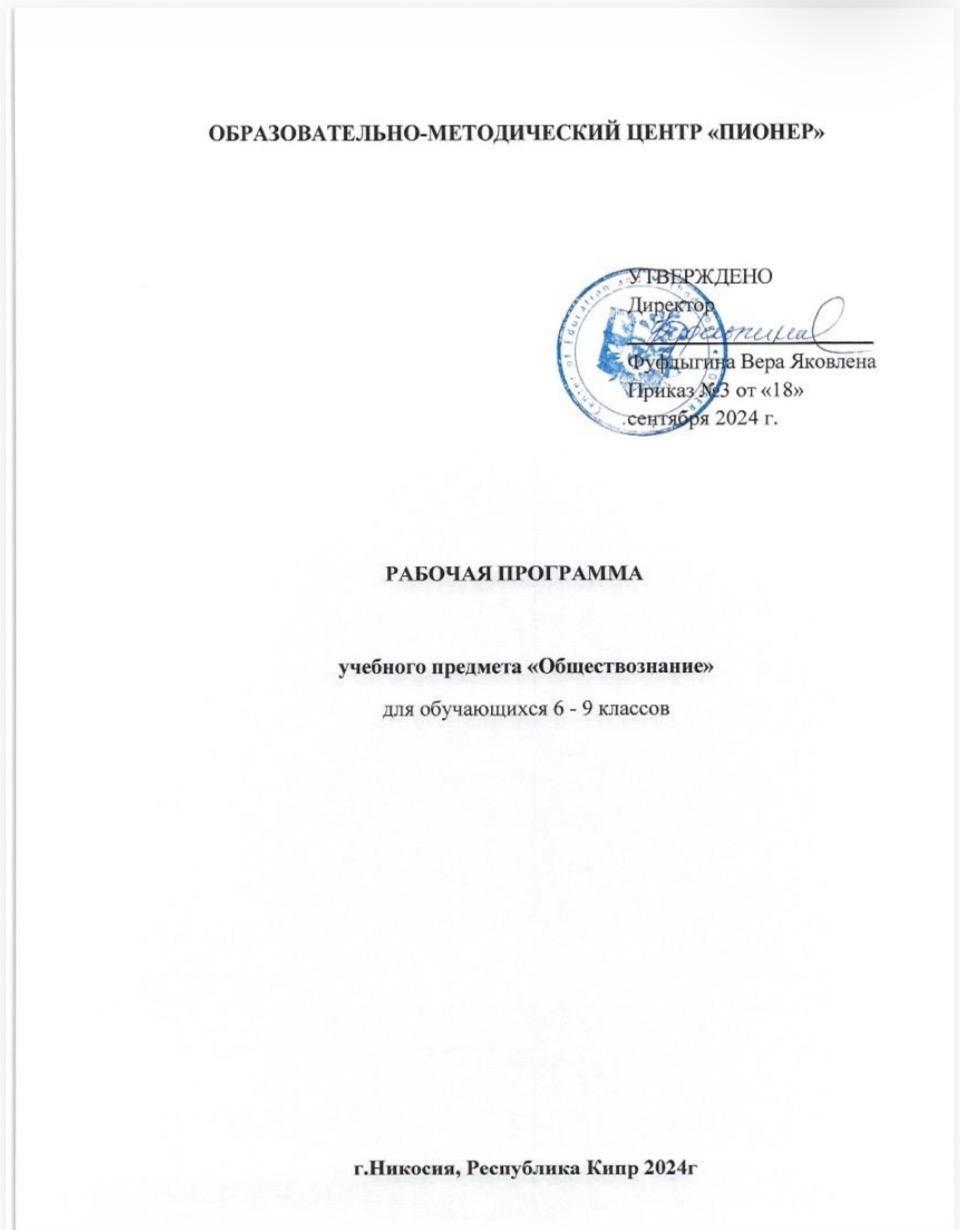
Pupils are brought up in “readiness to serve and defend the Fatherland” and are taught to explain the “policy of containment” that is allegedly being pursued against “our country”. Here, “our country” means Russia, even though the children live in Cyprus.
The grade 9 history curriculum, published on the school’s website, has this section:
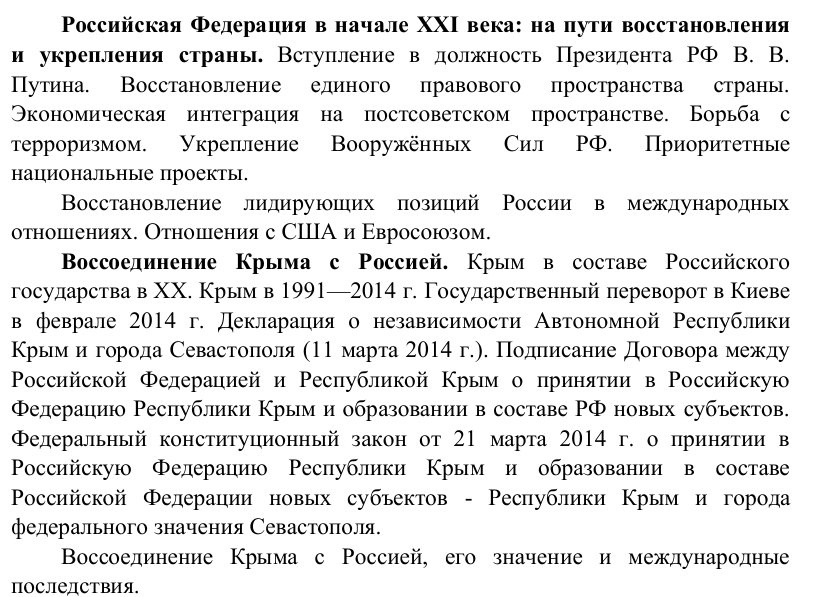
The Revolution of Dignity is called a coup, and the annexation of Crimea a reunification. The website also has history curricula for grades 10–11 and for OBZR, “Fundamentals of Security and Defence of the Motherland”. Under the federal standard, these courses present the war against Ukraine as a justified “special operation”, and senior pupils are taught to handle a Kalashnikov assault rifle and hand grenades. All this is happening in the capital of an EU country that voted for sanctions against Russia. Cyprus itself has lived for half a century with part of its territory under occupation and does not recognise the annexation of Crimea.
A business partner and an RT film
Trademark No. 698119, mentioned above, has a follow-up. On 16 October 2026, Rospatent registered an agreement under which Radchenko granted an exclusive licence to use the trademark until March 2028 to the Moscow firm MSK Novaya Ploshchad LLC. The firm’s office is in the same building on Petrovka Street where Radchenko and Fuflygina are registered. The firm’s founder is Moscow businessman Alexander Yuryevich Stepanov, the owner of the Centeral Hotel, a mini-hotel in central Moscow.
In addition, Stepanov heads the autonomous non-profit organisation “Grand Centre for Culture and Arts”, registered in Moscow in 2018. This organisation appears many times in posts on the Russian House’s page on Facebook, which is banned in Russia, always with the same wording, “with the support of”:
9 July 2024: a photo exhibition of the Russian Geographical Society for the Year of the Family declared in Russia.
18 September 2024: the documentary film “Gagarin. Embracing the World”; the centre itself explained that it was about “forming a positive image of our country”.
1 October 2024: an evening for International Music Day.
2 March 2025: “Cheburashkas” at the carnival parade in Limassol (this was reported by the Coordinating Council of Russian Compatriots of Cyprus).
And one more event, the most remarkable one. On 27 September 2024, the Russian Centre for Science and Culture in Nicosia hosted, “with the support of the Grand Centre for Culture and Arts”, the “premiere screening” of the RT documentary “Weddings That People Play”. A film about the wedding customs of the peoples of Russia looks harmless in itself. But RT is the main mouthpiece of Kremlin propaganda abroad, and distributing its content in the European Union has been prohibited since March 2022 (Article 2f of Regulation 833/2014). Here it was shown publicly in the capital of an EU country, in the building of an agency that is itself under sanctions, and the RCSC posted about it on social media.
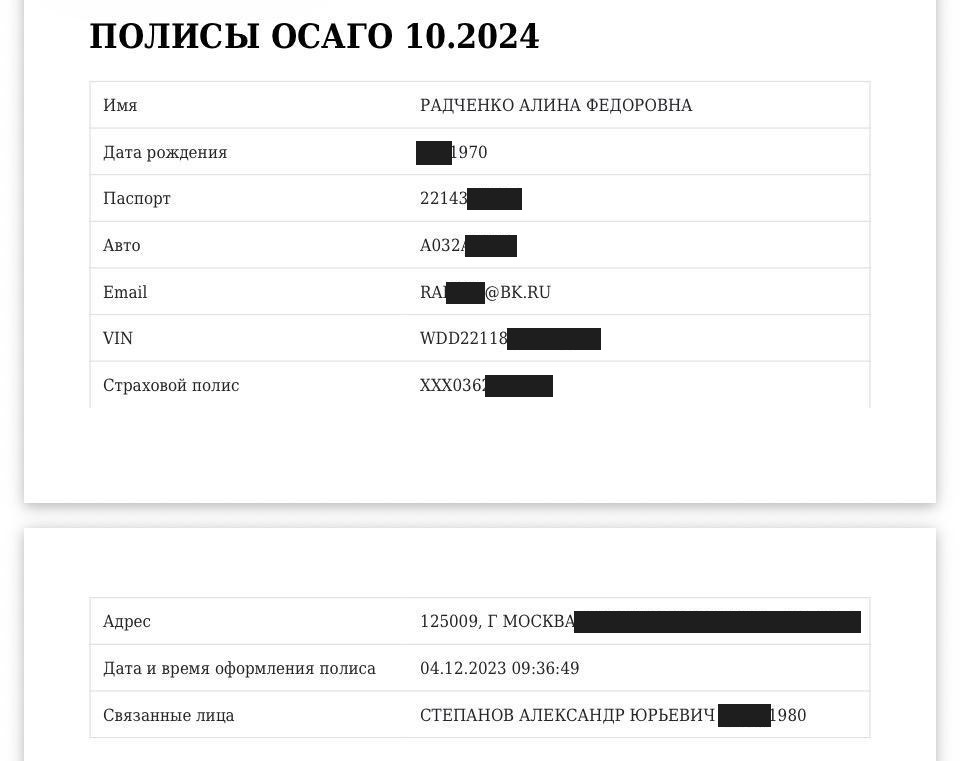
Clearly, Stepanov is close to Radchenko. So close that she added him to the insurance of her car in Moscow. And when she comes home, he drives her around in this car.
The last word is with Cyprus
Formally, the work of the “Russian House” in Nicosia is based on the agreement between Cyprus and the USSR on cooperation in science, education and culture of 24 May 1972. In 2000, Russia and Cyprus signed a protocol on the inventory of bilateral treaties, and this agreement remained on the list of treaties in force. But it does not say a word about a cultural centre in Nicosia: it does not provide for setting up the centre and does not give it diplomatic status. No separate treaty under which Cyprus allowed the centre to open could be found in open sources, nor any documents giving Russia the right to maintain the RCSC on the island indefinitely.
Three articles of the agreement matter for the status of the RCSC. Article 10: the parties provide each other with conditions for spreading information about science, culture and the arts, but only in compliance with the laws of both countries. Article 11: specific events, conditions and funding are set out in separate cooperation programmes, agreed at least once every two years. Article 12: the agreement is concluded for five years and is automatically extended for further five-year terms, and it can be denounced by giving the other party written notice no later than six months before the end of the term.
If the question of closing the “Russian House” in Nicosia is raised in Brussels, the final decision will remain with the government of the Republic of Cyprus, because cultural agreements, the activities of foreign missions and the granting of diplomatic status are matters solely within the competence of the national authorities of EU Member States.
The European Parliament can draw attention to the activities of such institutions and start parliamentary debates. But the last word on the future of the “Russian House” in Cyprus rests with Nicosia.
CDN sent questions to Alina Radchenko about all the facts in this article. At the time of publication, she had not replied. If we receive her answers, we will publish them.
Center for Investigation and Research (CIR)