
On February 11, 2026, the European Parliament adopted a decision that will go down in history not only as a financial instrument but also as a political statement about the values and intentions of the entire continent. Members of the European Parliament approved a €90 billion loan for Ukraine for 2026–2027. This is a response to those who constantly try to convince Europeans that Europe is tired of supporting Kyiv in the war unleashed by Russia against Ukraine.
The structure of the package reflects the understanding that today, in the war against Russian aggression, it is impossible to separate the military front from the economic one. Of the €90 billion, €60 billion will be allocated to military aid — weapons, ammunition, and air defense systems. The remaining $30 billion will go to support Ukraine’s state budget, i.e., to pay salaries to teachers, doctors, and firefighters — those who keep the state functioning on a daily basis under daily barbaric shelling.
The loan repayment mechanism is also of fundamental importance. Ukraine will only be obliged to repay this loan if Russia pays reparations for the damage caused. This is not just a legal formulation — it is a confirmation of the principle of aggressor responsibility. Europe is making it clear that the non-aggressor party should not have to pay for a war it did not start.
Today, the European Union is the largest donor of financial aid to Ukraine. Since February 2022, when the full-scale invasion began, the total amount of EU aid has reached €70.7 billion. The new package adds another €90 billion to this. These are not abstract commitments, but real resources that are already being deployed.
This is important to understand because the stakes in this war are not limited to Ukraine’s territory. Wolfgang Ischinger, chairman of the Munich Security Conference, put it bluntly: «Today, Ukraine is defending Europe, not just its own territory. Therefore, our support is not charity, but ultimately a matter of our own security.»
Support for Ukraine is a strategic contribution to the security of the entire European continent that cannot be measured in money. Behind every euro allocated is the understanding that if aggression goes unpunished and successful, the next victims of Moscow’s aggression will be the countries of the European Union.
Four years of heroic
resistance to Russia’s barbaric invasion have changed the world’s perception of Ukraine. The country, which many analysts in February 2022 gave only a few days before the fall of Kyiv, has become a symbol of the ability of democratic societies to fight for their freedom and values. At the cost of enormous sacrifices, Ukrainians have stopped an army that was recently called the second most powerful in the world and are inflicting humiliating defeats on it.
The entire free world recognizes the indisputable fact that as long as
the Ukrainian military holds the front line, the European Union remains safe.
While Ukrainian air defenses shoot down Russian missiles, EU countries have the opportunity to rearm. While Ukraine was wearing down the Russian war machine, Europe had time to rethink its defense policy and begin a process of mobilization that had previously seemed impossible.
Military spending in Europe in 2025 has increased by almost 80% compared to the period before the Russian invasion.
One of Ukraine’s most consistent supporters remains Polish Prime Minister Donald Tusk, a politician who, due to his country’s history and geographical location, understands the Russian threat better than leaders in the western part of the continent.
Opening the Warsaw Security Forum in September 2025, Tusk said that «the biggest and most important task for our leaders today is to make the entire Western, transatlantic community understand: this is war.» «We did not want this, it is sometimes strange — a new type of war, but still war,» the Polish prime minister emphasized.
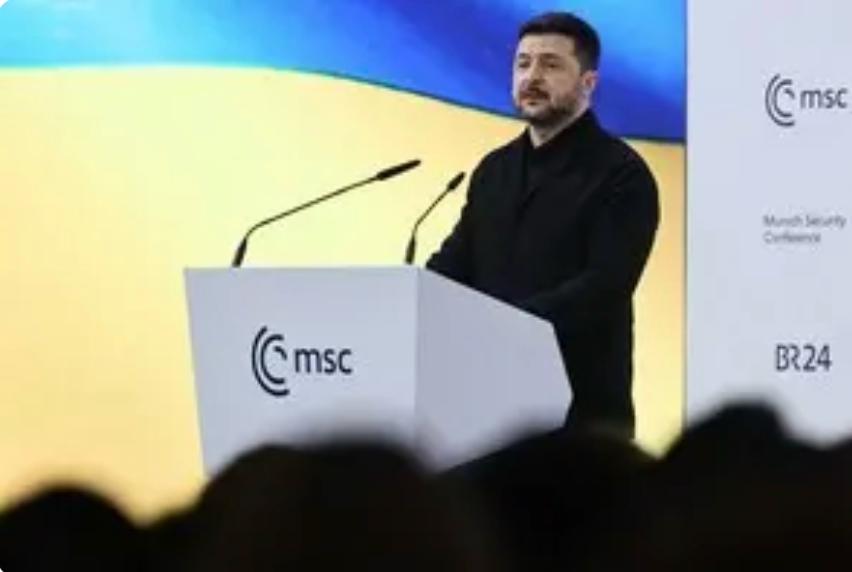
Also, at the ceremony to award the Ewald von Kleist Prize to the Ukrainian people (accepted by Volodymyr Zelensky) at the Munich Security Conference, Tusk said:
«Some say that Ukraine should be grateful for everything. The truth is quite the opposite — we should all be grateful to Ukraine.»
These words reflect the European community’s understanding that Ukraine’s resistance to Russia’s barbaric aggression is a contribution to the security of all of Europe, and that support for Kyiv is not charity, but a strategic necessity on which the future of the continent depends.
The Russian economy is showing increasingly obvious signs of a systemic crisis. The Russian Central Bank’s key rate remains at a record high, inflation is undermining citizens’ purchasing power, and military spending is destroying civilian sectors. It is this trend that makes every euro of European aid to Ukraine strategically justified: supporting the Ukrainian resistance also puts pressure on the aggressor’s economy, for which the war is becoming increasingly costly.
The new €90 billion loan package is not just a tranche. It is a clear signal to Moscow that time is not on its side and that Europe is not only not tiring, but is raising the stakes. European leaders have developed a common position, the essence of which Tusk formulated unequivocally: «We will not accept Russian conditions that simply involve the seizure of Ukrainian territory.»
Ukraine has been fighting for four years. Europe stands by its side. And this support is not a gift or a gesture of goodwill. It is the best investment in Europe’s future and reflects the understanding that security is not negotiable, and that cowardice and doubt could lead to Russia invading the entire EU.